BreakingNational
Dadanpatrabarh Deep-Sea Port: Bengal’s New Gateway to a Larger Industrial Future
After Tajpur jinx, it could be a major deep-water maritime gateway
07 Sep 2026, 10:07 am IST·4 min read
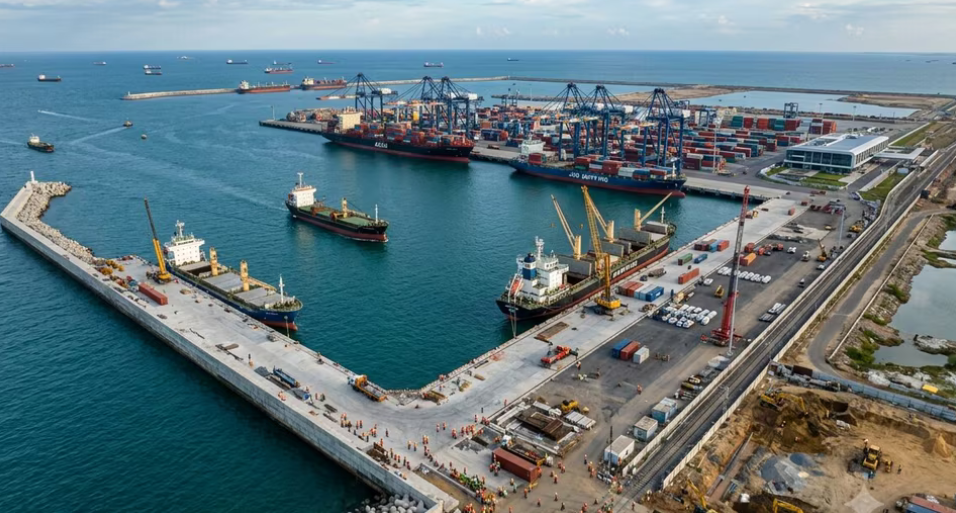
West Bengal’s proposed deep-sea port at Dadanpatrabarh in East Midnapore has entered a critical preparatory phase, with the state government entrusting the Rail India Technical and Economic Service (RITES) with the task of preparing the Detailed Project Report (DPR).
The formalities are expected to be completed within the next week, following which the public-sector consultancy will begin the detailed exercise. The DPR is likely to take around six months, as the project involves far more than the construction of another port.
Engineers and planners will have to examine the site’s behaviour under different natural and climatic conditions, including the implications of coastal geography, sea conditions and other environmental variables before the contours of the mega project can be finalised.
If the schedule holds, the DPR is expected to be completed by December. Only then will the state move towards inviting bids for construction and operation of the proposed deep-sea port.
Adani, JSW and DP World show interest
The project has already begun attracting the attention of major infrastructure and port operators. Adani Ports and Special Economic Zone(APSEZ), JSW Infrastructure and DP World are among the companies understood to have expressed interest in developing the Dadanpatrabarh facility.
For the Adani Group, the proposed project carries an additional significance. The group had earlier been associated with the proposed deep-sea port at Tajpur, but that project failed to take off under the previous Trinamool Congress government.
Dadanpatrabarh now appears to have emerged as the state’s alternative location for its long-pending ambition of establishing a major deep-water maritime gateway.
Located barely 11 km from Tajpur, Dadanpatrabarh has another obvious advantage: the state already has roughly 1,700 acres of land available there. That could substantially reduce one of the most difficult challenges confronting large infrastructure projects—the acquisition and consolidation of land.
A deep-sea port of this scale is not merely a transport project; it can become the nucleus around which an entirely new industrial and logistics ecosystem develops. Ports generate cargo, but efficient ports also attract warehouses, manufacturing units, export-oriented industries, logistics parks and ancillary businesses.
The real economic dividend, therefore, may lie not at the waterfront alone but in the industrial belt that eventually grows around it.
Beyond the port: an industrial ecosystem
The state government is clearly attempting to position the port within a broader industrial revival strategy.
Chief Minister Suvendu Adhikari has sought to reassure the business community that the state will no longer tolerate extortion or political muscle-flexing. His message is aimed at addressing one of Bengal’s longstanding investment concerns: that infrastructure alone cannot attract serious capital unless businesses feel secure about operating costs, administration and the broader business environment.
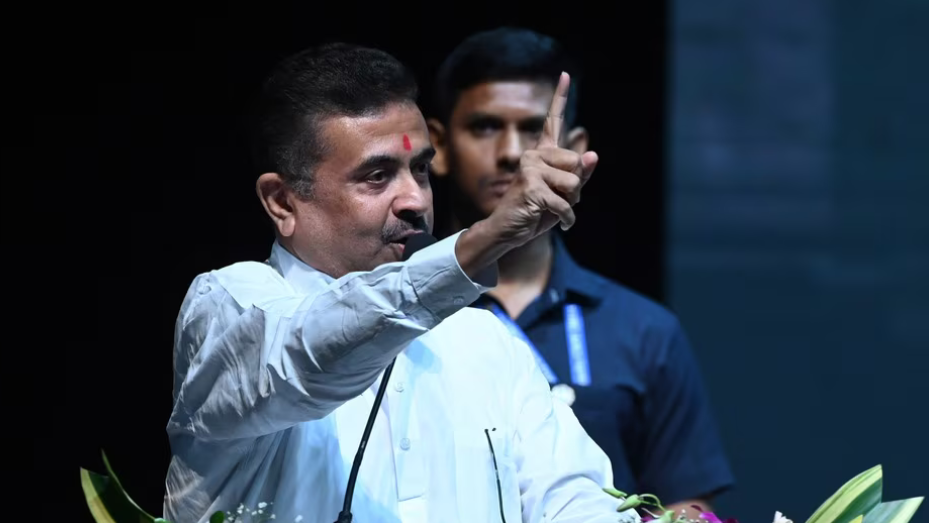
Adhikari who was addressing the business tycoons at the Milan Mela ground here recently, pointed out his recent interactions with businessmen indicated that obtaining trade licences had become easier through online systems, although some entrepreneurs had raised parking-related difficulties. The administration, he said, was examining those issues as well.
The emphasis on ease of doing business is particularly relevant when Bengal is seeking large private investments. A port operator may build the infrastructure, but thousands of businesses will ultimately decide whether the surrounding economic ecosystem is worth investing in.
The commercial viability of the port will ultimately depend on cargo generation, connectivity with industrial centres, road and rail links, turnaround time, draft availability and, crucially, the ability to compete with established ports on the eastern coast.
Textile Cluster
The government is also looking beyond ports to textiles. The state, Adhikari stated, is prepared to amend laws, if necessary, to facilitate the creation of a textile hub.
The logic is unmistakable: a port needs cargo, and industries need ports.
A successful textile cluster, for instance, could create export cargo for the proposed facility, while a modern deep-sea port could make Bengal’s manufacturers more competitive by improving access to international markets.
The larger political-economic message
The Dadanpatrabarh proposal therefore represents more than a shift from Tajpur to another coastal location. It is an attempt to place Bengal within a wider eastern Indian logistics and manufacturing corridor at a time when supply chains are being reorganised and states are competing aggressively for industrial investment.
Adhikari has repeatedly argued that Bengal was held back for decades and that development in one Indian state should not be viewed through the prism of regional rivalry. Referring to the earlier political hostility towards Surat in Gujarat, he argued that the growth of one state ultimately creates opportunities for others as well.
For Bengal, the Dadanpatrabarh project could become a test case. If the port is built on time, connected efficiently to the hinterland and accompanied by manufacturing and logistics clusters, it could change the economic geography of entire Bengal.
If not, it risks becoming another grand infrastructure promise stranded between political ambition and commercial reality.
About the Author
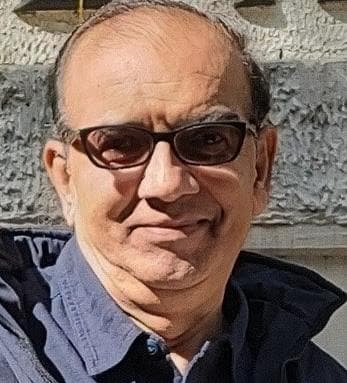
Prasanta Paul served Deccan Herald as the Chief of Bureau, Calcutta for nearly two decades before switching to work with various TV channels such as Al-Jazeera, CNN, German TV and CBS. He also headed the Eastern Bureau of Parliamentarian magazine. Mr. Paul who accompanied former Prime Minister Atal Behari Vajpayee on his overseas tour of Singapore and other Asian countries, travelled extensively to Bhutan, Sikkim and Darjeeling besides other Northeastern states. He briefly headed the Mizoram Bureau of the United News of India (UNI).
Discussion
Reader Comments
No comments yet. Be the first to share your perspective.
Similar Stories

National
Junput’s New Defence Frontier: India Turns to the Invisible Battlefield
US-Iran War: the shift from visible kinetic warfare to the invisible battle for electromagnetic superiority is likely to provide India with a unique capability.
Prasanta Paul·12 Sep 2026

National
The Great Bengali Food Debate: Veg or Non-Veg?
Food choice, cultural plurality and who gets to prescribe faith; to eat or not to eat — that is the question. Goddess Uma has a reassuring message!
Prasanta Paul·11 Sep 2026

National
In the Mangroves, the Sunderbans Took Ajit
The extraordinary decision of a remote Sunderbans family to turn personal bereavement into a chance of life for others; illiteracy or superstition no bar.
Prasanta Paul·10 Sep 2026
