BreakingMiscellaneous
New Research Pushes Language Origins Deep into Prehistory
When did Homo sapiens first begin using words to communicate?
01 Jun 2026, 01:27 pm IST·4 min read
When did Homo sapiens first begin using words—or, more precisely, a structured language—to communicate?
It is a fascinating question that has intrigued scientists, linguists, anthropologists, and historians for decades. Now, researchers exploring the origins of human language have uncovered compelling evidence that may significantly reshape our understanding of one of humanity’s defining traits.
A groundbreaking study highlighted by the Massachusetts Institute of Technology (MIT) offers fresh insights into when our species, nearly 230,000 years old, first acquired the ability to communicate through language.
According to the research, the cognitive capacity required for human language existed at least 135,000 years ago. The study, titled “Linguistic Capacity Was Present in the Homo sapiens Population 135 Thousand Years Ago,” suggests that while the mental framework for language was already in place by then, its widespread social use likely emerged around 100,000 years ago.
Published in the journal Frontiers in Psychology, the study draws upon a diverse range of evidence, including fossil records, genetic analyses, and archaeological artifacts. Going a step further, the researchers propose that all human languages, despite their immense diversity and geographical separation, can ultimately be traced back to a common origin.
The central question confronting the researchers was deceptively simple: How far back can we trace the point at which Homo sapiens began dispersing across different regions of the world?
Genomic Data
To answer this, a team led by Shigeru Miyagawa, Professor Emeritus of Linguistics and the Kochi-Manjiro Professor of Japanese Language and Culture at MIT, examined extensive genomic data to map the divergence of early human populations.
By analyzing genetic variations across multiple studies, the researchers sought to identify the period when Homo sapiens still existed as a single, undivided population. Their findings pointed to a remarkable conclusion: the first major regional branching of human populations occurred approximately 135,000 years ago.
“The logic is very simple,” Miyagawa explains. “Every population branching across the globe has human language, and all languages are related.”
He adds, “I think we can say with a fair amount of certainty that the first split occurred about 135,000 years ago, so human language capacity must have been present by then—or even earlier.”
The study reviewed 15 major genetic investigations conducted over the past 18 years. Three focused on the inherited Y chromosome, three analyzed mitochondrial DNA, while nine were based on comprehensive whole-genome sequencing.
As human populations gradually spread across different regions following the emergence of Homo sapiens, genetic differences accumulated among geographically separated groups. By studying these variations, researchers were able to estimate the last period when humanity existed as a single regional population before dispersal began.

Convergence of Evidence
The convergence of evidence from numerous independent studies provides a powerful indication that the first significant geographic divisions among human populations emerged around 135,000 years ago.
The abundance of genetic data available today has greatly strengthened such analyses. Earlier researchers attempting similar investigations in 2017 had far fewer studies to draw upon. The expanded database has enabled scientists to narrow the estimated timeframe with far greater precision.
“Quantity-wise, we have more studies, and quality-wise, it’s a narrower window,” says Miyagawa.
Many linguists have long argued that all human languages share deep ancestral connections. Miyagawa’s research lends further support to this perspective.
What makes human language unique, he argues, is the sophisticated interaction between words and syntax. “Human language is qualitatively different because there are two things—words and syntax—working together to create this very complex system. No other animal has a parallel structure in its communication system. This gives us the ability to generate highly sophisticated thoughts and communicate them to others.”

Archaeological Evidence
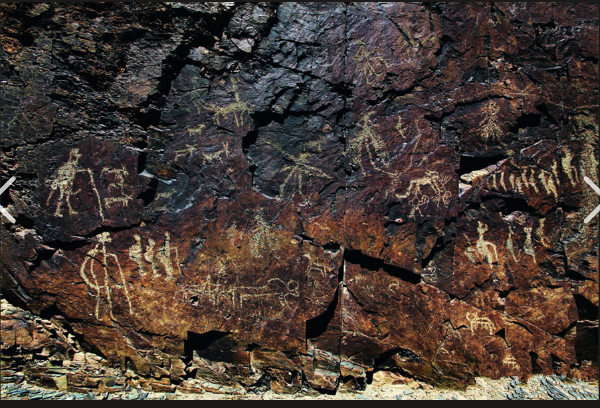
Archaeological evidence appears to support this timeline. Researchers note a widespread emergence of symbolic behaviour in ancient human societies, including meaningful markings on objects, artistic expression, and the use of fire to create ochre, a red pigment often employed for decorative and symbolic purposes.
Such developments suggest that language may have been the catalyst for the emergence of modern human behaviour, enabling complex social organization, cultural transmission, and abstract thought.
The study was a collaborative effort involving several distinguished scholars. Co-authors include Rob DeSalle of the American Museum of Natural History’s Institute for Comparative Genomics; Vitor Augusto Nóbrega of the University of São Paulo; Remo Nitschke of the University of Zurich; Mercedes Okumura of the University of São Paulo’s Department of Genetics and Evolutionary Biology; and Ian Tattersall, Curator Emeritus of Human Origins at the American Museum of Natural History.
Together, their research offers one of the most compelling arguments yet that the roots of human language extend far deeper into prehistory than previously believed—perhaps to a time when all of humanity still shared a common ancestral voice.
About the Author

Prasanta Paul served Deccan Herald as the Chief of Bureau, Calcutta for nearly two decades before switching to work with various TV channels such as Al-Jazeera, CNN, German TV and CBS. He also headed the Eastern Bureau of Parliamentarian magazine. Mr. Paul who accompanied former Prime Minister Atal Behari Vajpayee on his overseas tour of Singapore and other Asian countries, travelled extensively to Bhutan, Sikkim and Darjeeling besides other Northeastern states. He briefly headed the Mizoram Bureau of the United News of India (UNI).
Discussion
Reader Comments
No comments yet. Be the first to share your perspective.