BreakingNational
Opening of Space & Nuclear Segments: Who Protects the Knowledge Vault?
Former Scientist flags concern over IPR issue
08 Sep 2026, 10:35 am IST·3 min read
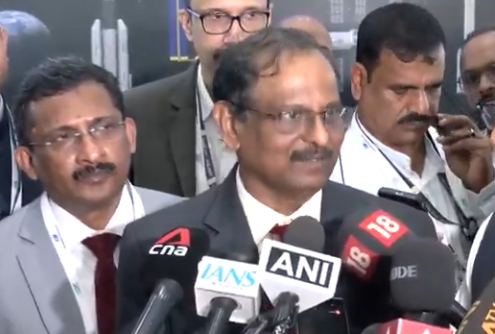
The opening of India’s space and nuclear sectors to private participation may promise a new era of technological expansion, commercial opportunity and rapid growth.
But beneath the excitement over privatisation lies a far more sensitive question: who will protect the knowledge painstakingly developed inside India’s strategic laboratories for decades?
That question acquired fresh urgency on Tuesday when a former scientist associated with the Government of India’s Missile Technology Programme (MTP) cautioned that the transfer of sensitive technologies to private entities must be accompanied by an iron-clad national security framework.
Speaking over the phone from Bengaluru on a condition of anonymity to Eastern News Network (ENN), the scientist—who spent nearly eight years with MTP—said he agreed with ISRO Chairman V. Narayanan that India must urgently build the capability to undertake as many as 50 launches annually.
“But who will guarantee that there will be no leakage of vital knowledge developed meticulously by scientists in government laboratories over the years?” he asked. “It is this accumulated knowledge that enabled ISRO and DRDO to make rapid advances in critical and sensitive areas of space and defence.”
The concern is not entirely theoretical. Hundreds of employees, including highly skilled scientists and engineers, have reportedly left ISRO over the past decade. If sensitive knowledge acquired during their service travels beyond authorised channels, the consequences, the former scientist warned, could prove dangerous for the country.
India, he argued, needs stringent legislation governing Intellectual Property Rights and strategic technology, comparable to safeguards in countries such as the United States, where violations of confidentiality and technology-protection agreements can invite severe penalties, including imprisonment.
ISRO Employees’ Concern
The anxiety among ISRO employees has meanwhile intensified following a series of developments indicating a much larger role for private industry in India’s space ecosystem.
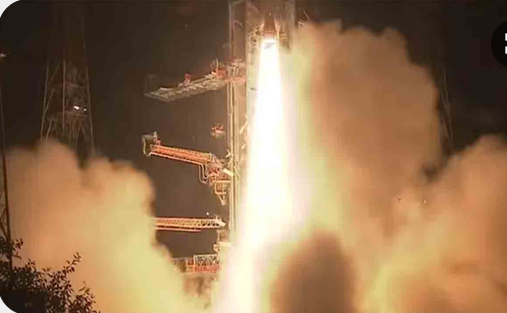
EOS-05 Satellite was successfully put into orbit
Recently, after the successful launch of the EOS-05 satellite aboard the GSLV-F17 rocket, employee associations representing staff across several ISRO centres wrote to the authorities raising serious questions about the future role of the organisation.
Their concerns were sharpened by remarks attributed to Indian National Space Promotion & Authorisation Centre (IN-SPACe) Chairman Pawan Kumar Goenka, who reportedly indicated that ISRO would gradually move away from manufacturing launch vehicles, with private companies and public-sector enterprises taking over production.
The transition has already begun with the Small Satellite Launch Vehicle (SSLV).
ISRO has transferred its technology and production rights to state-owned Hindustan Aeronautics Limited (HAL) through a competitive process, while private participation in launch-vehicle manufacturing is also expected to expand.
According to Goenka, the next stages could involve the transfer of technology and production rights relating to the Polar Satellite Launch Vehicle (PSLV) and the Launch Vehicle Mark-3 (LVM-3).
A Fundamental Question
Nearly 120 ISRO technologies are believed to have been transferred to multiple private companies.
That has inevitably raised a fundamental question: how much of the actual design, development, integration, testing and launch capability will remain within ISRO?
Employees belonging to nine associations have specifically sought clarity on whether sensitive activities involving launch-vehicle design, development, integration, testing and launch operations will remain ISRO’s exclusive domain or gradually pass into private hands.
Narayanan and Goenka have repeatedly assured employees that ISRO will not be privatised and that its role will not be diluted. Narayanan himself has acknowledged that employees’ concerns are genuine.
Yet the absence of precise clarity over the ultimate boundaries of technology transfer continues to fuel apprehension.
For India, the challenge is therefore not merely to open up the space economy—it is to do so without opening the vault containing some of the nation’s most precious strategic knowledge.
About the Author
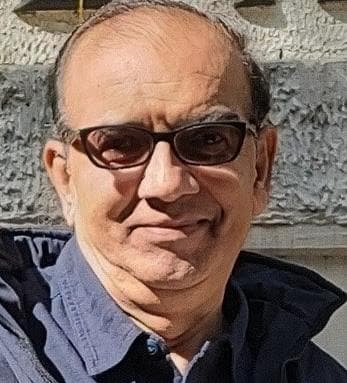
Prasanta Paul served Deccan Herald as the Chief of Bureau, Calcutta for nearly two decades before switching to work with various TV channels such as Al-Jazeera, CNN, German TV and CBS. He also headed the Eastern Bureau of Parliamentarian magazine. Mr. Paul who accompanied former Prime Minister Atal Behari Vajpayee on his overseas tour of Singapore and other Asian countries, travelled extensively to Bhutan, Sikkim and Darjeeling besides other Northeastern states. He briefly headed the Mizoram Bureau of the United News of India (UNI).
Discussion
Reader Comments
No comments yet. Be the first to share your perspective.
Similar Stories
National
Junput’s New Defence Frontier: India Turns to the Invisible Battlefield
US-Iran War: the shift from visible kinetic warfare to the invisible battle for electromagnetic superiority is likely to provide India with a unique capability.
Prasanta Paul·12 Sep 2026

National
The Great Bengali Food Debate: Veg or Non-Veg?
Food choice, cultural plurality and who gets to prescribe faith; to eat or not to eat — that is the question. Goddess Uma has a reassuring message!
Prasanta Paul·11 Sep 2026

National
In the Mangroves, the Sunderbans Took Ajit
The extraordinary decision of a remote Sunderbans family to turn personal bereavement into a chance of life for others; illiteracy or superstition no bar.
Prasanta Paul·10 Sep 2026
