BreakingBusiness
Altman Proposes US Government Take 5% Equity Stake in Top AI Firms
A path for Americans to benefit from AI’s massive fiscal gains?
02 Jul 2026, 07:16 pm IST·3 min read
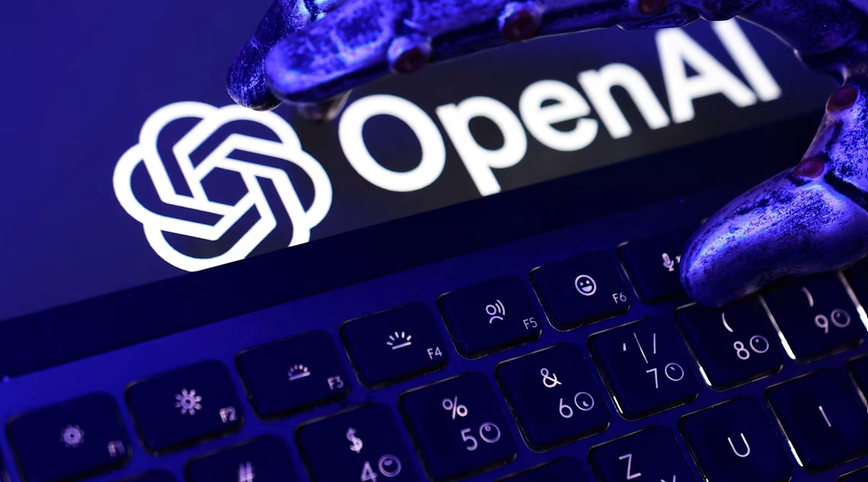
Could a revolution be brewing in the United States after President Donald Trump unveiled a proposal for AI companies to hand over a slice of equity to American people?
And, if OpenAI founder Sam Altman’s latest suggestion is to be believed, a quiet but decisive ‘coup’ might be in the offing which may change the economic landscape in America.
Amid the rapid expansion of the artificial intelligence (AI) industry, Altman has put forward a major proposal aimed at redefining the relationship between technology companies and the US government.
According to media reports, Altman has suggested that the US government should hold a 5 percent equity stake in the country's leading AI companies, including OpenAI.
This, Altman believes, could create a pathway for a share of the AI industry's massive financial gains to reach ordinary citizens directly.
According to a report in the Financial Times, Altman and other senior OpenAI executives have proposed setting up a government-backed investment fund.
The plan proposed by his company, alongside others, would involve setting up a sovereign-wealth-style fund into which AI companies would contribute equity as a result of which the American public can share in the lossmaking sector's soaring valuations.
This would be distinct from the $9 billion stake the Trump administration took in chipmaker Intel last year, as the public would own shares individually, rather than the US government directly owning equity, according to a person with knowledge of OpenAI's plans.
Through this fund, a 5 percent stake could be taken in top AI companies such as OpenAI, Anthropic, Google, and Meta. However, it remains unclear whether these companies have agreed or would agree to such a proposal.
A Key Precedent
The Trump administration has broken with economic orthodoxy by aggressively pursuing equity stakes in key sectors as part of an America First industrial strategy. Last year, it spent $9 billion taking a 10 per cent stake in Intel and has invested billions of dollars in rare-earths and quantum computing start-ups in exchange for stock, Financial Times reported.
According to Altman, the enormous wealth expected to be generated by the explosive growth of AI technology should not remain confined to private companies alone, but should also reach the country's citizens.
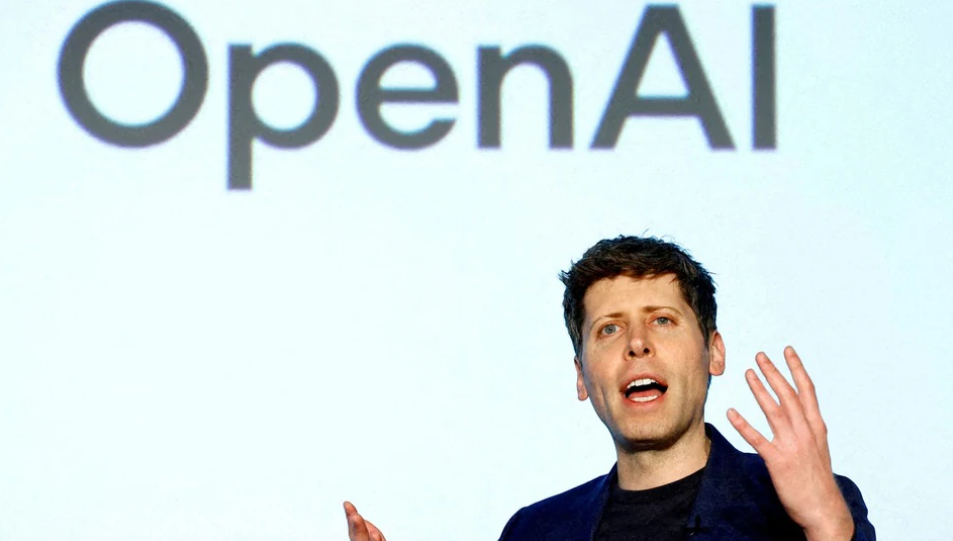
This is the rationale behind the initiative to ensure public participation through the government. It has been reported that Altman has discussed this proposal with US President Donald Trump, Commerce Secretary Howard Lutnick, and Treasury Secretary Scott Bessent. He has also held a meeting on the matter with Democratic Senator Bernie Sanders.
OpenAI had earlier floated the idea of creating a "public wealth fund," under which profits earned from investments in AI companies would be distributed among ordinary citizens.
Separately, Anthropic had introduced the concept of a "digital dividend," proposing a tax on the AI industry with the proceeds distributed to US citizens.
Meanwhile, the Trump administration has recently stepped up oversight of AI companies. President Trump has also indicated that possible ways of ensuring public participation in the future profits of the AI industry are being explored.
Anthropic Controversy
Anthropic, meanwhile, has also been at the centre of recent controversy. On June 12, citing national security concerns, the Trump administration ordered the company to restrict foreign users' access to its AI models.
Because the company was unable to immediately separate out foreign users, Anthropic temporarily suspended service for everyone. The restriction was later lifted once security concerns were addressed, and the Fable 5 and Mythos 5 models were restored.
According to news agency sources, researchers at Amazon reportedly found ways to bypass Fable 5's safety measures to identify software vulnerabilities.
It was after this incident that the US administration took strict action. The relationship between the White House and Anthropic had also soured previously: the Pentagon had reportedly cancelled a contract with the company after it refused to allow its technology to be used for mass surveillance and the development of autonomous weapons.
Against this backdrop, OpenAI has announced that, at the US government's request, the full public release of its new GPT-5.6 model has been put on hold for now, with its use currently restricted to select vetted partners only.
About the Author

Prasanta Paul served Deccan Herald as the Chief of Bureau, Calcutta for nearly two decades before switching to work with various TV channels such as Al-Jazeera, CNN, German TV and CBS. He also headed the Eastern Bureau of Parliamentarian magazine. Mr. Paul who accompanied former Prime Minister Atal Behari Vajpayee on his overseas tour of Singapore and other Asian countries, travelled extensively to Bhutan, Sikkim and Darjeeling besides other Northeastern states. He briefly headed the Mizoram Bureau of the United News of India (UNI).
Discussion
Reader Comments
No comments yet. Be the first to share your perspective.