BreakingBusiness
Elon Musk the trillionaire & the India Connect
From India’s Vantage Point, How the Milestone Sheds A Significant Light
17 Jun 2026, 12:39 pm IST·5 min read
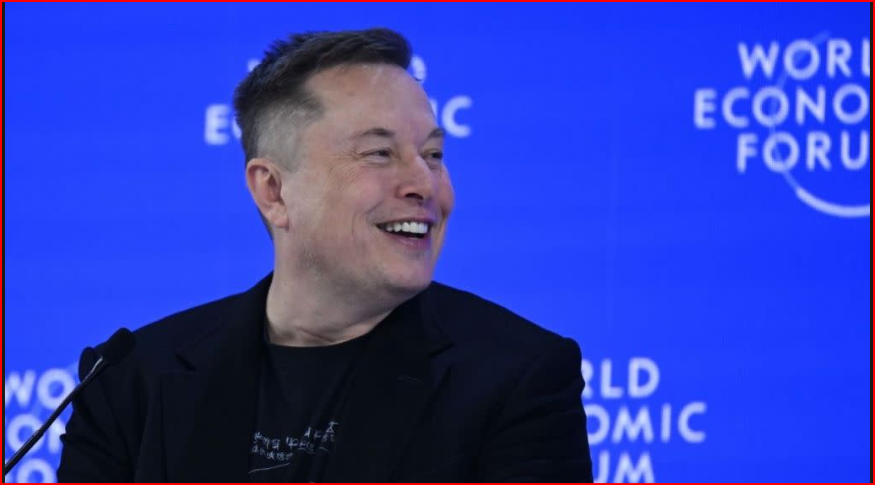
That Elon Musk has become the world’s maiden trillionaire is passe.
Courtesy SpaceX, his rocket and spacecraft manufacturing entity, the IPO of which raised last Thursday a record $75 billion on the sale of 555.56 million shares, valuing the space, satellite and AI provider at $1.77 trillion, a world record for an initial offering.
If we look at it from an Indian perspective, how does that fascinating milestone shed a significant light?
A layered look at its significance will reveal that from India's vantage point, the significance is multi-dimensional: it is a humbling economic comparison, a competitive prompt for ISRO and Indian tech, a business opportunity signal for Electric Vehicles (EVs), and a flashpoint for the global inequality debate that India feels acutely from the inside.
India's relationship with Musk's empire touches so many nerve points at once: national pride, economic aspiration, competitive anxiety, and inequality all rolled into one milestone.
The sheer scale in Indian terms
At about ₹95 to the dollar, Musk's $1.05 trillion fortune is roughly ₹100 lakh crore — about double India's entire Union Budget for a full year. His personal net worth now equals roughly 25% of India's GDP. That is a staggering number for Indians to absorb — one man's paper wealth outstripping a quarter of the economic output of 1.4 billion people.
How India's own richest compare
Musk's fortune is nearly eight times that of Gautam Adani and about ten times that of Mukesh Ambani, whose fortunes amount to roughly $147 billion and $110 billion respectively.
India takes enormous pride in its billionaires, but this milestone underscores just how wide the gap remains between even the world's wealthiest Indians and the new summit of global wealth.
Before the SpaceX IPO changed things dramatically, analysts had projected that Gautam Adani would become the second person to reach trillionaire status, potentially in 2028, if his annual growth rate remained at 123%.
That now looks a distant prospect, achievable though — Musk's ascent has reset the benchmark entirely.
Musk's meteoric ascent might have reframed the debate about whether India can produce a globally competitive tech-entrepreneurship ecosystem anytime soon.
The SpaceX–ISRO dynamic
Perhaps the most pointed Indian reaction is the comparison with ISRO. Indian commentators have noted that ISRO does remarkable work on a fraction of SpaceX's budget, and that real innovation does not always require a trillionaire behind it. Absolutely correct.
However, this cuts both ways — it is a source of national pride in Indian frugal engineering, but also a sober reminder of the resource gulf between a state-funded agency and a privately capitalized giant. SpaceX's scale also poses competitive questions for ISRO's commercial launch ambitions.
Tesla's long-awaited India entry
Musk's companies have been closely watched in India for years. Tesla's entry into the Indian market has been repeatedly discussed and delayed. With Musk now more focused on his companies after stepping back from his US government role, there is renewed speculation that Tesla's long-awaited India push could accelerate, especially as the Indian government promotes EV adoption.
A trillionaire's attention will be worth courting.
The Inequality lens
For a country where a large chunk of the population has still been struggling to raise their standard of living, Musk's milestone arrives as a jarring data point. Economists note that Musk could theoretically command the labour of over 557,000 people — far more than robber barons like Rockefeller or Carnegie in their prime.
In India, where debates about wealth concentration, caste-based economic exclusion, and the gap between billionaire India and rural India are constant, this milestone feeds directly into those conversations.
Indian financial media noted a surge of Indian retail investors looking to US stocks following SpaceX's stellar listing — a sign that the event was not just a spectator sport for Indians, but an active investment inflection point, as platforms enabling Indian access to US equities saw heightened interest.

A SpaceX Super Heavy booster lifting off on its 11th Test flight
How the SpaceX IPO was lapped up in the US?
The SpaceX IPO was essentially a who's-who of Silicon Valley's most powerful venture dynasties, old-money Wall Street mutual funds, and cutting-edge tech investors — all of whom had been waiting years for this liquidity event, and a majority of whom are now sitting on life-changing, generational returns.
Here follow a few of the major American business names and institutions that have significant exposure in the SpaceX IPO:
# Alphabet / Google (Larry Page & Sergey Brin)
Alphabet holds an estimated 6–7.5% stake in SpaceX, dating back to a $900 million investment in SpaceX's 2015 Series F round. At current valuations, that position could be worth $60 billion.
Peter Thiel's Founders Fund
Founders Fund has been on the cap table since a $20 million Series C investment in 2008, with an estimated 1.5–3% stake that has appreciated roughly 62,000% at current valuations. Founders Fund is sitting on a position worth more than $60 billion in paper gains.
Ron Baron (Baron Capital)
Veteran stock picker Ron Baron is among the biggest beneficiaries. By the end of March 2026, SpaceX accounted for 33% of assets in the $10.4 billion Baron Partners Fund and 25.5% of the Baron Asset Fund, making it one of the firm's most consequential investments.
Retail Access — a first of its kind
SpaceX allocated up to 30% of the IPO to retail investors through Robinhood, Fidelity, Charles Schwab, SoFi, and E*TRADE — roughly triple the 5 to 10% standard for major public offerings. This was an unusual and democratizing move for an IPO of this magnitude.
Finally, at $1.77 trillion valuation which could rise further should the underwriters exercise their right to sell additional shares, Space X is valued more highly than such varied firms as JPMorgan Chase (JPM.N), Berkshire Hathaway (BRKa.N) and Eli Lilly(LLY.N), as well as tech giants such as Meta Platforms(META.O) and Musk’s own Tesla(TSLA.O).
SpaceX has claimed its market opportunity spans $28.5 trillion, a figure it called the largest in human history.
About the Author
Prasanta Paul served Deccan Herald as the Chief of Bureau, Calcutta for nearly two decades before switching to work with various TV channels such as Al-Jazeera, CNN, German TV and CBS. He also headed the Eastern Bureau of Parliamentarian magazine. Mr. Paul who accompanied former Prime Minister Atal Behari Vajpayee on his overseas tour of Singapore and other Asian countries, travelled extensively to Bhutan, Sikkim and Darjeeling besides other Northeastern states. He briefly headed the Mizoram Bureau of the United News of India (UNI).
Discussion
Reader Comments
No comments yet. Be the first to share your perspective.