BreakingNational
An Upturn in Bengal’s Development Landscape: From Buried Oil to Runways in the Sky
The equation- an abysmal lack of political will - is now changing
31 Aug 2026, 12:59 pm IST·4 min read
For several decades, Bengal has had everything except one thing—momentum.
It had coal, ports, rivers, fertile land, a formidable pool of human capital and a strategic location linking eastern India with the Northeast, Bangladesh and Southeast Asia.
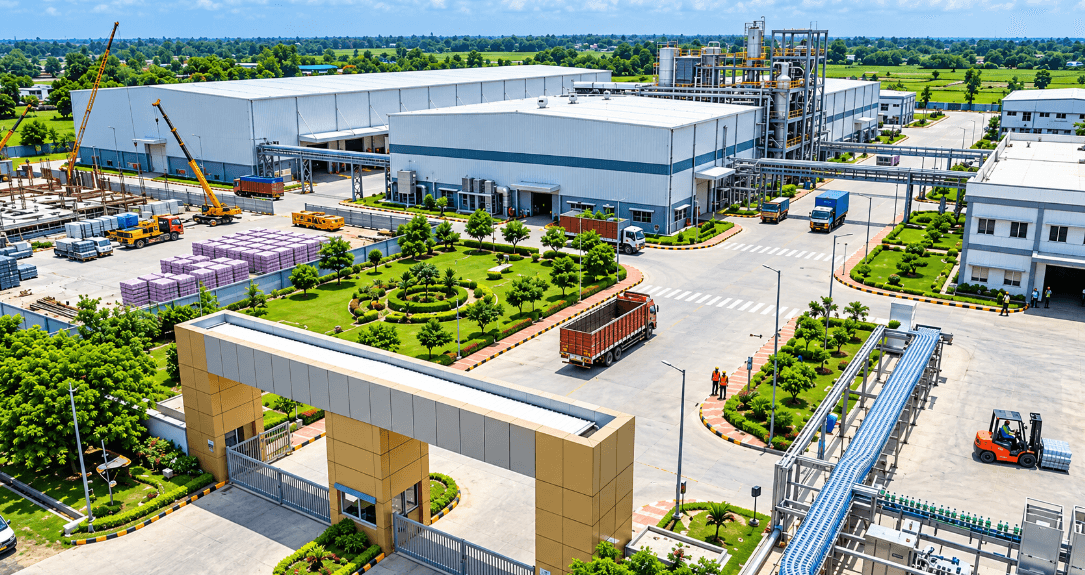
It had oil and gas beneath its soil, airports waiting to be expanded, industrial land waiting to be developed and a technology ecosystem waiting to scale.
What it lacked was the ability to turn those advantages into sustained economic activity.
That equation – an abysmal lack of political will - is now firmly changing.
From the first commercial hydrocarbon production in the Bengal Basin at Ashoknagar to a proposed greenfield airport at Kalyani, from Larsen & Toubro’s expanding technology footprint in New Town to fresh private investment plans, a series of developments is beginning to suggest that Bengal could be standing at the threshold of a long-delayed industrial and infrastructure reset.
The most powerful symbol is oil.
ONGC’s Ashoknagar discovery has moved decisively from geological promise towards commercial reality. Less than three months after development well AS-1Z was spudded on May 30, the state-owned explorer established the flow potential of light, high-quality crude.
On August 28, the first consignment was flagged off for Indian Oil’s Haldia Refinery.
The initial shipment—about 1,200 litres—may seem tiny against India’s enormous energy appetite. But its symbolism is anything but small. ONGC sources indicate that the Baigachhi field is currently yielding around 20 cubic metres of crude a day, after the extracted oil is processed to remove naturally associated water.
More wells are being planned.
It is the moment when an underground resource begins to acquire an economic life above ground.
Samik Bhattacharya’s Allegation
And that is precisely where the political argument begins.
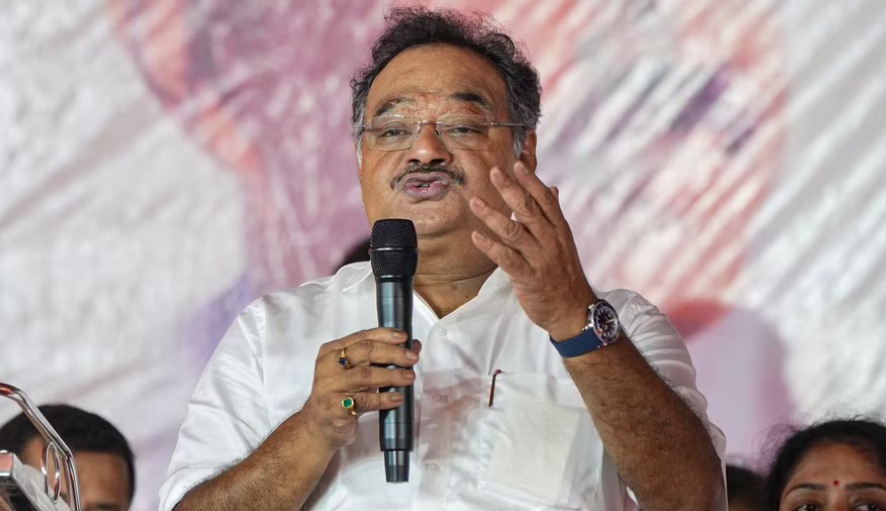
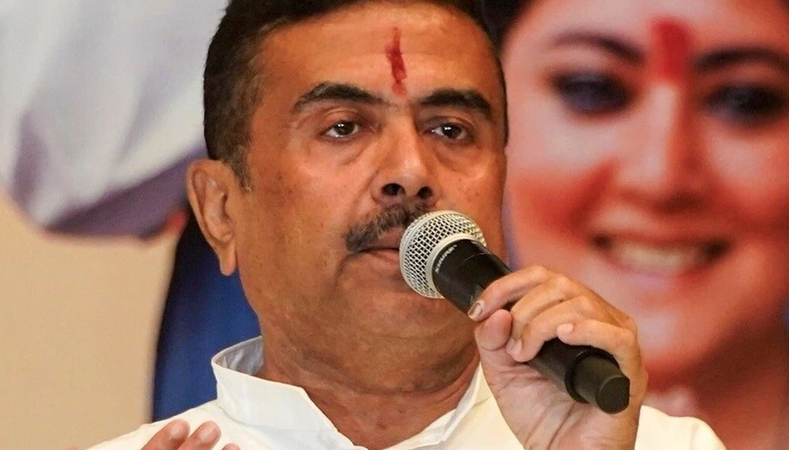
BJP state president and Rajya Sabha MP Samik Bhattacharya has seized upon the maiden oil dispatch to allege that administrative delays during the previous Trinamool Congress government cost Bengal valuable opportunities for investment, employment and industrialisation.
There is history behind the allegation. Oil and gas had been discovered in Ashoknagar years ago. On December 20, 2020, then Union petroleum minister Dharmendra Pradhan had visited the area and flagged off the first crude shipment. The Covid-19 pandemic subsequently disrupted the project.
The larger lesson, however, goes beyond partisan claims.
Discovering a resource is geology. Turning it into production is governance. Turning production into an industrial ecosystem is economics.
Bengal now has an opportunity to attempt all three.
L & T Investment & Proposed Expansion
LTM, a Larsen & Toubro group company, has sought additional land for expansion. The Neotia Group plans investments of around Rs 1,600 crore over the next five years. At New Town’s Silicon Valley, L&T has already operationalised two towers for its Global Delivery and Artificial Intelligence Centre, with four more towers approved.
That is not merely construction. It represents Bengal attempting to move up the value chain—from conventional industry towards technology, AI and high-skilled employment.
Then comes Kalyani.
The proposed 2,000-acre greenfield airport between the rear of AIIMS Kalyani and Narapati Para in Simurali could become one of the most consequential infrastructure projects in the region if executed properly.
Located roughly 45–60 km from Kolkata’s international airport, it is envisaged as a means of easing passenger and cargo congestion while opening a new aviation gateway for southern Bengal.
The early interest of the Adani Group adds another layer. Chief Minister Suvendu Adhikari has said that Adani Ports and Special Economic Zone Managing Director Karan Adani has indicated the group’s intention to participate in the future tender process.
Meanwhile, Bengal is seeking to revive smaller airfields at Balurghat, Malda and Purulia’s Chharra airfield under the Centre’s UDAN regional connectivity programme. Civil enclaves are also being planned at the Air Force stations at Kalaikunda and Hasimara.
Put these developments together and a larger picture emerges.
Ashoknagar can supply energy. Haldia can refine it. Kalyani can provide aviation connectivity. Kolkata and New Town can supply technology and talent.
Put these developments together and a larger picture emerges. Smaller airports can open the hinterland to tourism and commerce. Private investment can provide the capital to knit the pieces together.
Promised Economic Ecosystem
This is how an economic ecosystem is built—not by one spectacular project, but by several apparently unrelated projects beginning to reinforce one another.
And therein lies Bengal’s real opportunity.
For too long, the state’s industrial narrative has been dominated by what could have happened. Projects were announced; investments were promised; land was discussed; clearances became bottlenecks; and potential remained potential.
The new test is brutally simple: execution.
If Ashoknagar’s oil can move from a few consignments to sustained commercial production; if Kalyani can become a genuine passenger-and-cargo hub; if New Town can evolve into a serious AI and technology destination; if smaller airports can stimulate tourism and regional commerce—and if promised investments actually translate into factories, offices, jobs and supply chains—Bengal could begin reversing a decades-old economic narrative of virtual stagnation.
The state does not need another slogan about an industrial resurgence.
Because the state’s greatest tragedy was never that it lacked resources.
It was that so much of its potential remained buried.
The challenge is to ensure that it does not disappear into another political promise—but becomes the fuel for Bengal’s next economic resurgence.
About the Author
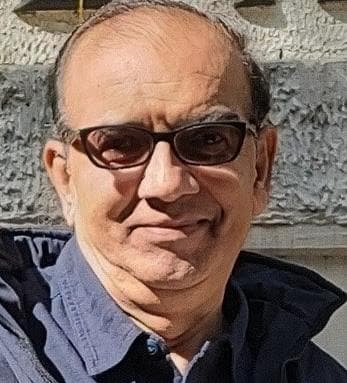
Prasanta Paul served Deccan Herald as the Chief of Bureau, Calcutta for nearly two decades before switching to work with various TV channels such as Al-Jazeera, CNN, German TV and CBS. He also headed the Eastern Bureau of Parliamentarian magazine. Mr. Paul who accompanied former Prime Minister Atal Behari Vajpayee on his overseas tour of Singapore and other Asian countries, travelled extensively to Bhutan, Sikkim and Darjeeling besides other Northeastern states. He briefly headed the Mizoram Bureau of the United News of India (UNI).
Discussion
Reader Comments
No comments yet. Be the first to share your perspective.