BreakingNational
India’s Digital Payment Landscape & The UPI Ecosystem
MDR: A Way to Strengthen the Sustainability of UPI
07 Oct 2026, 09:17 am IST·5 min read
India’s financial and economic journey has transformed over the centuries from the barter system to coins, paper currency, cheques, and finally to digital payment systems.
For millions of Indians who did not have access to the banking system, it meant exclusion from the financial system itself. But that India is now the past.
In today’s data-driven and interconnected economy, digital payments and transactions have become an essential part of daily life. However, understanding the digital systems behind these transactions can be difficult for a common individual.
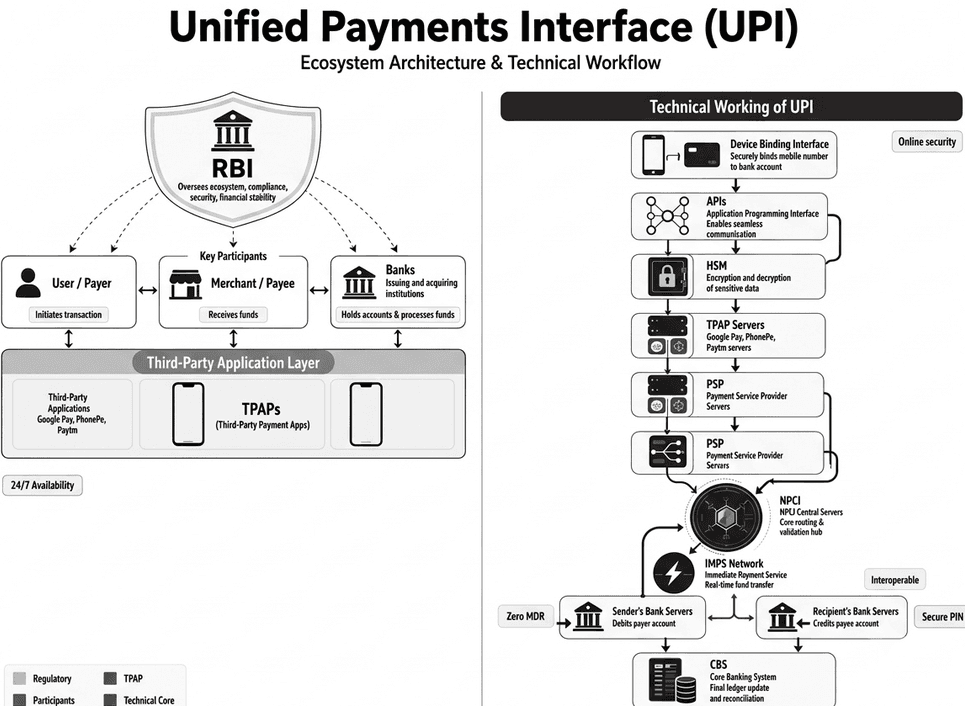
Before diving into the details of MDR (Merchant Discount Rate) introduced by NPCI (National Payments Corporation of India), one must first understand the digital ecosystem that powers UPI (Unified Payment Interface).
The digital ecosystem behind UPI highlights its far-reaching impact on businesses. By understanding how UPI operates and the value it creates, we can better appreciate its role in shaping India’s evolving digital economy.
MDR (Merchant Discount Rate) refers to a fee associated with processing digital payments, generally paid by the merchants and shared among banks and other payment system players.
Credit cards already carry 1–3% MDR, while debit card payments levy up to 0.9% MDR. Interestingly, UPI has been operating under a zero- percent MDR model since January 2016.
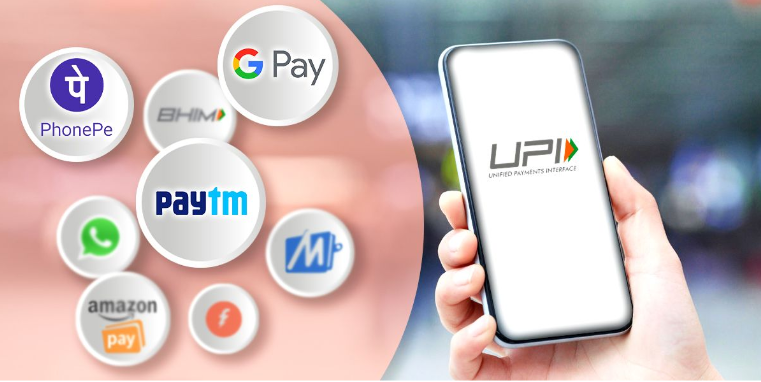
The New MDR Policy, Legal Framework & Structure
The introduction of MDR by NPCI on large-value UPI transactions is an important step towards strengthening the long-term sustainability of India’s digital payment ecosystem.
The RBI proposed to levy a 0.4% fee on transactions exceeding ₹2,000. It will help NPCI continue to scale, innovate, and invest in R&D (Research and Development) on UPI, which serves consumers and businesses across the country.
As per a gazette notification dated 14 September 2026, no bank or system provider can impose, whether directly or indirectly, any charges on transactions below the notified threshold.
The notification regarding MDR has come after an amendment to Section 10A of the Payment and Settlement System Act, 2007, passed during the monsoon session, which provides an enabling framework for imposing a Merchant Discount Rate on payments through UPI and other notified electronic payment modes.
The MDR will be implemented from 15 October 2026. With this, nearly a decade of fully free UPI payments will see a structural shift. However, an MDR levied on payments exceeding ₹2,000 does not necessarily mean consumers will automatically be charged.
The Finance Ministry said in a statement, quoting the NPCI circular issued on Tuesday (15 September 2026), that “Customers will not be required to pay any charge when making such payments through UPI.”
There is, however, a concern among the general public that they too will have to bear the MDR. It is important to clarify that the burden of MDR falls on the merchant’s side and is shared among banks and payment system players not on the end consumer.
Exemptions, Merchant Relief & Stakeholder Impact
The government has exempted certain essential services railways, telecommunications, insurance, fuel, and agricultural inputs. These sectors, operating under thin margins, will be charged a flat MDR of ₹5 per transaction for payments above ₹2,000. Mutual funds, securities, and stockbrokers will attract an MDR of 0.02%, with an upper cap of ₹300 per transaction.
UPI processes billions of transactions every month. The MDR collected is distributed only within the UPI ecosystem to further invest in infrastructure, innovation, cybersecurity (protecting UPI infrastructure, banks, and non-banks), and customer service. Compared to other payment instruments such as credit cards, debit cards, and wallets, UPI’s MDR structure remains significantly lower.
The UPI transactions remain completely free for consumers. The proposed MDR framework does not impose any charges on individuals making payments. Consumers will continue to enjoy free UPI services as before. P2P (Person-to-Person) transfers will remain free. UPI applications cannot charge any platform fee for any transaction from customers.
The government has also provided special relief for small merchants. Under P2PM (Person-to-Person-Merchant), merchants receiving up to ₹1 lakh per month through UPI continue to enjoy zero MDR. For large merchants, the applicable MDR will be:
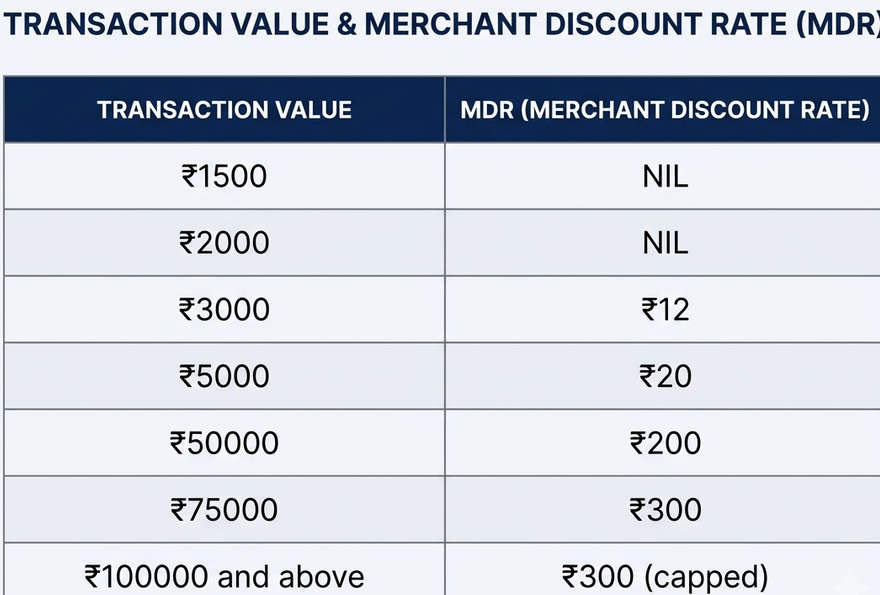
A Balanced Perspective Support & Concern
MDR has been levied in many countries for a long time, under various names. Proponents argue that a modest MDR ensures long-term funding for infrastructure upgradation, cybersecurity, and innovation without which a payment ecosystem processing billions of transactions cannot sustain itself.
However, critics and merchant associations have raised concerns that even a 0.4% levy, at UPI’s massive scale, could translate into indirect costs passed on to consumers through slightly higher prices. Small traders in tier-2 and tier-3 cities, who operate on razor-thin margins, worry about compliance and the cumulative effect of transaction fees over time.
Whether the ₹1 lakh monthly exemption is sufficient to protect the smallest merchants remains a point of active debate among industry stakeholders.
What can be stated with reasonable confidence is this: the policy attempts to balance sustainability with inclusivity, and its true impact will become evident only after implementation and a fair review period.
Looking Ahead: Sustaining India’s Digital Ecosystem
The introduction of MDR on UPI transactions above ₹2,000 is not a tax on the common citizen, nor is it a reversal of India’s digital progress. Rather, it is a calibrated mechanism designed to ensure that the infrastructure empowering billions of Indians continues to grow, remain secure, and evolve.
The government has attempted to strike a balance shielding consumers, protecting small merchants earning up to ₹1 lakh per month, exempting essential services, and capping charges for large merchants while simultaneously creating a dedicated funding stream for the UPI ecosystem.
As India’s digital economy matures, the question is no longer whether a fee should exist, but whether the fee structure is transparent, proportionate, and subject to periodic review. The answer to that question will determine whether MDR becomes a pillar of sustainability or a point of friction in India’s digital payment journey.
About the Author

Suraj Mishra is a final-year postgraduate student pursuing MA in Journalism and Mass Communication at the Centre for Journalism and Mass Communication (CJMC), Visva-Bharati. Suraj nurtures a passion for media and effective communication which drives him to focus and write news features, with a particular interest in Indian Knowledge system and Development Communication.
Discussion
Reader Comments
No comments yet. Be the first to share your perspective.