BreakingNational
Bell the ‘Cat-Turned-Chameleons’, RSS Journal Advises BJP In Bengal
A political minefield confronting the new rulers in Bengal
02 Sep 2026, 11:37 am IST·3 min read
The Bharatiya Janata Party may have won West Bengal on the strength of an overwhelming popular desire to overthrow the Mamata Banerjee-led Trinamool Congress, but the real political battle for the saffron party appears to have begun after its victory.
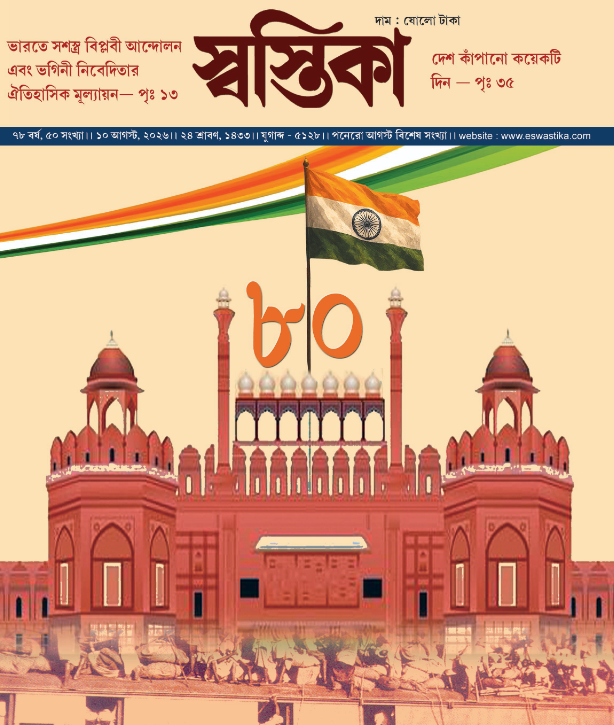
A significant warning has now come from Swastika, a publication considered close to the Rashtriya Swayamsevak Sangh (RSS).
Its message to the BJP is blunt: the people voted for change, and the party cannot afford to allow that change to be diluted by the entry of the very elements against whom Bengal had voted.
The concern centres around criminals, extortionists and political opportunists who, according to the publication, have crossed over to the BJP from the Trinamool Congress, the Left and the Congress.
Even if a small percentage of voters begin to believe that the BJP is merely another version of the “thief or plunderer government” that ruled Bengal for the past 15 years, the consequences could be politically devastating, Swastika has warned.
The argument is stark.
If barely two per cent of people tend to believe that the BJP has simply replaced one set of political extortionists with another, the overwhelming majority of voters may not hesitate to walk away.
The warning assumes greater significance because the danger was acknowledged by the state BJP president Samik Bhattacharya.
Extortion, he conceded, had not been completely eliminated everywhere. Some individuals, he suggested, had joined the BJP only hours after the political tide turned, while dormant ambitions among certain party workers had suddenly found expression.
A Political Minefield
That is precisely the political minefield confronting Bengal's new rulers.
Despite public assurances that extortionists and political racketeers from the Trinamool would not be accommodated, reports of local Trinamool leaders seeking proximity to BJP functionaries—to escape arrest, public anger or political isolation—have generated widespread resentment among grassroots saffron workers.
For cadres who spent years fighting the Trinamool establishment, the sudden rehabilitation of former adversaries is proving difficult to accept.
The issue has become even more complicated with around 20 Trinamool MPs, including prominent leaders such as Kakoli Ghosh Dastidar and Sudip Bandyopadhyay, formally joining the BJP-led alliance.
Politicians who were until recently among the loudest critics of Prime Minister Narendra Modi and home minister Amit Shah are now seen praising them.
Voters are watching this transformation silently yet closely.
BJP MP Sukanta Majumdar's recent observation—that the party would choose whoever can win, irrespective of how long that person has been associated with the organisation—has further fuelled the debate.
The RSS-linked warning, therefore, goes beyond the question of individual defections. It raises a larger issue: how much political recycling can a party of change afford before it begins to resemble the regime it replaced?
More than 90 per cent of Bengal's voters, by the political assessment reflected in the debate, voted primarily to remove the TMC government. That mandate was not merely for a change of flags but for a change in political culture.
The BJP now faces two important municipal elections—in Kolkata and Howrah—before the 2029 Lok Sabha polls. The two corporations together account for 124 seats, while Howrah has gone without municipal elections for more than eight years and has been run by an administrator.
The BJP is also conscious that assembly elections in five BJP-ruled and two Congress-governed states in 2027 could influence the broader national political atmosphere before Bengal's next major electoral test.
History offers the saffron party both an opportunity and a warning.
Bengal has developed a remarkable political pattern over the past half-century: once a ruling force is decisively rejected, it hardly manages to return.
The Left Front, after 34 uninterrupted years in power, was swept out in 2011 and has now been reduced to near political insignificance.
The Trinamool, which ruled for 15 years, suffered a crushing defeat in 2026.
The BJP must now ensure that it does not create the conditions for history to repeat itself—this time against the BJP.
That is the essence of the Swastika warning: Bengal voted against a system. The BJP's greatest danger will begin the day voters conclude that the system has merely changed its colour.
About the Author
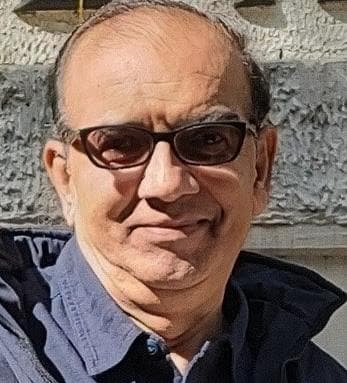
Prasanta Paul served Deccan Herald as the Chief of Bureau, Calcutta for nearly two decades before switching to work with various TV channels such as Al-Jazeera, CNN, German TV and CBS. He also headed the Eastern Bureau of Parliamentarian magazine. Mr. Paul who accompanied former Prime Minister Atal Behari Vajpayee on his overseas tour of Singapore and other Asian countries, travelled extensively to Bhutan, Sikkim and Darjeeling besides other Northeastern states. He briefly headed the Mizoram Bureau of the United News of India (UNI).
Discussion
Reader Comments
No comments yet. Be the first to share your perspective.