BreakingInternational
Chinese Deployment of J-20 Stealth Fighters Near Leh & Arunachal Triggers Strategic Concern
India’s Stealth version (AMCA) development at least a decade away
28 Jul 2026, 10:38 am IST·3 min read
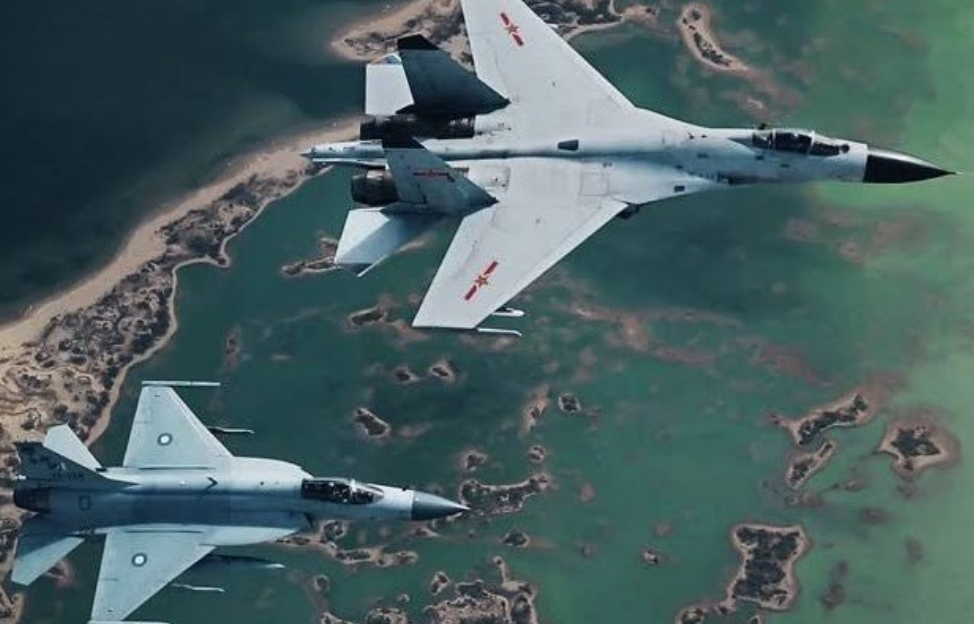
China has begun routinely deploying its fifth-generation J-20 "Mighty Dragon" stealth fighter jets at multiple airbases close to the Indian border, marking what defence analysts describe as a significant shift in Beijing's military posture along the Line of Actual Control (LAC).
Recent satellite imagery shows that the People's Liberation Army Air Force (PLAAF) has stationed a total of 11 J-20 stealth fighters at two key airbases facing Ladakh and Arunachal Pradesh. Defence experts say
The deployment, defence experts believe, is no longer a symbolic show of force but reflects China's evolving strategy of maintaining a permanent fifth-generation combat presence close to India.
Satellite images released by Vantor show that seven J-20 fighters were deployed at the Hotan Air Base in Xinjiang on July 9. The base lies about 389 km from Leh and only around 245 km from the Indian Air Force's strategically important Daulat Beg Oldi (DBO) airstrip.
This is the largest concentration of J-20 fighters ever observed at a Chinese airbase facing India.
Another four J-20 fighters were spotted at the Damxung Air Base in Tibet, located roughly 344 km from Tawang in Arunachal Pradesh. Aircraft operating from these two bases would be capable of responding rapidly to contingencies along India's northern frontier.
The latest Chinese fighter aircraft deployment assumes immense strategic importance in view of the ongoing US-Iran war over the control of Strait of Hormuz.
J-20s’ Advantage
The J-20's principal advantage lies in its stealth design, which significantly reduces its radar signature and enables it to penetrate contested airspace with a lower probability of detection, aviation analysts say.
The Indian Air Force's frontline fighters—including the Rafale, Su-30MKI, Mirage 2000 and MiG-29—are all highly capable fourth-generation or 4.5-generation aircraft but lack true stealth characteristics.
The deployment, claims former Indian Air Force fighter pilot and NewSpace co-founder Sameer Joshi, indicates that the PLAAF has normalized fifth-generation fighter operations from high-altitude airbases opposite India.
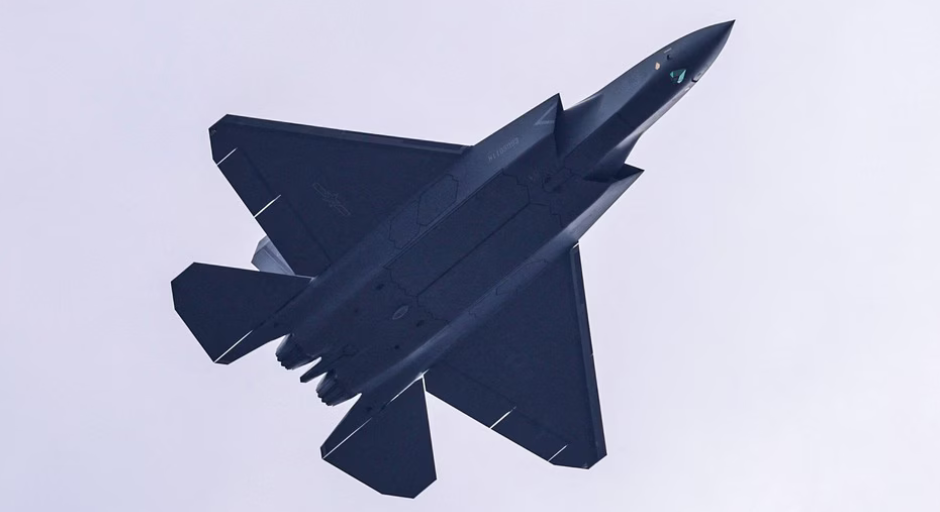
According to him, the presence of seven J-20s at Hotan and four at Damxung suggests these deployments are now routine rather than temporary military signalling. Joshi warned that the expanding stealth threat underscores the urgency for India to strengthen its counter-stealth sensors, integrated air defence network and long-range precision strike capabilities.
Why It Is A Concern For India
The deployment also highlights the widening technological gap in stealth aviation technology between the two Asian rivals. India currently has no operational stealth fighter. Its indigenous Advanced Medium Combat Aircraft (AMCA), the country's first fifth-generation fighter programme, remains under development and is expected to require at least another decade of testing, certification and induction before entering frontline squadron service.
China, meanwhile, has rapidly expanded J-20 production over the past few years. The fleet grew from about 50 aircraft in 2019 to around 200 by the end of 2022. By late 2025, Chinese manufacturers were reportedly producing nearly 120 J-20s annually.
Various defence assessments now estimate that the PLAAF operates between 300 and 500 J-20 fighters. Britain's Royal United Services Institute (RUSI) projects that China's J-20 fleet could touch 1,000 aircraft by 2030.
In contrast, India currently operates 36 Rafale fighters across two squadrons, besides more than 260 Su-30MKIs, Mirage 2000s and MiG-29s. New Delhi has already signed a contract to acquire 26 Rafale-M fighters for the Indian Navy, while discussions continue on procuring an additional 114 multirole fighters for the Indian Air Force.
Even so, analysts say China's rapidly expanding stealth fleet presents a long-term capability challenge that India will have to address through accelerated modernisation and force restructuring.
Retired Air Marshal Narmdeshwar Tiwari said China's ability to manufacture nearly 125 fighter aircraft annually reflects the maturity of its aerospace industry and its highly integrated defence manufacturing ecosystem.
He attributed the rapid expansion to decades of strategic planning, sustained investment and the mission-oriented approach adopted by Beijing after the First Gulf War underscored the decisive role of air power in modern warfare.
About the Author

Prasanta Paul served Deccan Herald as the Chief of Bureau, Calcutta for nearly two decades before switching to work with various TV channels such as Al-Jazeera, CNN, German TV and CBS. He also headed the Eastern Bureau of Parliamentarian magazine. Mr. Paul who accompanied former Prime Minister Atal Behari Vajpayee on his overseas tour of Singapore and other Asian countries, travelled extensively to Bhutan, Sikkim and Darjeeling besides other Northeastern states. He briefly headed the Mizoram Bureau of the United News of India (UNI).
Discussion
Reader Comments
No comments yet. Be the first to share your perspective.