BreakingInternational
Jantar Mantar Protest & The Great Harvard Divide
Affiliation doesn’t automatically authorise some to speak for Harvard University
15 Oct 2026, 11:03 am IST·5 min read
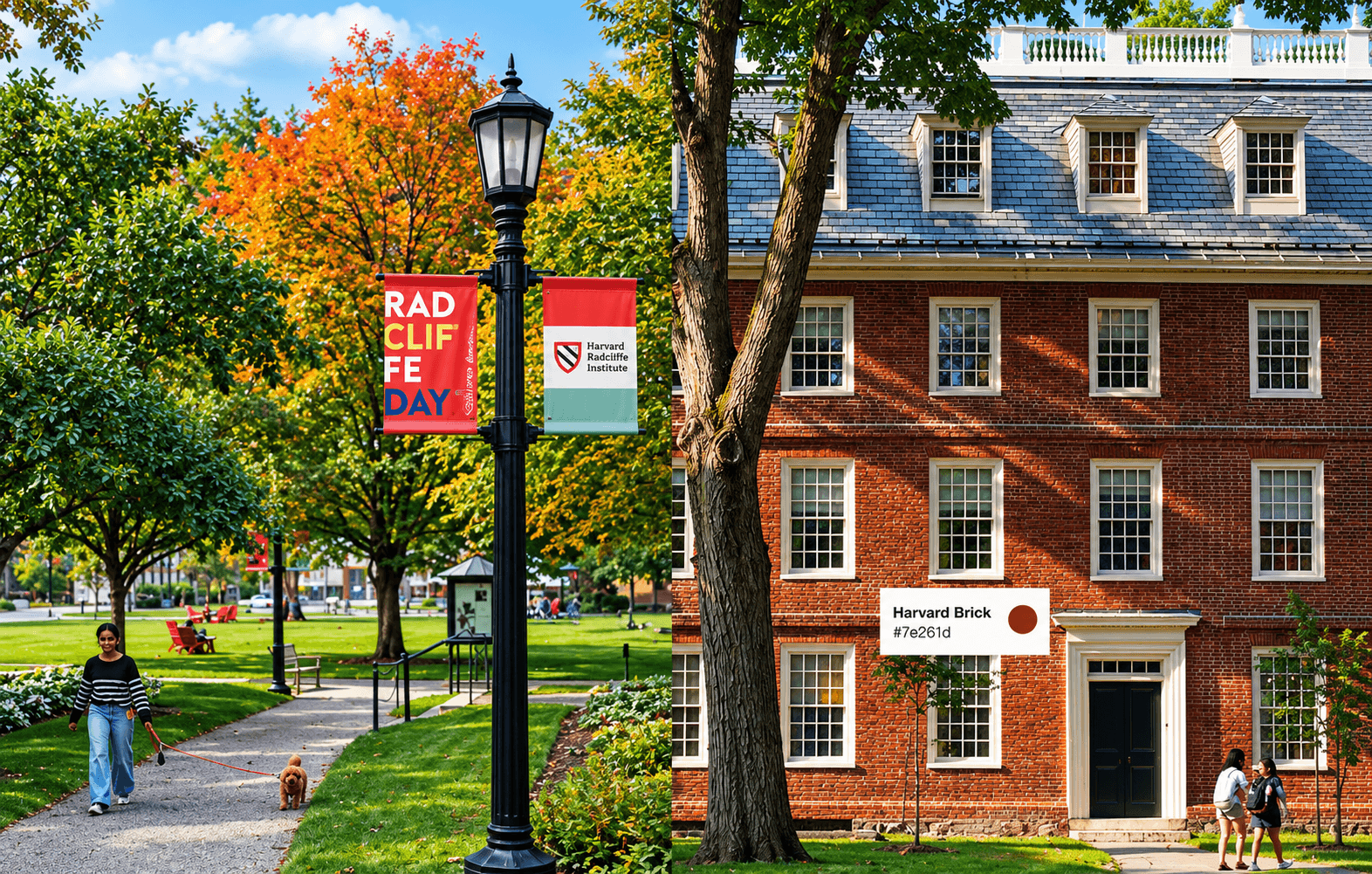
When a dispute over street protests in the Indian capital travelled into the corridors of one of the world's most prestigious academic communities, the result was more than an exchange of sharply worded statements.
The Harvard controversy has opened a revealing window into the tensions between individual conviction and institutional responsibility, democratic dissent and public order, and political advocacy and the authority conferred by an illustrious name.
At its heart lies a fundamental distinction: being affiliated with Harvard University does not automatically confer the right to speak on behalf of Harvard, or of its recognised alumni association in India.
The Harvard Club of India has made that distinction explicit. Rajat Sethi, a member of its Executive Committee, clarified that the Club's charter and mandate do not permit it to issue political statements in its own name or on behalf of Harvard University.
Secondly, the Club's bylaws, as explained by Sethi, do not authorise political positions either in favour of or against a constitutionally established government. Statements by individual alumni, he emphasised, must be understood as their personal views rather than institutional pronouncements.
The significance of this intervention extends beyond the immediate controversy.
Two statements, two interpretations
On October 12, a group of Harvard-affiliated individuals issued a statement condemning what they described as police brutality, unlawful detention and violations of the constitutional rights of peaceful protesters during the October 10 demonstrations in Delhi.
The protests were directed against Chief Election Commissioner Gyanesh Kumar, amid allegations of irregularities surrounding the revision of electoral rolls. The Election Commission and the BJP have rejected accusations that the exercise is politically motivated.
The signatories expressed particular concern over the reported treatment of a lawyer who happens to be a Harvard Kennedy School graduate. Their intervention framed the issue principally as one of civil liberties, police accountability and the protection of peaceful dissent.
Another group, also from Harvard, rejected the allegation saying that it was an attempt to undermine the importance and significance of constitutional bodies and democratically elected government.
The Harvard Club of India's subsequent response approached the controversy from a different institutional perspective. It warned against invoking Harvard's name to lend authority to a political position without appropriate authorisation.
It also expressed concern over rhetoric that, in its view, risked undermining public confidence in constitutional institutions, including the Election Commission, the Supreme Court and Parliament.
The first statement was a protest against alleged violations of civil liberties; the Club's response challenged the attribution of institutional authority and questioned the wider political rhetoric.
Does either of it conclusively settle the factual or constitutional questions surrounding the police action?
That is precisely why the distinction matters.
MEA Statement
Let us first recall the reaction of the Ministry of External Affairs (MEA) towards the statement of the United Nation’s Human Rights body regarding the police action on the protesters at Jantar Mantar.
"We also note that the OHCHR has an approach of extreme selectivity when it comes to public positions," the MEA said in its response.
"Violent responses to protests in our neighbourhood have gone uncommented, as indeed have law enforcement actions in its own vicinity. Such double standards only erode the credibility of its standing and contribute to the loss of faith in multilateralism," the MEA added while rejecting the contention of the UN Human Rights body.

Harvard's reputation carries considerable intellectual and social weight. Its alumni include academics, lawyers, policymakers, business leaders and public figures.
A statement bearing the names of Harvard-affiliated individuals can therefore command attention far beyond that attracted by an ordinary political intervention.
But prestige and representation are not synonymous.
An alumnus speaks with the authority of personal experience, professional standing and individual conviction. An institution speaks through its authorised procedures and designated representatives.
Confusing the two can create a misleading impression that a private political opinion enjoys an organisation's collective endorsement.
The Club's clarification is therefore defensible as a question of institutional governance. Its bylaws, as described by its Executive Committee member, establish a boundary between personal expression and collective representation.
The constitutional question beneath the controversy
Articles 19(1)(a) and 19(1)(b) of the Constitution protect freedom of expression and peaceful assembly without arms. These freedoms are subject to constitutionally permissible restrictions, including those imposed in the interests of public order.
The Supreme Court has emphasised proportionality in considering restrictions, while established judgments have rejected the proposition that regulation can become an arbitrary blanket prohibition on peaceful assembly.
But at the same time, the authorities cannot be expected to ignore credible threats to public safety. The right to protest does not confer an unrestricted right to assemble anywhere, regardless of security requirements or the rights of other citizens.
Allegations of police excesses warrant examination; claims of a threat to public order require credible justification. Neither accusation nor official assertion should substitute for independent scrutiny.
Similarly, criticism of the Election Commission must be assessed on its evidence, while the institution's constitutional role deserves protection from unsubstantiated attacks.
Institutional accountability and institutional legitimacy are not competing principles. A functioning democracy requires both.
Last but not the least, in West Bengal, during the regime of the previous Trinamool Congress-run government, North Bengal remained cut off through rail and road for nearly 48 hours due to a rampaging mob three years ago.
The April 2025 Murshidabad protests and subsequent violence which erupted over opposition to the proposed Waqf (Amendment) Act, 2025 rapidly escalated from traffic blockades into severe communal clashes, property destruction and brutal fatalities.
On both the occasion, police failed to act to restore the law and order following strict orders from the powers that be.
Where was the batch of these so-called conscience-stricken alumni of the Harvard University during that prolonged period violence that completely paralysed the North Bengal?
This batch, it is obvious, must be suffering from an 'approach of extreme selectivity and double standard'. Merely exploiting the Harvard brand won’t suffice, the signatories of the batch need to understand.
Hence, the danger lies in reducing a complicated constitutional dispute to a contest between competing lists of eminent names. Academic distinction does not automatically establish the truth of a political allegation; individual dissent must not be mistaken for institutional representation.
About the Author
Prasanta Paul served Deccan Herald as the Chief of Bureau, Calcutta for nearly two decades before switching to work with various TV channels such as Al-Jazeera, CNN, German TV and CBS. He also headed the Eastern Bureau of Parliamentarian magazine. Mr. Paul who accompanied former Prime Minister Atal Behari Vajpayee on his overseas tour of Singapore and other Asian countries, travelled extensively to Bhutan, Sikkim and Darjeeling besides other Northeastern states. He briefly headed the Mizoram Bureau of the United News of India (UNI).
Discussion
Reader Comments
No comments yet. Be the first to share your perspective.