BreakingNational
Could the Bay of Bengal Hold a New Oil Bonanza for Bengal?
The sedimentary formations during exploration trigger hope
21 Sep 2026, 09:46 am IST·3 min read
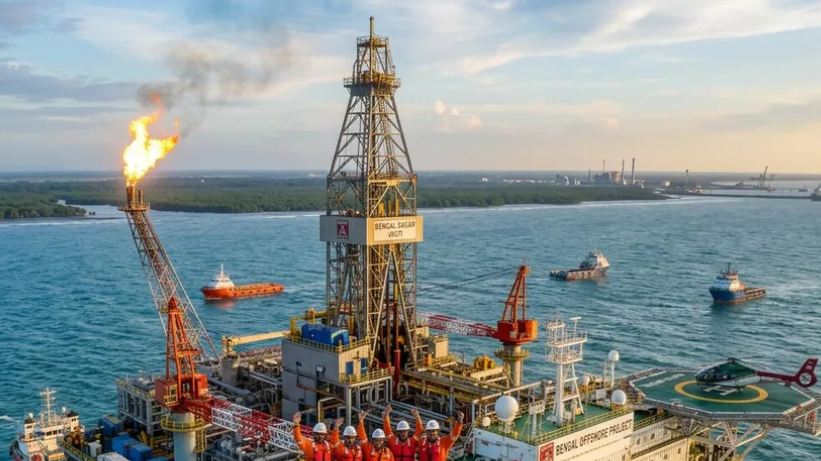
Could the seabed off West Bengal and the adjoining Bay of Bengal emerge as a new frontier for India’s oil and gas exploration?
The hope of the find has been considerably raised by the state Rajya Sabha MP Samik Bhattacharya who indicated that the answer could be yes, pointing to ongoing exploration in the Bengal Offshore region and the adjoining Mahanadi offshore basin.
Speaking during a visit to the Baigachi oilfield in Ashoknagar in North 24 Parganas district where commercial oil production has begun after a prolonged wait, Bhattacharya said on Sunday that exploration has been under way in the geological and hydrocarbon-bearing zones along the Indian and Bangladeshi coasts.
Initial drilling in the Mahanadi offshore region had produced encouraging results, with testing now under way, he added.
“As residents of West Bengal, we naturally have hope,” he said, expressing the expectation that future oil discoveries in the Bay of Bengal could be substantially larger than those currently being produced at Ashoknagar.
His remarks come against the backdrop of an expanding national search for hydrocarbons beneath India’s eastern offshore waters. A major seismic-survey programme covering the Bengal-Purnea, Mahanadi, Krishna-Godavari and Andaman offshore basins has been planned to map the geological structures beneath the seabed.
The scale itself is striking: the Bengal-Purnea and Mahanadi surveys together involve around 45,000 line-km, while the Andaman programme covers roughly 43,000 line-km.
The objective is straightforward but strategically significant—to identify oil and natural-gas systems hidden beneath the vast sedimentary formations of the Bay of Bengal.
The Mahanadi basin has already produced encouraging evidence. The latest government data have recorded two gas discoveries by ONGC in the offshore region, while in July 2026 the first appraisal well of a planned deepwater drilling programme was spudded there.
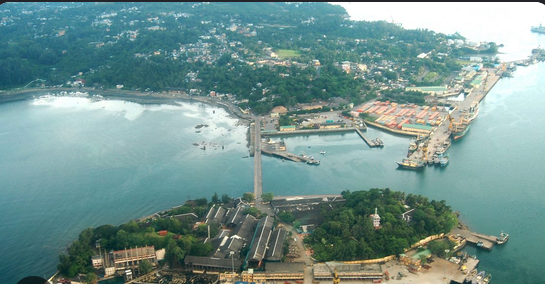
Andaman & Nicobar Islands
Andaman & Nicobar Islands Basin
The larger story, however, extends much farther south-east—to the Andaman and Nicobar archipelago, where India has been quietly building another major frontier for offshore energy exploration.
The Andaman-Nicobar basin has been estimated to contain 371 million tonnes of oil equivalent (MMTOE) hydrocarbon resources.
By 2024, India had completed a 2D broadband seismic survey covering about 80,000 line-km of its Exclusive Economic Zone, (EEZ) including the Andaman offshore area.
Oil India Ltd (OIL) had earlier acquired another 22,555 line-km of seismic data in the Deep Andaman Offshore Survey.
More significantly, ultra-deepwater drilling in the Andaman region has produced traces of light crude and condensate and other geological indications pointing to an active petroleum system.
The government, however, has stressed that commercial reserves are yet to be established.
That distinction is crucial. Exploration does not automatically translate into commercially recoverable oil. But it does indicate that India’s eastern seaboard may possess a far larger hydrocarbon story than previously understood.
For West Bengal, therefore, Ashoknagar may prove to be more than an isolated oilfield. If the geological promise of the Bengal Offshore and Mahanadi basins is eventually confirmed through appraisal and commercial production, the state could find itself sitting on the edge of a much wider energy frontier.
And that could make the Bay of Bengal—not merely a maritime neighbourhood, but a potentially important component of India’s future energy-security architecture.
About the Author

Prasanta Paul served Deccan Herald as the Chief of Bureau, Calcutta for nearly two decades before switching to work with various TV channels such as Al-Jazeera, CNN, German TV and CBS. He also headed the Eastern Bureau of Parliamentarian magazine. Mr. Paul who accompanied former Prime Minister Atal Behari Vajpayee on his overseas tour of Singapore and other Asian countries, travelled extensively to Bhutan, Sikkim and Darjeeling besides other Northeastern states. He briefly headed the Mizoram Bureau of the United News of India (UNI).
Discussion
Reader Comments
No comments yet. Be the first to share your perspective.
Similar Stories
National
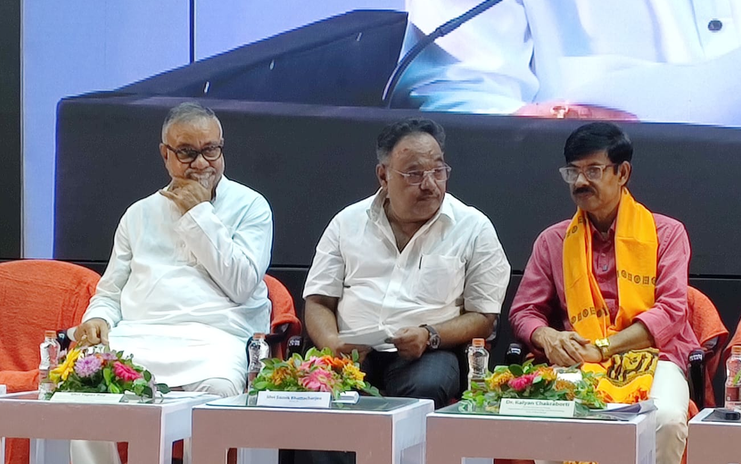
Diamond May Soon Start Shining in Bengal, Samik Bhattacharya
“We’ve to reverse-engineer the earlier flight of capital from Bengal,” said Samik Bhattacharya “from diamonds to chips, capital has to return”.
Prasanta Paul·19 Sep 2026

National
Fair Is Foul, Foul Is Fair
Central Drugs Control issues a public-health alert against two unauthorised Pakistan-made cosmetic products—Goree Beauty & Chandni Whitening Cream.
Prasanta Paul·17 Sep 2026

National
Palace-on-Wheels: Bengal Explores Luxury Heritage Rail Circuit
The proposed luxury train could link major tourism and pilgrimage destinations across West Bengal, Bihar, Odisha and Assam among others.
Prasanta Paul·16 Sep 2026
