BreakingNational
EC Controversy: Distinction Between Dissent, Deliberation and Decision.
Investigative news about the Election Commission must be accountable too
25 Sep 2026, 11:25 am IST·5 min read
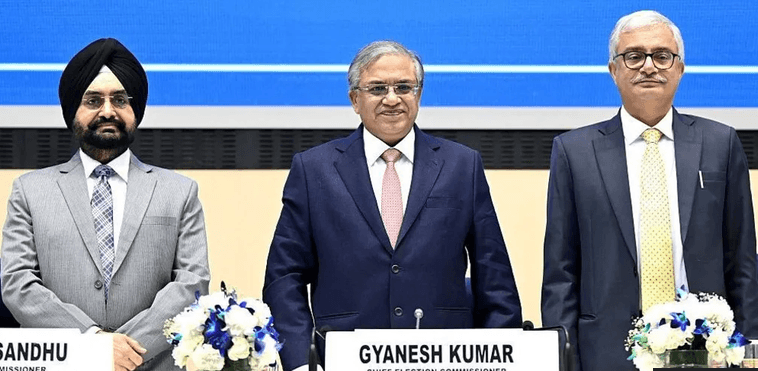
A political furore has erupted in the wake of two of the three Election Commissioners reportedly objected to how some of its most consequential decisions were being taken.
It happened in the past as well - T N Seshan v Union of India case that had been fought in the Supreme Court. No wonder, that didn’t diminish the myth called T N Seshan.
On September 23, The Indian Express published an investigative news claiming that Election Commissioners Sukhbir Singh Sandhu and Vivek Joshi had, on record, raised objections at least 14 times over the past 10 months on issues ranging from voter additions and deletions to Form 6 and the centralisation of electoral-roll software.
And the newspaper described it as an “unprecedented rupture” within the constitutional body.
The political storm was immediate, with Opposition leaders targeting Chief Election Commissioner Gyanesh Kumar.
But one simple, verified fact deserves to be placed alongside the controversy. The BJP won 282 Lok Sabha seats in 2014, 303 in 2019 and 240 in 2024.
And this was despite Prime Minister Narendra Modi's much-publicised “Abki baar, 400 paar” campaign. Gyanesh Kumar was the Chief Election Commissioner by then.
The numbers, by themselves, establish no causal relationship—but they are a useful reminder that electoral outcomes cannot automatically be read as evidence of institutional manipulation, much though Mr Rahul Gandhi or Ms Mamata Banerjee might cry hoarse about it.
And the story does not end there. It barely begins.
The ECI responded that in a three-member constitutional institution, differing views, written observations, technical suggestions and questions during deliberations are normal. It maintained that its final decisions, including those relating to the Special Intensive Revision (SIR), were taken unanimously by the Full Bench of the Commission.
That distinction matters: a disagreement during deliberation is not necessarily a disagreement over the final institutional decision.
OpIndia Counter-argument
Then came the counter-argument from OpIndia, which challenged several central inferences in the Indian Express investigation. Take the alleged centralisation of electoral-roll powers. Indian Express raised concerns that the database was being centralised in Delhi, potentially bypassing statutory field-level officers.
The counter-report cited Electoral Registration Officers (EROs) who said they continued to work on ECINet and retain their statutory authority over inclusion and deletion.
The distinction is elementary but important:
Centralised software does not automatically mean centralised statutory power.
A technology platform can be centrally administered without the underlying legal authority necessarily being transferred to Delhi.
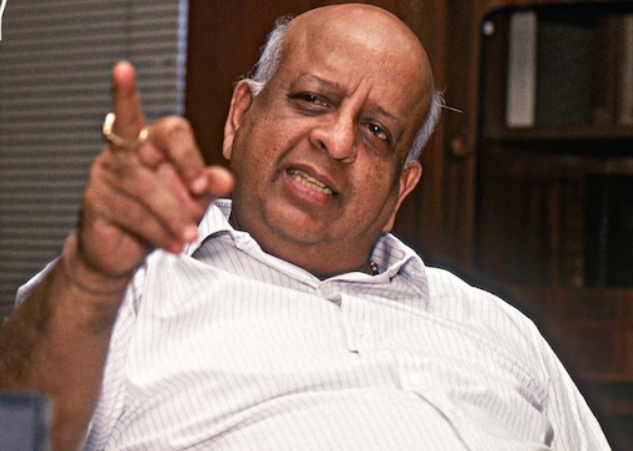
T N Seshan
The second issue is Form 6. The Indian Express reported an internal objection describing a particular change as “unauthorised and illegal”. That is undeniably significant and warrants explanation.
But an Election Commissioner's internal legal objection and a judicial determination that an action is unlawful are not the same thing.
The third question is the most consequential: do 14 objections establish that the Election Commission itself has collapsed?
The objections cannot—and should not—be brushed aside. They concern the heart of electoral administration. But the existence of objections, by itself, does not establish institutional collapse.
The more meaningful questions are: Why were the objections raised? How were they dealt with? What was finally decided? And by whom?
That distinction becomes particularly important in West Bengal.
Consider one striking electoral fact. In the 2024 Lok Sabha election, Trinamool Congress leader Abhishek Banerjee won Diamond Harbour by 7,10,930 votes, polling 10,48,230 votes against BJP candidate Abhijit Das's 3,37,300.
And lo, within two years, the margin vanishes in thin air, courtesy the strict BSF-controlled, EC-monitored 2026 Assembly polls in West Bengal.
The last 49 year’s electoral history of Bengal has long been scarred by rigging, intimidation and political violence besides killings. And rigging had particularly been raised to the level of an institution.
Against that background, the 2026 Assembly election—held on April 23 and 29—assumed particular significance in the public debate over electoral administration. No violence and no spilling of blood.
SIR in Bengal
Now comes SIR.
In West Bengal, the ECI has reported 38.31 lakh appeals: 22.21 lakh from voters seeking inclusion or restoration and 16.10 lakh seeking deletion of names. Thus, simply citing “38 lakh appeals” does not tell the entire story.
One must ask who filed them, why they were filed and what the appellate tribunals have ultimately decided and why.
The same caution applies nationally. More than 13 crore names have reportedly been removed from draft electoral rolls during the SIR exercise across 30 States and Union Territories.
Even the Delhi Chief Minister Mrs Rekha Gupta’s parents’ names went missing in the SIR exercise, thanks to logical indiscrepancy tag.
But removal from a draft roll is not synonymous with final loss of voting rights. Dead, shifted, duplicate and otherwise ineligible entries are legitimate subjects of electoral-roll revision; equally, a genuine voter wrongly excluded must have an effective route to restoration.
There is also a historical lesson.
Former CEC T N Seshan transformed the public image of the Election Commission and fought to establish the supremacy of the Chief Election Commissioner over his two fellow Commissioners.
The Supreme Court, however, held that a multi-member Commission was constitutionally valid; the CEC was the Chairman, with business transacted through unanimity or majority.
That history makes the present controversy more, not less, important.
The Indian Express has placed serious internal objections before the readers. The ECI says such differences are part of institutional deliberation and that final decisions were unanimous. OpIndia disputes some of the broader conclusions drawn from those objections.
All three strands deserve scrutiny.
For democracy, the real test is not whether questions are asked inside the Election Commission. Questions must be allowed.
The test is whether those questions receive credible answers, whether lawful procedures are followed, whether genuine voters are protected—and whether the public can distinguish an internal objection from a final institutional decision.
The Election Commission must remain accountable.
But journalism about the Election Commission must be accountable too.
In a democracy, neither institution gets the privilege of being above questions.
About the Author
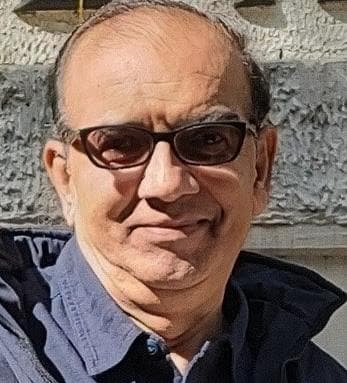
Prasanta Paul served Deccan Herald as the Chief of Bureau, Calcutta for nearly two decades before switching to work with various TV channels such as Al-Jazeera, CNN, German TV and CBS. He also headed the Eastern Bureau of Parliamentarian magazine. Mr. Paul who accompanied former Prime Minister Atal Behari Vajpayee on his overseas tour of Singapore and other Asian countries, travelled extensively to Bhutan, Sikkim and Darjeeling besides other Northeastern states. He briefly headed the Mizoram Bureau of the United News of India (UNI).
Discussion
Reader Comments
No comments yet. Be the first to share your perspective.