BreakingNational
From a Polytechnic Lab to Pokhran: India’s Drone War Takes Shape
Drones reaching from trial to scalable & battle-ready capability
29 Sep 2026, 09:48 am IST·3 min read
India’s emerging drone capability is beginning to acquire an interesting dual character.
The ingenuity of a young polytechnic student at one end, and a reported 1,000-km unmanned strike platform at the other.
In Himachal Pradesh, a 20-year-old Government Polytechnic student Sarvesh Sharma has secured a Rs 3.5-crore Ministry of Defence grant to develop an advanced surveillance drone for the Indian Army.
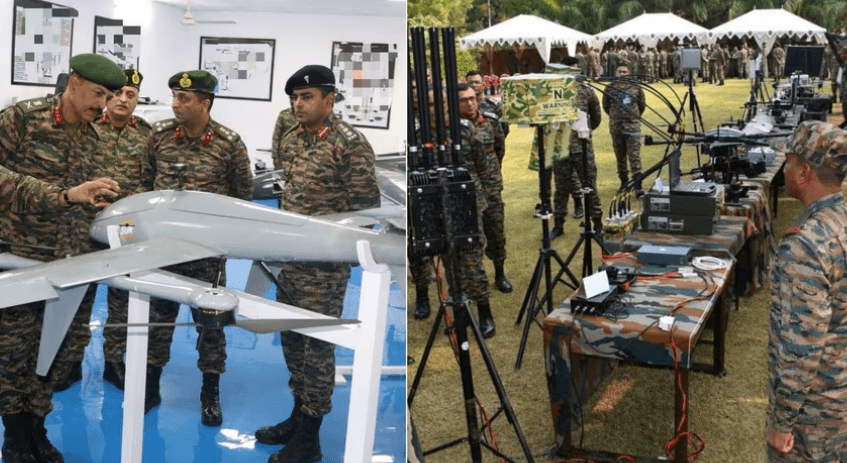
In Rajasthan, meanwhile, Noida-based defence technology company IG Defence has successfully conducted a flight trial of its KAL long-range one-way attack drone at the Pokhran Field Firing Range.
Taken together, the two developments point to a widening Indian effort to build indigenous unmanned systems for both battlefield surveillance and long-range precision missions.
Tale of Sarvesh
Sarvesh’s journey is particularly striking. His team participated in the national-level Open Cardboard Drone Competition, organised by IIT Jodhpur and the Army’s Konark Corps, where around 50 teams from educational institutions across India competed.
His team finished fourth and won Rs 10 lakh. Discussions during the competition about the difficulties faced by soldiers in border surveillance prompted him to pursue a more specialised military drone.
Sarvesh subsequently built a prototype at a cost of only Rs 87,000 and applied under the Defence Innovation Organisation and Innovations for Defence Excellence (iDEX) framework. The proposal promptly received the Defence Ministry’s approval.
The resulting Rudra Edge T-1 (Spectra) is intended for Army surveillance, particularly in difficult border and high-altitude environments.
Sarvesh’s proposed design seeks to reduce the possibility of detection by enemy radar and resist electronic jamming—capabilities that will have to be established through further development and testing rather than treated as already proven.
The scale of the transition is remarkable: from a student prototype costing less than a lakh to a formally supported defence project worth Rs 3.5 crore.
Sarvesh, whose father is a daily-wage labourer, is currently in the fifth semester at Government Polytechnic at Hamirpur. His project will receive laboratory and incubation support at IIT Roorkee and has a 20-month development timeline.
The KAL Breakthrough
Then comes KAL.
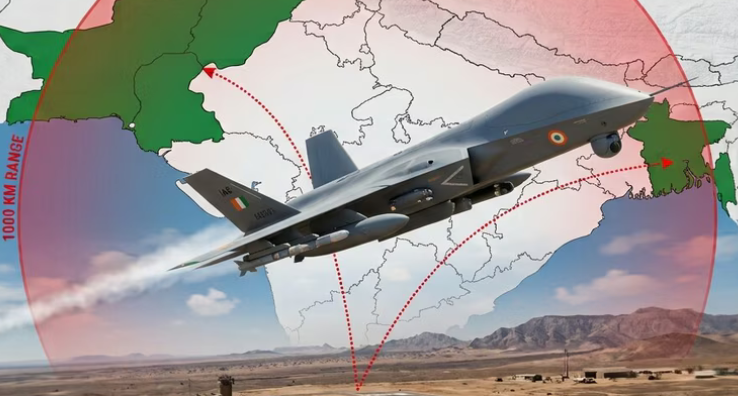
The KAL drone, developed by IG Defence, has completed a Pokhran trial from a vehicle-mounted launch platform. The company describes it as a one-way attack drone designed for long-range precision missions.
Its reported specifications include a range of up to 1,000 km, seven to eight hours of endurance, a payload of up to 50 kg and an operating altitude of up to 5,000 metres. The Pokhran trial validated the integration of its airframe, propulsion, avionics, navigation and mission systems, particularly radar evasive character.
However, the company did not disclose the actual distance or duration flown during that particular test.
The larger significance is unmistakable.
The ongoing war between Russia and Ukraine and elsewhere (US & Iran) has demonstrated how unmanned systems can alter the economics and geography of warfare. A relatively inexpensive unmanned platform can undertake missions that might otherwise expose pilots, helicopters or expensive combat aircraft to hostile air defences.
For India, the lesson is particularly relevant across its difficult borders. Surveillance drones must increasingly operate in environments where concealment, electronic warfare resistance, endurance and altitude matter as much as cameras and propulsion.
From Sarvesh’s Rs 87,000 prototype to KAL’s reported 1,000-km reach, India’s drone story is therefore no longer merely about buying unmanned aircraft.
It is about building an indigenous ecosystem in which students, laboratories, start-ups, the armed forces and defence institutions increasingly meet on the same battlefield of innovation.
The real test will now be whether these promising designs can move successfully from prototype and trial to reliable, scalable and battle-ready capability.
About the Author
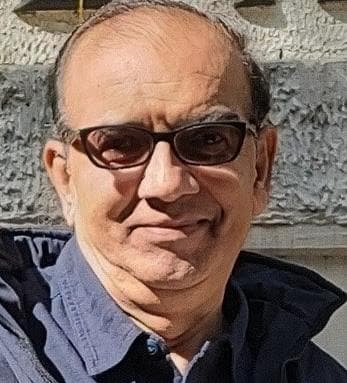
Prasanta Paul served Deccan Herald as the Chief of Bureau, Calcutta for nearly two decades before switching to work with various TV channels such as Al-Jazeera, CNN, German TV and CBS. He also headed the Eastern Bureau of Parliamentarian magazine. Mr. Paul who accompanied former Prime Minister Atal Behari Vajpayee on his overseas tour of Singapore and other Asian countries, travelled extensively to Bhutan, Sikkim and Darjeeling besides other Northeastern states. He briefly headed the Mizoram Bureau of the United News of India (UNI).
Discussion
Reader Comments
No comments yet. Be the first to share your perspective.