BreakingNational
From Lucknow’s ‘Mini Jamtara’ to Kolkata’s Cyber Hub: Cops Probe Possible Chinese Mafia Links
Fraudsters siphoned off more than ₹675 crore in Bengal alone
19 Aug 2026, 11:14 am IST·4 min read
If police led by a senior IPS officer in Lucknow have recently unravelled a flourishing cybercrime racket whose tentacles allegedly stretched across several countries, investigators in Kolkata have stumbled upon clues leading them disturbingly close to the city’s principal IT hub – Sector V.
In Lucknow, the fraudsters had apparently chosen the most unlikely setting for a criminal enterprise: a swanky office in the heart of the city of Nawabs.
Operating from the Summit Building in Gomti Nagar, the fake international call centre was doing brisk business in daylight, cheating citizens in India and abroad of enormous sums. Investigators estimate that the racket, described as a “mini Jamtara gang”, could be generating close to ₹35–40 lakh every day.
In the Uttar Pradesh Crime Branch raid in July, as many as 119 employees and managers of the fake call centre were arrested, while police seized 100 laptops, 178 mobile phones and a substantial quantity of other digital equipment.
The employees allegedly impersonated bank representatives, technology-company executives and government officials to trap victims.
Suspected Chinese Cybercrime Syndicate
But the investigation has thrown up an even more disturbing possibility.
Police and intelligence officials are examining whether at least some such Indian cybercrime networks may have links with Chinese cybercriminal syndicates. Their concern stems from cases in which money generated through cyber fraud has allegedly travelled through a maze of accounts before ultimately reaching entities suspected to have connections with Chinese criminal networks.
Only on Tuesday, Gujarat Police arrested a youth, Rafiqul Alam, from Barpeta in Assam who allegedly worked as an agent for Chinese cybercrime syndicates and helped transfer more than ₹1,000 crore in suspected proceeds of fraud to them.
The alleged modus operandi is apparently simple, yet complex. Indian agents retain a share of the criminal proceeds, while the money is then shifted through accounts scattered across the country, ultimately reaching companies or entities allegedly linked to the overseas syndicate.
As one state police officer put it: “The agents operating in India keep a portion of the cyber loot. The rest moves through accounts spread across the country and eventually reaches an organisation connected with the Chinese syndicate.”
That is precisely why the figures emerging from the Kolkata-Bidhannagar cybercrime investigation have acquired such significance.
Fake Call Centres in Sector V, Salt Lake
Salt Lake’s Sector V—one of eastern India’s biggest IT hubs—has repeatedly figured in allegations involving illegal call centres targeting victims in wealthy countries, particularly the US, Britain, Germany, Europe and Australia.
Recentlhy, a detail analysis of cybercrime complaints recorded on the National Cyber Crime Reporting Portal (NCCRP) has revealed the staggering scale of the domestic money trail.
According to information available with state police investigators, from the beginning of this year until August 15, cyber fraudsters siphoned off more than ₹675 crore through a network that initially received the money in over 1.72 lakh bank accounts located in West Bengal.
These are described by investigators as first-layer beneficiary accounts, more commonly known in cybercrime terminology as mule accounts.
Such accounts are often rented or controlled by organised fraud networks in return for substantial payments. The moment a victim transfers money, the first recipient account becomes the crucial opening point of the laundering chain.
From there, the funds can be fragmented, transferred repeatedly and pushed through multiple layers, making the ultimate beneficiary increasingly difficult to identify.
Investigators say more than 1.72 lakh first-layer accounts identified in this exercise are located in Bengal!
Maze of SIM Card Network
Another clue has added to their concern.
Police have identified 414 SIM cards allegedly used in cyber fraud all of which were shockingly purchased from within the Bidhannagar area. One or more organised cybercrime syndicates, sleuths believe, are operating systematically in and around the region.
The state’s Cyber Crime Wing, recently renamed S4C after the new government assumed office, arrived at the ₹675-crore figure after analysing cyber-fraud complaints registered during the last eight-and-a-half months.
Yet, unlike the stereotypical image of international call-centre fraud, the victims in this particular money trail are largely Indians. The fraudsters are allegedly exploiting India’s own banking system, using a vast network of accounts to receive and rapidly move criminal proceeds.
The infamous cybercrime networks associated with the Jamtara Model, Jharkhand have repeatedly surfaced in investigations into the nationwide “digital arrest” racket. The model’s stupendous resilience has prevented cops from dismantling the ecosystem completely.
And that may be the real lesson from Lucknow and Kolkata.
The Lucknow raid may have demolished one “mini Jamtara”. But the Kolkata investigation suggests that the larger ecosystem is far from broken.
The most troubling question now confronting investigators is whether these apparently local fraud factories are merely independent criminal enterprises—or whether some of them are the Indian nodes of a much bigger international network, with the money trail eventually leading to cybercrime syndicates operating far beyond the country’s borders.
About the Author
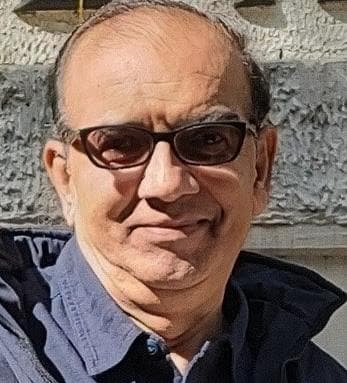
Prasanta Paul served Deccan Herald as the Chief of Bureau, Calcutta for nearly two decades before switching to work with various TV channels such as Al-Jazeera, CNN, German TV and CBS. He also headed the Eastern Bureau of Parliamentarian magazine. Mr. Paul who accompanied former Prime Minister Atal Behari Vajpayee on his overseas tour of Singapore and other Asian countries, travelled extensively to Bhutan, Sikkim and Darjeeling besides other Northeastern states. He briefly headed the Mizoram Bureau of the United News of India (UNI).
Discussion
Reader Comments
No comments yet. Be the first to share your perspective.