BreakingBusiness
"I Would Have Fallen at Ratan Tata's Feet and Sought His Forgiveness", Tapas Roy
Bengal Industries Minister Signals a New Investment Mindset
22 Jul 2026, 01:13 pm IST·4 min read
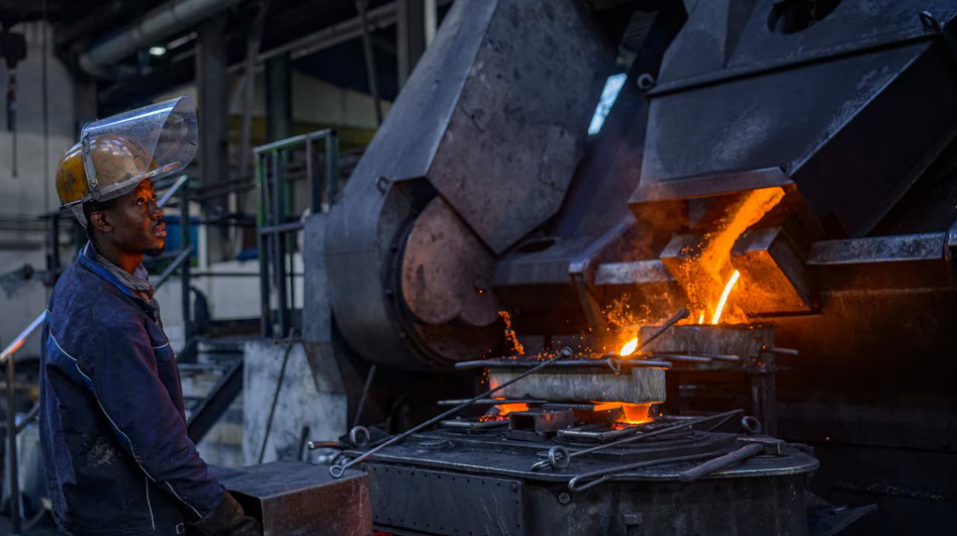
In politics, governments rarely apologise. In business, however, an apology can sometimes be worth billions.
West Bengal's new administration appears to have recognised that rebuilding investor confidence may require more than policy incentives—it may first require acknowledging the mistakes that drove industry away.
Nothing captures that changing mindset more vividly than Bengal Industries Minister Tapas Roy's extraordinary declaration in the State Assembly: "I would have fallen at the feet of Ratan Tata and sought his forgiveness."
The new BJP government in the state appears determined to overturn the state's long-standing reputation as an inhospitable destination for big-ticket investments. That change, industry leaders say, is becoming evident not merely in policy announcements but in the language and attitude of those steering the state's industrial revival.
"This is exactly how an industry minister of an investment-starved state should speak if he wants to attract fresh capital," a leading industrialist told Eastern News Network (ENN).
"The message is that the government is prepared to leave old political baggage behind and do whatever it takes to rebuild investor confidence."
Asked what prompted such an assessment, the industrialist pointed to the remarks made by Mr Tapas Roy on the floor of the Assembly on Tuesday.
"I would have fallen at the feet of Ratan Tata, had he been alive, and sought his forgiveness," Roy said, referring to the controversial exit of the Tata Nano project from Singur during Trinamool Congress chairperson Mamata Banerjee's anti-land acquisition movement.
The minister described Tata Motors' departure from Bengal as "a grave mistake" and made it clear that he would have personally apologised to the late industrialist in an attempt to bring the group back to the state.
"It is painful that the Tatas left Bengal. I have said that if Ratan Tata were alive today, I would have held his feet and requested him to return. That is not an act of humiliation. I would gladly do so for Bengal's new generation and for the future of the state's industry," Roy said.
For many in industry, the significance of the statement lay less in its emotional appeal than in what it revealed about the government's priorities.
"An industries minister publicly acknowledging a past mistake and expressing such humility on the Assembly floor is unprecedented in Bengal's political discourse," the industrialist said, requesting anonymity. "It reflects the urgency with which the new government wants to restore investor confidence."
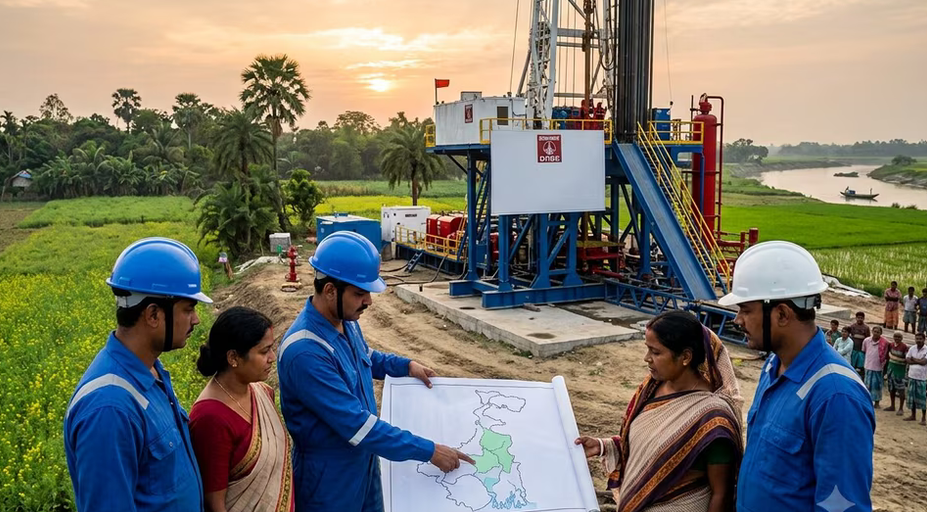
ONGC Project Clearance
Roy claimed that nearly 150 industrialists have already met him since the new government assumed office, many of them approaching the administration voluntarily to explore investment opportunities.
Oil & Natural Gas Commission (ONGC), he said, has been granted permission to start oil exploration activities in around 2900 sq feet area in four districts of the state -- Nadia, North 24 Parganas, East Burdwan and Murshidabad.
“ A revenue of Rs 104 crore is expected to fill the state exchequer from the Ashoknagar project in Habra once ONGC begins the exploration of oil there,” he added.
According to the minister, several business leaders privately conveyed that they would have been compelled to shift their investments elsewhere had the previous dispensation remained in power. Instead, they now see an opportunity to participate in what he described as Bengal's next phase of industrial growth. He added that the enthusiasm extends well beyond those who have already held discussions with the government.
The outreach, Roy indicated, will not be confined to the Tata Group. The state plans to engage with several of India's leading business houses, including the Adani Group, the Birla Group and other major industrial conglomerates, in a concerted effort to bring fresh manufacturing investments to West Bengal.
The minister said the recent foundation-laying ceremony of the Rs 600 crore Lux Cozi manufacturing facility marked the beginning of a renewed industrial expansion in the state and the momentum would gather pace in the coming months.
In another indication of the government's push to revive manufacturing, Roy announced that a new industrial plant is likely to be inaugurated at Durgapur as early as next month. Speaking in the Assembly, he said the government was according high priority to the industrial development of Durgapur and indicated that Chief Minister Suvendu Adhikari is expected to inaugurate the facility around the middle of August.
While Roy stopped short of identifying the project, the announcement has fuelled expectations of yet another addition to Bengal's emerging investment pipeline.
Whether this new optimism translates into sustained investment will ultimately depend on the speed with which projects move from announcements to execution. Yet, after years when industrialists associated Bengal more with missed opportunities than manufacturing ambitions, the tone has unmistakably changed.
And in investment, perception is often the first sign that the climate itself is beginning to shift.
About the Author
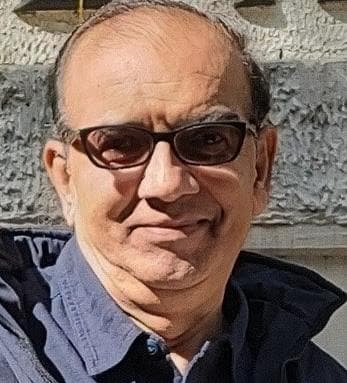
Prasanta Paul served Deccan Herald as the Chief of Bureau, Calcutta for nearly two decades before switching to work with various TV channels such as Al-Jazeera, CNN, German TV and CBS. He also headed the Eastern Bureau of Parliamentarian magazine. Mr. Paul who accompanied former Prime Minister Atal Behari Vajpayee on his overseas tour of Singapore and other Asian countries, travelled extensively to Bhutan, Sikkim and Darjeeling besides other Northeastern states. He briefly headed the Mizoram Bureau of the United News of India (UNI).
Discussion
Reader Comments
No comments yet. Be the first to share your perspective.