BreakingInternational
India’s CEC Gyanesh Kumar Catapults into Trump’s Political Garden
India’s electoral system was held up as a model for America
18 Aug 2026, 11:20 am IST·4 min read
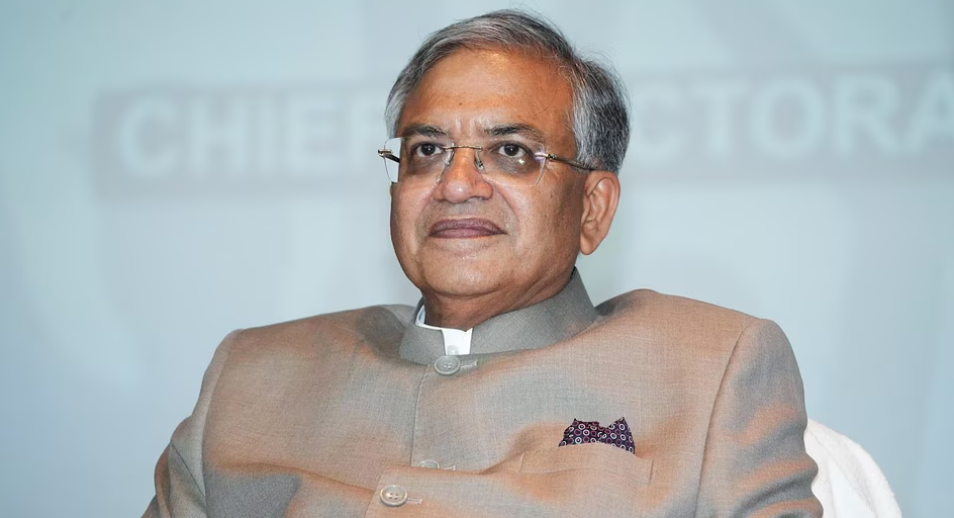
India’s Chief Election Commissioner Gyanesh Kumar has suddenly found himself in an unlikely corner of world politics — Donald Trump’s political garden.
The man presiding over the world’s largest electoral machinery has now been invoked by the US President himself as an example of how elections should be conducted.
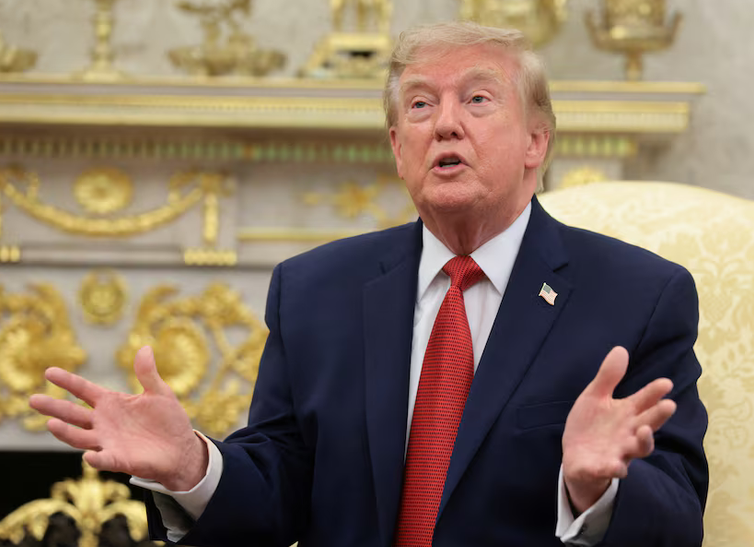
In a striking intervention in America’s fiercely contested debate over voter identification, Trump cited his recent interaction with Kumar and held up India’s electoral system as a model for the United States.
The endorsement could hardly have come from a more globally consequential political figure.
In a post on his social media platform Truth Social, Trump renewed his demand for compulsory photo identification for American voters and urged Congress to pass the proposed SAVE America Act.
Recalling an interaction with Gyanesh Kumar earlier this month, Trump said the Indian CEC had questioned how the United States could conduct elections without requiring voters to produce valid photo identification.
Trump then deployed India’s staggering electoral numbers to press home his argument.
India’s last general election, he pointed out, saw around 646 million voters participate. Less than one per cent voted by mail, he said, while every voter was required to possess a valid photo identity document.
Trump’s Argument
For Trump, the comparison was unmistakable: if the world’s largest democracy could administer elections on such a gigantic scale with rigorous identification procedures, why could the United States not do the same?
It is this direct reference to Kumar that has given the development an unusual dimension. Trump was not merely praising India in the abstract. He specifically brought the Indian Chief Election Commissioner into the American political argument, transforming what could have remained a routine bilateral exchange into a talking point in Washington’s highly polarised battle over election laws.
The reference also comes close on the heels of Kumar’s meeting with US Ambassador to India Sergio Gor at Nirvachan Sadan in New Delhi on August 12. The two sides agreed to deepen cooperation in election management and the training of electoral personnel, reaffirming their commitment to democratic cooperation.
Barely days later, that engagement appears to have acquired a much wider resonance.
Gor himself publicly backed Trump’s position on Tuesday, describing the President as “absolutely correct” and citing again India’s experience of conducting the 2024 general election involving 646 million voters.
The US envoy held up India’s voter-identification system as evidence that robust authentication on a mass scale was both possible and essential to protecting electoral integrity.
Kumar’s Credit & Voter ID Debate in US
For Kumar, the global attention follows a particularly eventful phase in India’s electoral administration. As the 26th Chief Election Commissioner, he has overseen major initiatives aimed at improving the purity and management of electoral rolls and strengthening the institutional machinery of elections.
The recent Special Intensive Revision, or SIR, of electoral rolls has itself generated intense political and administrative debate, making Kumar a central figure in the continuing discussion over the integrity of the franchise.
But the American debate is far more complicated than simply introducing an Indian-style rule.
The proposed SAVE America Act would require documentary proof of US citizenship for voter registration, while also pushing for stronger voter-identification requirements. It has already cleared the House of Representatives but is yet to secure approval in the Senate, where it faces substantial opposition.
Supporters argue that stricter identification would strengthen public confidence and prevent illegal voting. Critics, however, warn that such requirements could create barriers for otherwise eligible citizens who lack passports, birth certificates or other qualifying documents.
The voter-ID debate in America, therefore, is as much about access to the ballot as it is about electoral security.
That is precisely why Trump’s decision to invoke India is politically significant.
By placing before Americans, the example of a democracy that manages an electorate running into hundreds of millions, Trump has sought to turn India into evidence for his argument that large-scale, strict voter verification is administratively achievable.
And in doing so, he has unexpectedly elevated Gyanesh Kumar from the head of India’s Election Commission to a reference point in one of America’s most contentious domestic political battles.
Whether Congress ultimately passes the SAVE America Act is another question. But one thing is already clear: India’s electoral experience has entered Trump’s political arsenal — and CEC Gyanesh Kumar has suddenly catapulted into the centre of an American debate that could shape the rules of the next US Presidential Election.
About the Author
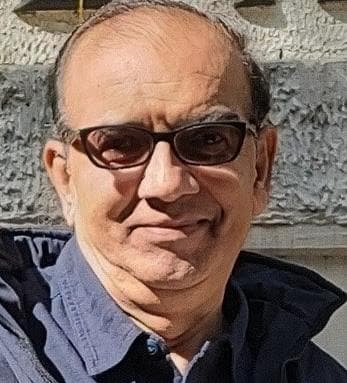
Prasanta Paul served Deccan Herald as the Chief of Bureau, Calcutta for nearly two decades before switching to work with various TV channels such as Al-Jazeera, CNN, German TV and CBS. He also headed the Eastern Bureau of Parliamentarian magazine. Mr. Paul who accompanied former Prime Minister Atal Behari Vajpayee on his overseas tour of Singapore and other Asian countries, travelled extensively to Bhutan, Sikkim and Darjeeling besides other Northeastern states. He briefly headed the Mizoram Bureau of the United News of India (UNI).
Discussion
Reader Comments
No comments yet. Be the first to share your perspective.