BreakingNational
Mamata’s Second Act: Desperate Struggle To Remain Politically Relevant
Loss of party symbol shatters her myth beyond repair
22 Sep 2026, 11:20 am IST·4 min read
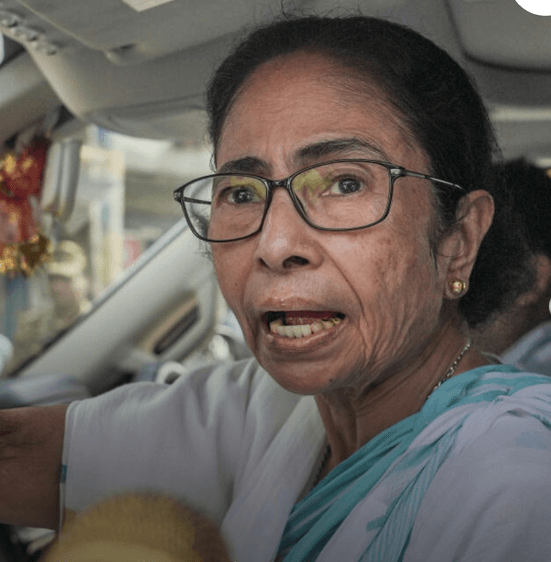
Mamata Banerjee’s greatest asset and greatest liability may now be the same thing—Mamata herself.
And the fight she has begun is no longer simply about returning to power. It is about returning to political relevance.
In a dramatic twist, the Election Commission’s interim freezing of the All India Trinamool Congress name and its iconic “Flowers and Grass” symbol has struck at something deeper than a party’s electoral identity.
With two rival factions claiming the Trinamool legacy, the Commission said a substantive determination under Paragraph 15 of the Election Symbols Order was still required. Until then, neither side could use the original name or symbol for the October 6 bypolls.
For Mamata, however, the party name and symbol are not merely organisational assets. They embody nearly three decades of political memory—the anti-Left movement, the Singur and Nandigram agitations, the 2011 change of government, three successive terms as chief minister and, now, the extraordinary reversal represented by the 2026 Assembly election.
The crisis, therefore, is not simply that Mamata has lost an election. It is that the political mythology that once sustained her movement has bitten the dust.
Her problem is not that she has lost the will to fight. She plainly has not. The problem is that the political landscape in which her old battle cry once resonated has been consigned to the grave.
Challenge Mamata Banerjee Faces
Mamata’s greatest challenge is now to recover the political identity that made her formidable after she herself became the establishment she once fought.
The 2026 setback, organisational weakening and defections have compounded the problem. So have mountains of corruption allegations and investigations involving her government and party figures, which have raised questions about the political credibility of the system she presided over.
Those questions remain matters of intense investigation and political contestation, with sleuths desperately hunting for solid proof of personal culpability.
Yet the symbolism of her recent outreach to Congress is unmistakable. The party she had once fought bitterly after breaking away from it has now become the last and lone ally in the byelection battle, including in Nandigram.
And here lies the paradox:
Can Mamata become politically new without ceasing to be Mamata?
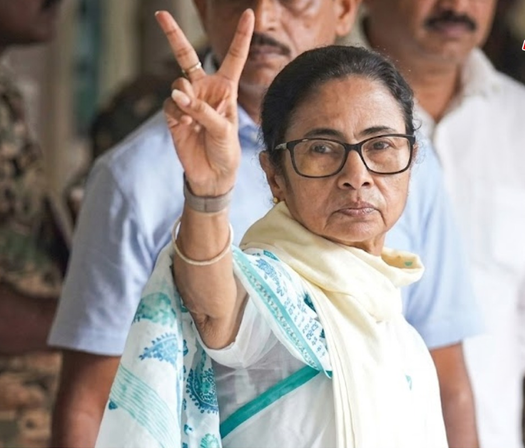
Her historical strength came from an extraordinary identification with the street riff-raff, the poor, the aggrieved and sections of Bengal’s intellectual and cultural landscape. But after 15 years in office, allegations surrounding her government and party, organisational fatigue and electoral defeat have altered the political meaning of that old identity.
Her opponents are already defining the crisis in harsher terms. BJP state chief Samik Bhattacharya, for instance, has dismissed her prospects of an effective comeback.
“Of course, she could fight, but from the four corners of her room or some sporadic Facebook Live programmes. A thoroughly corrupt party chief can’t do anything more than this,” observed Samik Bhattacharya, West Bengal chief of the Bharatiya Janata Party.
Mamata herself, meanwhile, has repeatedly signalled that she intends to fight back and has spoken of the Trinamool returning to power “very soon”.
So what is her political predicament—a Phoenix-like rise, a Macbethian return to the haunted castle, or Napoleon after Elba?
Sorry, neither of them.
The Phoenix is the most tempting metaphor because Mamata has risen before from apparently impossible circumstances. But this time the fire is not merely electoral. She must rise from an establishment she herself came to embody.
Macbeth offers a more dramatic architecture—not as a moral comparison, but as a political metaphor. The outsider challenges the established order, captures the throne and then discovers that ruling creates a different crisis: the ruler must now defend the very order once challenged.
Mamata’s trajectory has a similarly striking arc: street fighter → challenger → revolutionary alternative → ruler → establishment → defeated leader seeking resurrection.
Napoleon after Elba provides yet another historical metaphor: a defeated leader attempting to convert political memory into a second act. He briefly reclaimed power though in what became the Hundred Days.
The analogy says nothing about electoral destiny; it simply captures the phenomenon of political resurrection after apparent defeat.
And therein lies the real difficulty.
Power can sometimes be recovered through organisation, alliances and electoral arithmetic. Political legitimacy is harder to reconstruct.
That is the central dramatic contradiction of Mamata Banerjee’s second act.
About the Author
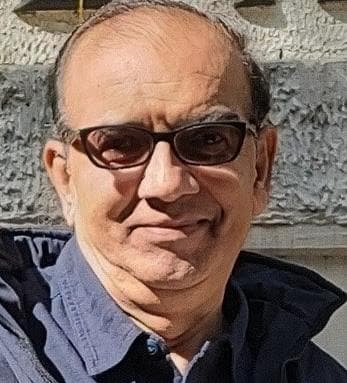
Prasanta Paul served Deccan Herald as the Chief of Bureau, Calcutta for nearly two decades before switching to work with various TV channels such as Al-Jazeera, CNN, German TV and CBS. He also headed the Eastern Bureau of Parliamentarian magazine. Mr. Paul who accompanied former Prime Minister Atal Behari Vajpayee on his overseas tour of Singapore and other Asian countries, travelled extensively to Bhutan, Sikkim and Darjeeling besides other Northeastern states. He briefly headed the Mizoram Bureau of the United News of India (UNI).
Discussion
Reader Comments
No comments yet. Be the first to share your perspective.