BreakingNational
Netaji: BJP In the Horns of A Dilemma over ‘Ashes’ & Derogatory Reference
Saffron’s Bengal predicament is arguably more politically sensitive
13 Aug 2026, 10:29 am IST·5 min read
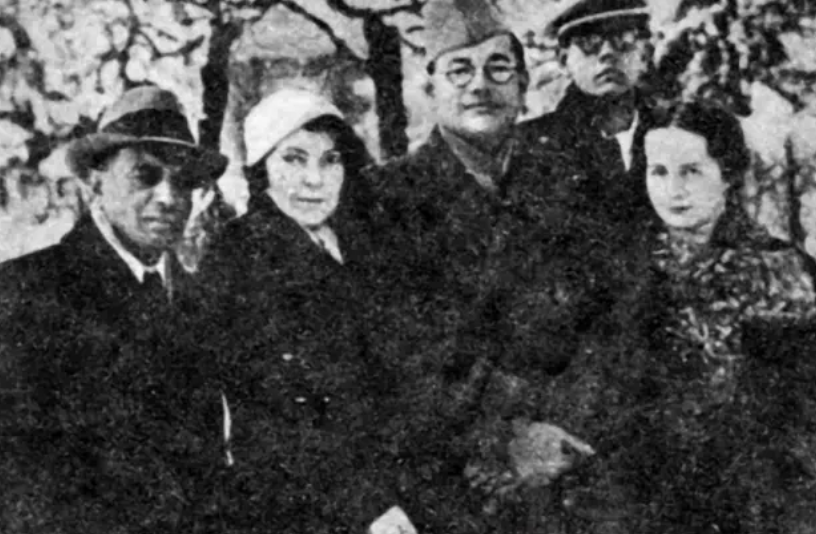
The Bharatiya Janata Party, in West Bengal as well as in New Delhi, has suddenly found itself grappling with a predicament it was perhaps least prepared for—barely days before India celebrates Independence Day.
The irony is difficult to miss. The issue confronting the party at the two ends is entirely different. Yet the man at the centre of both is the same: Netaji Subhas Chandra Bose.
Eight decades after his disappearance, Bose remains far more than a historical figure. He continues to occupy an extraordinary emotional space in the Indian imagination, particularly in Bengal. And it is precisely this emotional quotient that appears to have caught the BJP on the wrong foot.
In New Delhi, the Supreme Court has now sought the Centre’s response to a plea by Netaji’s daughter, Anita Bose Pfaff, seeking the return of the ashes preserved at Japan’s Renkoji Temple so that her father’s last rites can be performed in India.
The intervention has reopened one of independent India’s most enduring historical controversies—and potentially placed the Narendra Modi government in an awkward position.
Netaji’s disappearance following the reported air crash at Taihoku, now Taipei, on August 18, 1945, has never ceased to generate competing narratives. The Shah Nawaz Committee and Justice G.D. Khosla Commission concluded that Bose died in the crash.
The Justice Mukherjee Commission, however, rejected that conclusion and held that the ashes at Renkoji Temple were not those of Netaji. The then Manmohan Singh government obviously did not accept the Mukherjee Commission’s findings.
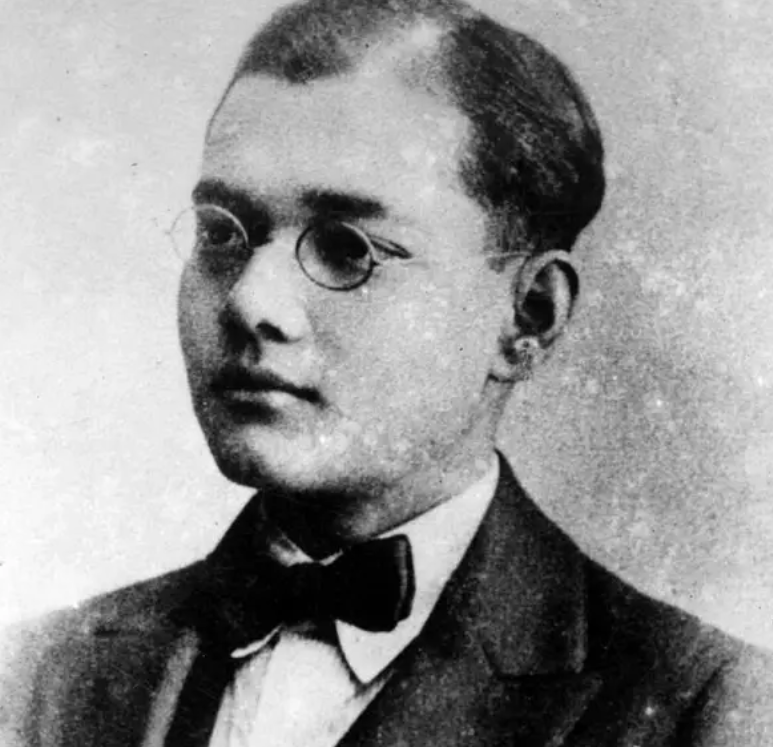
Atalji & Anita
Anita Bose Pfaff has consistently argued that the evidence and investigations that have emerged over the years justify accepting the air-crash theory and believes that the remains preserved at Renkō-ji Temple are those of her father. She has even offered her DNA sample to help establish their identity.
To make the matter little complicated for BJP, Atal Bihari Vajpayee, former prime minister and one of the most popular party leaders, offered floral tributes and paid his respects to the remains (read Ashes) believed to be those of Bose at the Renkō-ji in Tokyo on December 9, 2001, during his official prime ministerial visit to Japan.
Atalji’s burning of the incense to pay obeisance to the national icon triggered controversy as this amounted to the government’s seal of approval to the ashes being those of Netaji. And the BJP had then gone to a backfoot which took time for the party to recover.
Now, the Supreme Court’s decision to seek the Centre’s position therefore has the potential to force the government to confront a question it has so far been able to navigate without taking an unequivocal stand: what exactly does India believe happened to Netaji, and what should be done with the ashes that have remained in Japan for nearly 80 years?
For a government that has consciously sought to appropriate and celebrate the legacy of nationalist icons, this is not an entirely comfortable question.
Predicament of BJP in Bengal
But the BJP’s Bengal predicament is arguably even more politically sensitive.
Here, an apparent attempt at damage control has come from Chief Minister Suvendu Adhikari himself. The state government has announced that MLAs will receive ₹30,000 a month to run their offices provided they agree to two conditions.
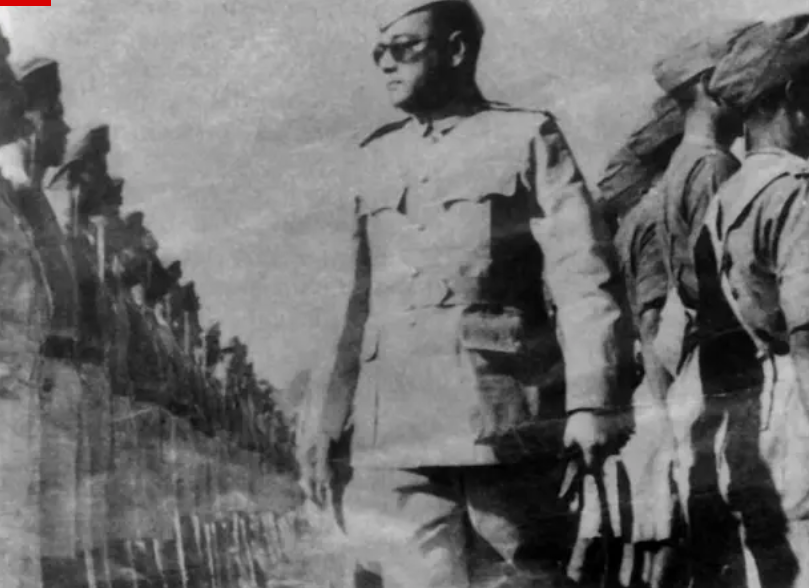
Their offices must be named ‘Netaji Subhas Chandra Bose Seva Kendra’, and they must display a government-supplied portrait of Netaji dressed in traditional dhoti and punjabi.
On the surface, it is an administrative measure. Politically, however, the timing makes it difficult to view it merely as one.
The announcement comes amid accusations that Netaji has been repeatedly insulted or disrespected in Bengal. Questions have been raised over alleged derogatory remarks about Bose by Rajya Sabha MP Ananta Maharaj. In a swift punitive action, Adhikari stripped Ananta Maharaj of the 'Bangabibhushan' title awarded to him by the previous Trinamool Congress government and directed the cyber police to arrest the culprits making derogatory references to Bose in the various social media handles.
In Birbhum, controversy has also erupted over the reported renaming of a road bearing Netaji’s name after Shyama Prasad Mukherjee, allegedly without municipal approval and in the presence of a BJP legislator.
The BJP therefore finds itself confronting a curious contradiction.
It has kept harping on the legacy of Netaji, invoking his nationalism, his defiance of colonial rule and his vision of a strong India. Yet the party is now being compelled to demonstrate, in very tangible ways, that its political ecosystem does not diminish the very icon whose legacy it seeks to appropriate.
The ₹30,000 office allowance, consequently, acquires a symbolism far greater than its monetary value. Naming every MLA’s office after Netaji and mandating his portrait appears less like routine administration and more like an attempt to put a political plaster over a growing wound.
And therein lies the larger problem for the BJP.
Netaji is not easily owned by any political party. His legacy cuts across ideological boundaries, generations and political loyalties. His image evokes patriotism in a manner that few contemporary politicians can command. Any perceived slight against him can therefore generate an emotional backlash that is disproportionately larger than the original incident.
As the Independence Day approaches, a burning truth needs to be kept in mind: history can be politically appropriated, but it cannot always be politically controlled.
In Delhi, the Supreme Court has reopened the question of Netaji’s ashes. In Bengal, his name and image have suddenly become instruments of political damage control.
Eight decades after his disappearance, Netaji Subhas Chandra Bose has once again demonstrated that he remains very much present—and that, for Indian politics, his absence can sometimes be more inconvenient than his presence.
About the Author
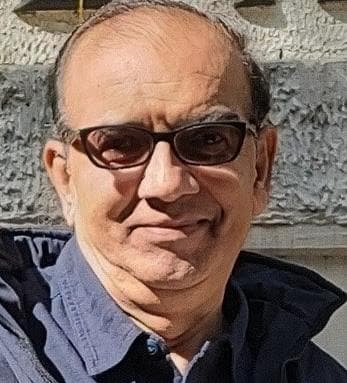
Prasanta Paul served Deccan Herald as the Chief of Bureau, Calcutta for nearly two decades before switching to work with various TV channels such as Al-Jazeera, CNN, German TV and CBS. He also headed the Eastern Bureau of Parliamentarian magazine. Mr. Paul who accompanied former Prime Minister Atal Behari Vajpayee on his overseas tour of Singapore and other Asian countries, travelled extensively to Bhutan, Sikkim and Darjeeling besides other Northeastern states. He briefly headed the Mizoram Bureau of the United News of India (UNI).
Discussion
Reader Comments
No comments yet. Be the first to share your perspective.