BreakingNational
No Smartphone, More Cycles: Suvendu’s New Formula for Students
The device, CM emphasizes, is more for academic use
01 Oct 2026, 12:01 pm IST·3 min read
West Bengal Chief Minister Suvendu Adhikari has sent an unmistakably counter-intuitive message to the state’s budding smartphone generation: less screen, more books.
Speaking to students at Madhusudan Palchoudhury Higher Secondary School in Batra, in Howrah district, Adhikari said he was strongly opposed to school students using mobile phones and suggested that children who need to concentrate on their studies must refrain from using smartphones as much as possible.
The government, he indicated, is considering replacing financial assistance for smartphones with emergency grant for education-specific tablets, potentially restricting the devices to academic use.
“I am going to initiate a discussion with the school education minister in this regard so that grant for mobiles is restricted,” he averred.
For a generation that has grown up with the smartphone virtually glued to the palm, the message is bound to provoke debate and much dislike.
But the Chief Minister is undeterred; his larger education pitch goes beyond the phone-versus-tablet argument. On the same platform, he announced that schoolchildren will henceforth receive free bicycles from Class VIII rather than Class IX, giving an additional year of physical mobility to students under the renamed ‘Sarathi’ scheme.
Free bicycle - Sarathi
The change is significant because the bicycle programme itself has been repositioned. The earlier ‘Sabuj Sathi’, introduced in 2015, has now been renamed ‘Sarathi’, with a new logo and an emphasis, according to the government, on improved quality and safety.
For 2026-27, the programme is expected to cover around 12.59 lakh students.
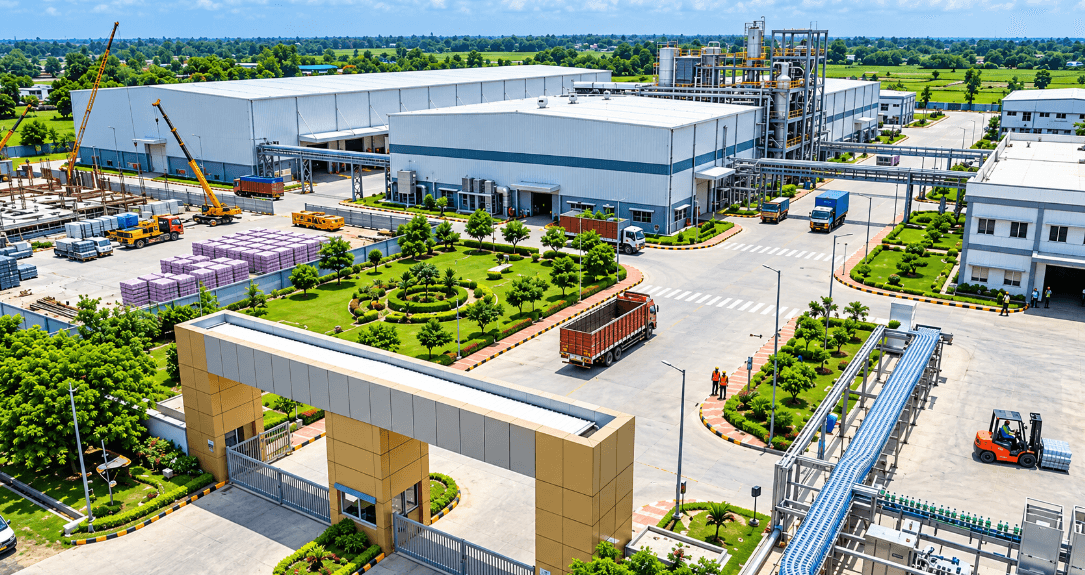
Adhikari also sought to connect the bicycle scheme with Bengal’s industrial ambitions. He said companies or industrial groups willing to manufacture bicycles for the programme in the state would be offered land free of cost.
The stated objective is therefore not merely to distribute bicycles but to encourage local production and potentially generate employment and ancillary industrial activity.
That gives the announcement an interesting economic dimension. A welfare programme traditionally viewed through the lens of student mobility is being presented as a possible demand generator for manufacturing inside Bengal.
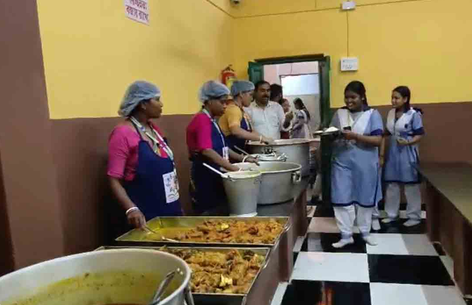
Students during a Midday Meal in a school
Adhikari also criticised the previous administration over the procurement and assembly arrangements under the earlier scheme, alleging that components were brought from Jalandhar in Punjab and that contracts were given to people connected to the former chief minister.
However, the BJP The government’s proposed education-device policy suggests a preference for technology that serves a defined academic purpose rather than unrestricted personal connectivity.
At the same time, bringing bicycles down to Class VIII places greater emphasis on movement, independence and everyday access to school. The two announcements, taken together, indicate an attempt to redefine what the government considers useful technology and smart mobility for schoolchildren.
Adhikar’s Tete-a-Tete with Students
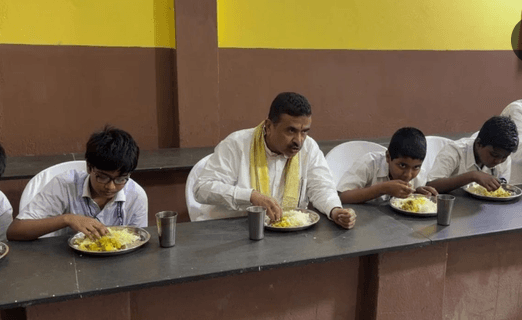
The Chief Minister has also spoken of expanding smart-school infrastructure and introducing NCC activities in schools. At Batra, he joined students for the midday meal, while the school community later received fish and rosogolla as a gesture from him.
For the students, therefore, the day offered an unusual combination: a bicycle for the road, a possible tablet for the classroom—and a warning that the smartphone will no longer be regarded as an educational entitlement.
In Bengal’s rapidly digitising school environment, that is a policy conversation worth watching. The real test will lie not in the slogan, but in whether the government can create a workable balance between digital access, academic discipline, physical activity and the realities of a generation that lives online.
About the Author
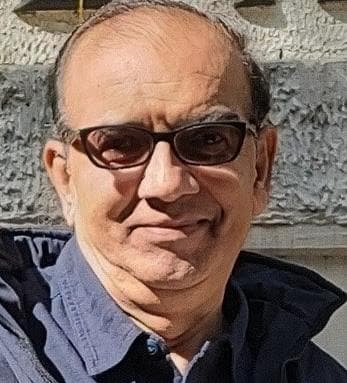
Prasanta Paul served Deccan Herald as the Chief of Bureau, Calcutta for nearly two decades before switching to work with various TV channels such as Al-Jazeera, CNN, German TV and CBS. He also headed the Eastern Bureau of Parliamentarian magazine. Mr. Paul who accompanied former Prime Minister Atal Behari Vajpayee on his overseas tour of Singapore and other Asian countries, travelled extensively to Bhutan, Sikkim and Darjeeling besides other Northeastern states. He briefly headed the Mizoram Bureau of the United News of India (UNI).
Discussion
Reader Comments
No comments yet. Be the first to share your perspective.