BreakingNational
Prime Political Targets: Bengal Terror Probe Uncovers Alleged ISI-Backed Hybrid Network
The plot reveals one of the most serious internal security challenges
03 Aug 2026, 12:29 pm IST·5 min read
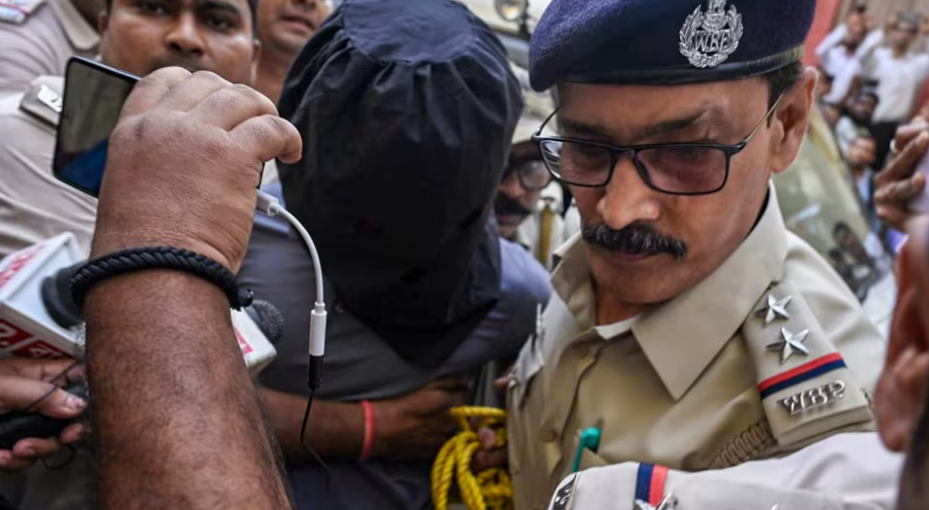
An intricate web of terror strikes allegedly planned by Pakistan's Inter-Services Intelligence (ISI) through the so-called "Shahajad Module" in West Bengal has been unravelled following the dramatic arrest of Hamim Mondal from Burdwan.
Investigators believe the case marks far more than the exposure of an isolated extremist. It points instead to the emergence of a sophisticated hybrid network that allegedly combines organised crime, online radicalisation, espionage, honey-trapping, sleeper cells and political surveillance into a single operational architecture.
If the findings withstand judicial scrutiny, the investigation could represent one of the most serious internal security challenges confronted by West Bengal in recent years.
The most alarming revelation, according to investigators, concerns an alleged preliminary conspiracy to target the state's Chief Minister Suvendu Adhikari.
An initial blueprint identifying possible routes, methods of attack and perceived vulnerabilities in the Chief Minister's security arrangements had been prepared and transmitted to Pakistan-based handlers, sleuths claim. Those handlers allegedly reviewed the proposal before sending back operational suggestions and observations.
Seized mobile phone of Hamim which has yielded digital material relating to these exchanges, has been sent for forensic examination.
Disturbing Turn in the Probe
The investigation has taken a disturbing political turn with allegations that at least six state ministers and members of their families had been identified for elaborate honey-trap operations.
After Hamim’s dramatic arrest from a gym in Burdwan, his close acquaintance Arpita Sarkar, the femme fatale used for honey-trapping, was picked up by the cops. She was allegedly expected to play a key role in cultivating personal relationships with selected targets.
The suspected objective, besides social infiltration, was to collect sensitive information, coercion through blackmail and eventual political manipulation.
Security officials believe such methods reflect an increasingly common pattern in contemporary espionage, where emotional vulnerability, digital intimacy and social engineering often prove more effective than conventional intelligence gathering.
An Inter-State Ecosystem
Hamim, cops claim, was operating as part of a much wider network with regular communication allegedly taking place with Pakistan-based handlers identified as Rana, Uzair, Abid Jatt and Hamar. Acting on their instructions, additional recruits were reportedly brought into encrypted social media groups while separate acts of sabotage were allegedly planned simultaneously.
The probe is no longer confined to West Bengal. Arrests linked to the wider network have already been reported from Assam, Rajasthan, Delhi and Uttar Pradesh, suggesting that investigators are examining an inter-state ecosystem rather than a localised conspiracy.
Plans were believed to be underway to establish multiple modules across West Bengal under the organisational umbrella associated with the Tehreek-e-Taliban Hindustan (TTH). Hamim allegedly held clandestine meetings at different locations to identify recruits, arrange logistics and explore channels for procuring weapons and financing operations. Indications of attempts to establish sleeper cells capable of remaining dormant until activated were also uncovered.

A video grab of Hamim in the gym
The Shahajad Bhatti Module
At the centre of the investigation stands Pakistan-based gangster Shahajad Bhatti, whom Indian investigators describe as the principal architect of the recruitment model, allegedly operating with the ISI backing.
According to investigators, Shahajad perfected a recruitment strategy that relied less on ideology in its initial stages than on digital influence. Operating openly on Facebook, Instagram and YouTube under the numerical identity "333", he allegedly identified individuals through their online engagement before initiating direct conversations through social media and video calls.
Prospective recruits were reportedly enticed with promises of easy money, criminal prestige and financial assistance. Small online payments ranging from ₹5,000 to ₹10,000 allegedly served to establish trust before recruits who were introduced to drug trafficking, arms movement and eventually sabotage-related activities. Proceeds from narcotics trafficking were allegedly intended to finance extremist operations, creating a self-sustaining criminal-terror ecosystem.
Hamim entered this network precisely through such online interactions. Originally from Monteswar in East Burdwan and employed in Howrah's Pilkhana area in the ready-made garment trade, he allegedly abandoned his job shortly before the elections, returned to Burdwan and rented an apartment in a posh residential complex.
Among those responsibilities, investigators allege, was surveillance of politically and religiously significant personalities across West Bengal, including monitoring the movements of the Chief Minister.
Chats and digital documents recovered during the investigation are said to indicate attempts to gather intelligence on the movements and security patterns of prominent political figures.
Investigators are also examining the TTH role as an ideological platform allegedly used to transform digitally recruited individuals into what security experts describe as "hybrid operatives"—persons capable of simultaneously undertaking propaganda, recruitment, logistics and operational support while maintaining an outwardly ordinary civilian life.
Evidence suggesting plans to recruit additional youths from West Bengal by exploiting religious sentiment has also surfaced.
Honey Trapper Arpita & Hybrid Warfare
The probe has also extended to Arpita Sarkar, whose close association with Hamim has come under scrutiny. Investigators are examining whether Pakistani handlers attempted to establish independent communication with her after learning of her relationship with Hamim. Whether financial inducements or systematic psychological conditioning were employed in efforts to draw her into the network is also being investigated.
Recently, traditional infiltration across physical borders is increasingly being supplemented by invisible digital pathways that exploit social media algorithms, financial incentives, encrypted communication platforms and organised crime networks. Recruitment today often begins on smartphone screens.
For West Bengal, the security challenge is no longer confined to preventing physical infiltration. It now extends to identifying online radicalisation, dismantling covert financial channels and detecting hybrid networks before they mature into operational terror cells.
In the age of hybrid warfare, the first battlefield is increasingly digital, while the ultimate targets remain political institutions, democratic stability and public confidence.
About the Author
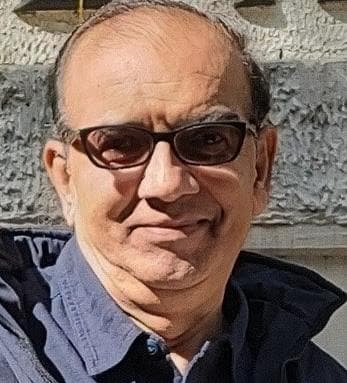
Prasanta Paul served Deccan Herald as the Chief of Bureau, Calcutta for nearly two decades before switching to work with various TV channels such as Al-Jazeera, CNN, German TV and CBS. He also headed the Eastern Bureau of Parliamentarian magazine. Mr. Paul who accompanied former Prime Minister Atal Behari Vajpayee on his overseas tour of Singapore and other Asian countries, travelled extensively to Bhutan, Sikkim and Darjeeling besides other Northeastern states. He briefly headed the Mizoram Bureau of the United News of India (UNI).
Discussion
Reader Comments
No comments yet. Be the first to share your perspective.