BreakingNational
Sonam Wangchuk: Kahani, À la Carte
The Hunger-Strike Playbook: The Ladakh activist's recurring protest script
18 Jul 2026, 11:05 am IST·4 min read
A man is often judged by the company he keeps—or so the old saying goes.
Can a man also be judged by the methods of protest he repeatedly chooses? That, perhaps, is an equally interesting question.
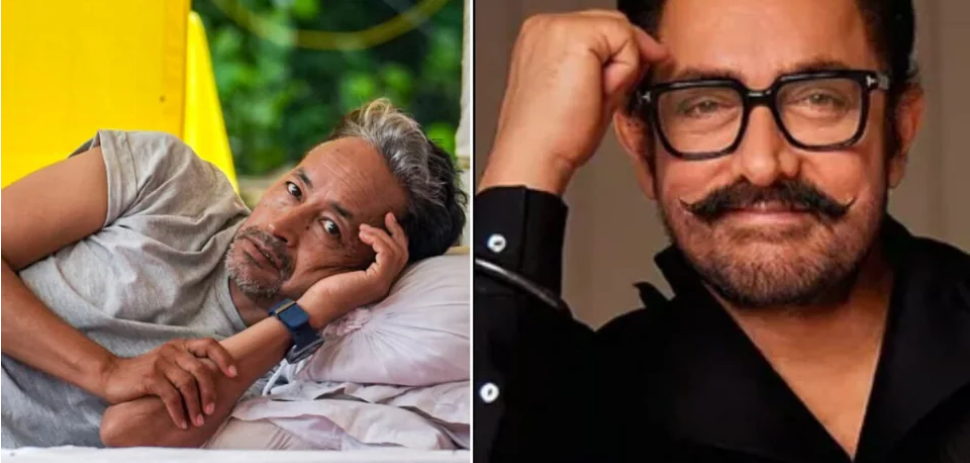
New Delhi's Jantar Mantar has once again become a journalist's second home. Much like a morning jogger who never misses a lap, every political reporter—whether from print, television or digital media—now seems duty-bound to begin the day at the fasting stage of our celebrated ice stupa architect and the oft-compared Phunsukh Wangdu (although Aamir Khan himself has politely distanced the fictional character from the real-life activist).
By now, the script is familiar.
A fast, a media scrum, a procession of visitors, prime-time debates—and eventually, another fast.
Sub-zero fasts in 2023. A 21-day fast in 2024. Another fast in Delhi later that year. Participation in the Kargil hunger strike in August 2025. And now, from June 28, 2026, an indefinite fast at Jantar Mantar.
Serial fasting, one might say, has become something of an annual calendar event. Then charges of accostment also, if not something more, so to say.
This time, however, climate change has taken a back seat. Apparently that chapter has grown old. The new cause is the NEET-2026 controversy, which led to the cancellation of the examination and a re-test.
A minor inconvenience, though: the revised NEET results have already been declared. And now obviously it’s time for his hospitalisation!
But then, another unfinished chapter remains.
Union Education Minister Dharmendra Pradhan has yet to resign.
Which, naturally, means the protest must continue.
Forgive another omission.
The Union government which bundled him out of the fasting manch for hospitalisation, declined to perform the customary ritual of dispatching emissaries to earnestly request the fasting icon to break his fast.
Nevertheless, a steady procession of admirers had earlier made sort of a beeline to descend upon the protest site, each pausing to express concern over his declining health—between their otherwise impossibly busy schedules.
Even Mamata Banerjee, the defeated Trinamool Congress chairperson allegedly accused of winking at scams worth several thousand crores, found time to telephone and inquire after him, despite the political turbulence swirling around her own party. Arvind Kejriwal had already marked his attendance earlier.
Quite an illustrious visitors' book.
It is therefore hardly surprising that critics have begun asking whether the hunger strike has evolved from an instrument of protest into a remarkably effective public-relations strategy—one that reliably guarantees prime-time airtime and international headlines.
One cannot deny its effectiveness.
International media devoted enormous attention to Wangchuk's fast, while India's successful rollout of its hydrogen train barely registered beyond technical circles.
No bouquets for Modi, certainly. But perhaps a modest round of applause for the engineers whose years of research made the technological milestone possible.
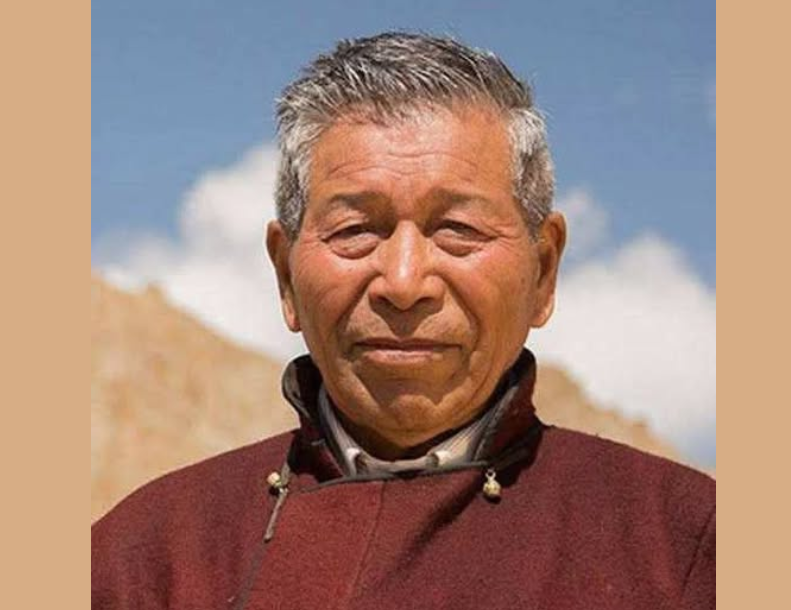
Ice Man of Ladakh - Chewang Norphel
There is, of course, another chapter that rarely finds equal prominence.
Wangchuk continues to face official scrutiny over alleged irregularities relating to foreign funding under the FCRA (Foreign Contribution (Regulation) Act) framework, while one of his institutions has also faced action over land allotment issues.
His critics cite these developments as evidence that the story extends beyond environmental activism. His supporters dismiss them as retaliatory pressure against a persistent critic of the government.
Readers may choose whichever explanation they find more convincing.
A Distinct Pattern
What is beyond dispute, however, is the pattern.
Each successive fast places Wangchuk squarely at the centre of the national news cycle. Whether expanding his campaign from Ladakh and climate issues to subjects such as NEET represents genuine solidarity or simply a widening of the protest platform is a matter open to debate.
Others argue that attaching oneself to high-profile national controversies is an efficient way of ensuring that one's protest receives far greater attention than similar demonstrations organised by lesser-known activists.
Perhaps.
Which brings us to another son of Ladakh.
Padma Shri Chewang Norphel—the original "Ice Man of India"—rarely commands television studios or front-page headlines.
Yet it was Norphel, a civil engineer, who pioneered Ladakh's artificial glacier technology decades ago to address seasonal water shortages. He quietly built more than 300 irrigation canals, developed over 15 artificial glaciers and transformed nearly 20,000 acres of farmland without launching a single media campaign or courting political controversy.
His contribution earned him the Jamnalal Bajaj Award in 2010, recognition from the United Nations Development Programme in 2011, and the Padma Shri in 2015.
A documentary, White Knight, later chronicled the remarkable life of this understated pioneer.
Therein lies the irony,perhaps.
One Ladakhi became famous largely because cameras faithfully followed every fast.
The other, to a great extent, changed Ladakh itself —and the cameras rarely followed him at all.
About the Author
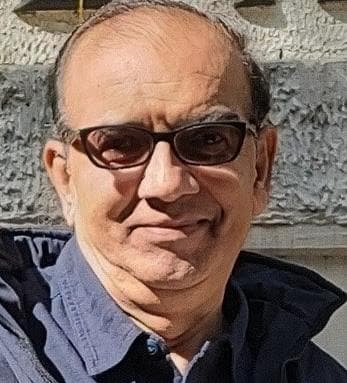
Prasanta Paul served Deccan Herald as the Chief of Bureau, Calcutta for nearly two decades before switching to work with various TV channels such as Al-Jazeera, CNN, German TV and CBS. He also headed the Eastern Bureau of Parliamentarian magazine. Mr. Paul who accompanied former Prime Minister Atal Behari Vajpayee on his overseas tour of Singapore and other Asian countries, travelled extensively to Bhutan, Sikkim and Darjeeling besides other Northeastern states. He briefly headed the Mizoram Bureau of the United News of India (UNI).
Discussion
Reader Comments
No comments yet. Be the first to share your perspective.