BreakingScience and Space
Space Race: NASA to build permanent lunar base
The Race to inhabit the Moon has officially begun
28 May 2026, 09:45 pm IST·4 min read
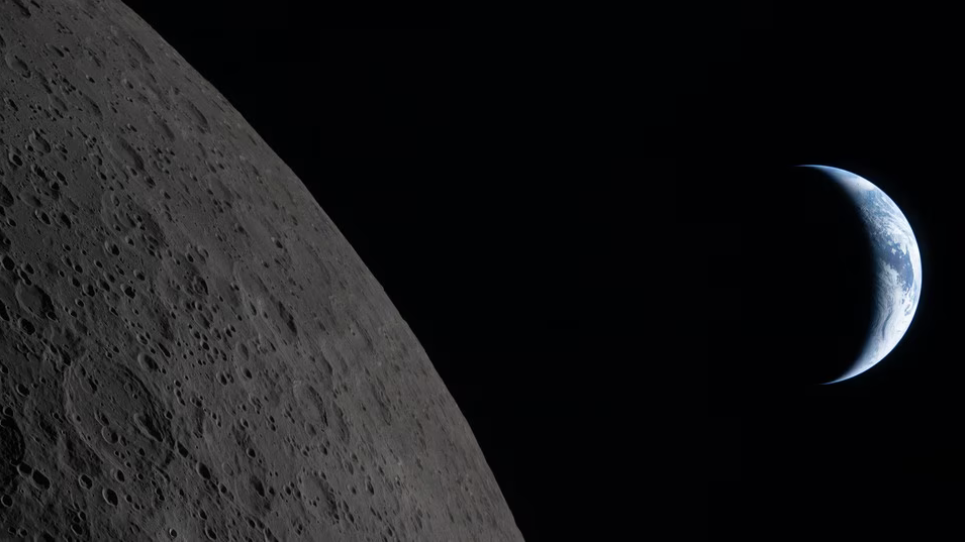
The Race has officially begun.
Well, you must be wondering what race is being referred to here.
The Race to inhabit the Moon.
Since the maiden landing of Neil Armstrong on the Moon on July 20, 1969 ("That's one small step for [a] man, one giant leap for mankind") aboard Apollo 11, scientists have been tirelessly experimenting over the right location on the lunar surface to facilitate a permanent human base.
And look at the sheer coincidence. Indian Space Research Organisation (ISRO) has just announced a string of crucial new findings that there are indications of subsurface ice or water reserves in some of the Moon's extremely cold and permanently shadowed craters in the south polar region, thanks to a dot-by-dot analysis of pictures captured during the famous Chandrayan-2 mission.
This discovery, ISRO scientists have hoped, could further strengthen the prospects of future lunar missions and long-term human presence on the Moon.
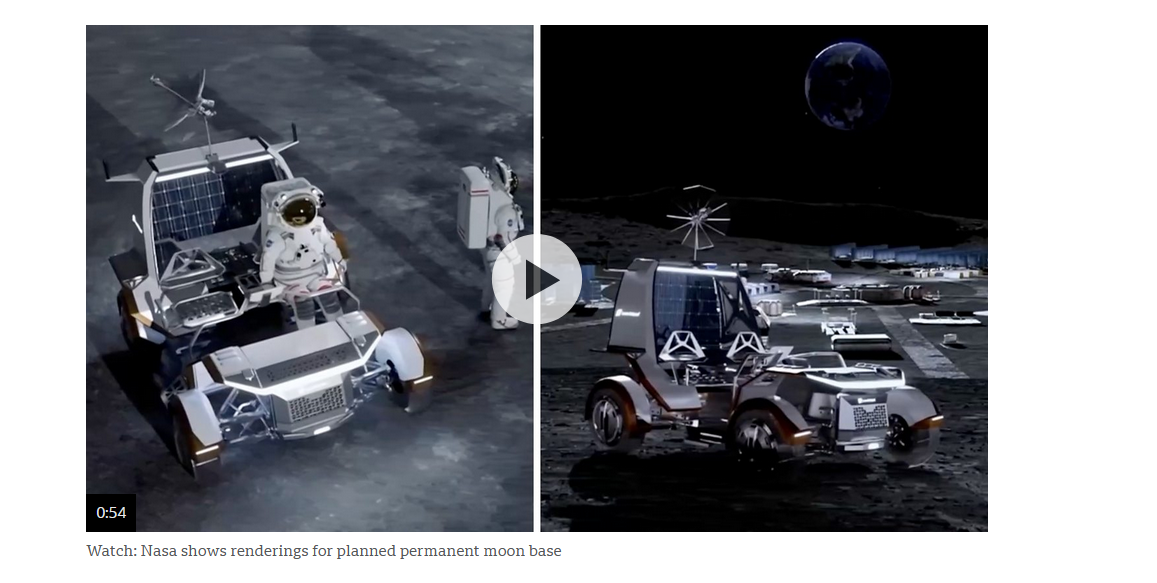
On Tuesday (26.05.2026), National Aeronautics & Space Administration (NASA) has disclosed that it has almost been fine-tuning its plans to build a permanent lunar base. To buttress its claims, it has released details of robotic landers, hopping drones and vehicles which will be sent there in the next missions to the Moon.
The reason is obvious; the US wants to land Americans back on the Moon for the permanent base before President Donald Trump leaves office in 2029.
To top it all, China is equally pressing ahead with its own plans to land humans on the Moon by 2030 with a view to building its own base. As part of it, the Asian superpower launched on Monday its Shenzhou-23 spacecraft, sending a crew of astronauts from the country's Tiangong space station.
In the latest space race, lady luck has again smiled on Amazon founder Jeff Bezos whose space company Blue Origin is one of several companies picked to build the futuristic machines.
Chandrayaan-2 Data
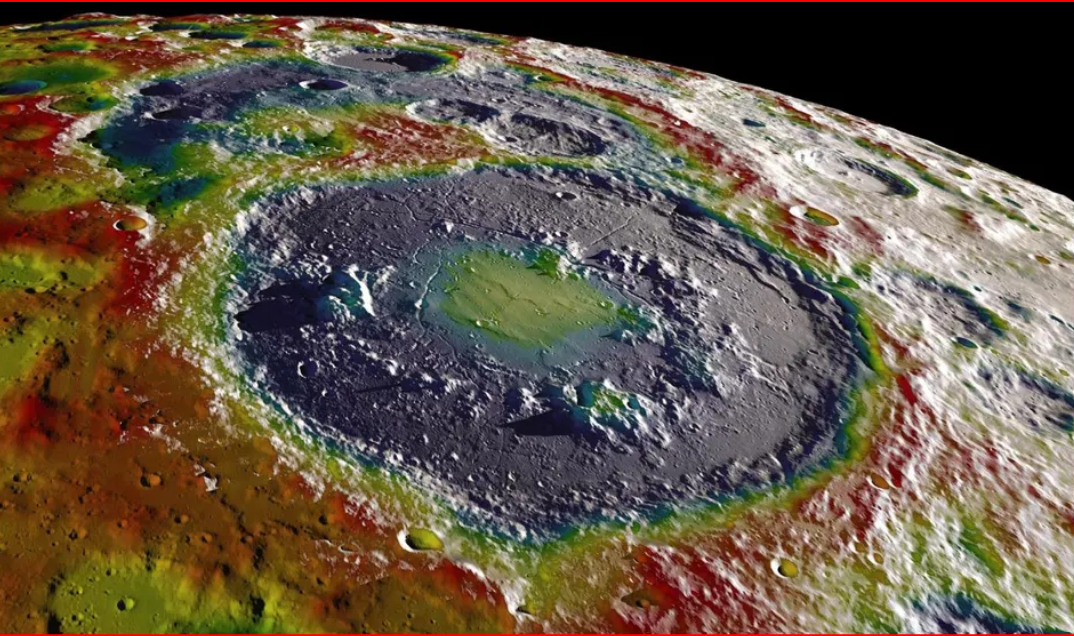
Analysis of the Chandrayan-2 data obtained through the Dual Frequency Synthetic Aperture Radar (DFSAR) instrument aboard the Chandrayaan-2 orbiter which is capable of analyzing materials present beneath the Moon's surface by applying specialised radar technology, revealed several permanently shadowed craters near the lunar south pole. Upon analysing them, ISRO scientists have found strong indications of the possible presence of ice within them.
The strongest indication has been found inside a crater named Faustini, over an area of approximately 1.1 km. This region never receives sunlight and maintains extremely low temperatures. According to scientists, in such an environment, ice could remain preserved for millions of years.
According to ISRO, this research will provide new data about the distribution of water and other volatile substances in the Moon's polar regions. This information could also prove critical for future plans of sending humans to the Moon or establishing long-duration stays there.
The reasoning is significant — water is not only essential as a drinking resource, but scientists also believe it can be used to produce rocket fuel for future space missions, by splitting water into hydrogen and oxygen.
Previously, analysis of Chandrayaan-2 data had already indicated the presence of water molecules and hydroxyl in various parts of the Moon. However, the latest findings --buried ice in the Moon's darkest, coldest corners in the South Pole-- have significantly elevated the importance of this ongoing research.
NASA’s Plans
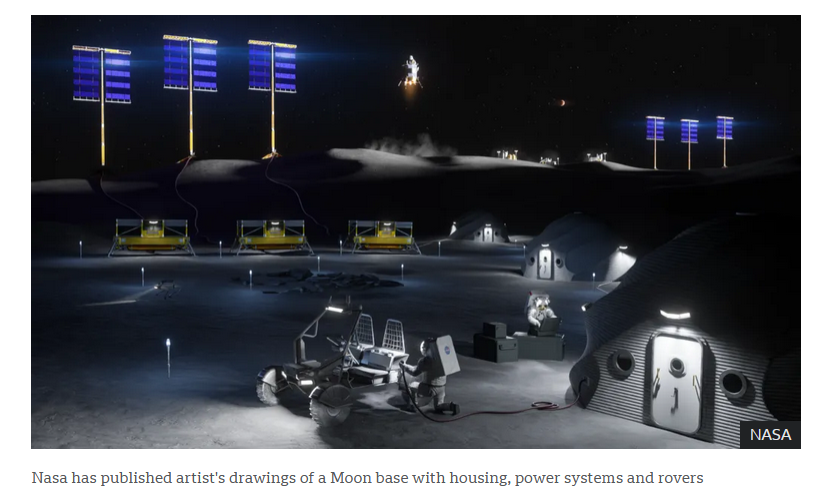
NASA’s Ignition Moon Base programme has three phases. A BBC report states that before humans travel there, the space agency wants to send robotic landers and hopping drones to explore and map the Moon's challenging terrain.
Delivery vehicles would also be taken that could drive astronauts over the lunar surface and carry communications and scientific instruments. Companies including Blue Origin, Intuitive Machines, and Astrobotic have been awarded the contracts to build the machines, NASA said.
Blue Origin's lunar lander, known as Endurance, must be capable of precise landings along with autonomous navigation and control systems. Meanwhile, Astrobotic's Griffin-1 lander is slated to touch down at Nobile Crater, located near the Moon's South Pole.
Both vehicles will transport a suite of scientific instruments on NASA's behalf, including high-resolution imaging cameras and laser-based tools designed to guide the craft during landing.
The robotic exploration phase is projected to run through 2029, encompassing 25 missions and delivering up to four metric tonnes of cargo to the lunar surface, according to Moon Base programme executive Carlos García-Galán, who shared the details on Tuesday.
Looking further ahead, NASA has set its sights on establishing power infrastructure on the Moon, with plans to construct both solar and nuclear energy facilities — including fission reactors.
By 2032, the space agency wants humans to be able to live on the Moon in "semi-permanent" housing. Rovers are expected to enable astronauts to travel long-distance across the rocky surface.
And, finally the Moon's South Pole is particularly appealing because frozen water could be used for drinking water or to produce oxygen which the Chandrayaan 2 data has already confirmed.
Key Words: Apollo 11- Amazon-Astrobotic- Blue Origin-BBC- Chandrayaan 2 – China- Endurance- ISRO- Ignition Moon Base programme - Intuitive Machines- Moon's South Pole- Nobile Crater – NASA-Robotic exploration- Shenzhou-23 spacecraft- Tiangong space station.
About the Author

Prasanta Paul served Deccan Herald as the Chief of Bureau, Calcutta for nearly two decades before switching to work with various TV channels such as Al-Jazeera, CNN, German TV and CBS. He also headed the Eastern Bureau of Parliamentarian magazine. Mr. Paul who accompanied former Prime Minister Atal Behari Vajpayee on his overseas tour of Singapore and other Asian countries, travelled extensively to Bhutan, Sikkim and Darjeeling besides other Northeastern states. He briefly headed the Mizoram Bureau of the United News of India (UNI). To his credit goes a deep-rooted empathy for social issues and marginalized people. His extensive coverage on the Tsunami, the Super Cyclone in Odisha and the 2020 Amphan cyclone besides
Discussion
Reader Comments
No comments yet. Be the first to share your perspective.