BreakingInternational
The Indian Soldiers Who Never Came Home… and Never Entered History
The greatest tragedy of war is not merely dying, but disappearing from memory.
07 Aug 2026, 11:04 am IST·4 min read
There are deaths that become monuments.
There are deaths that become history.
And then there are deaths that simply disappear.
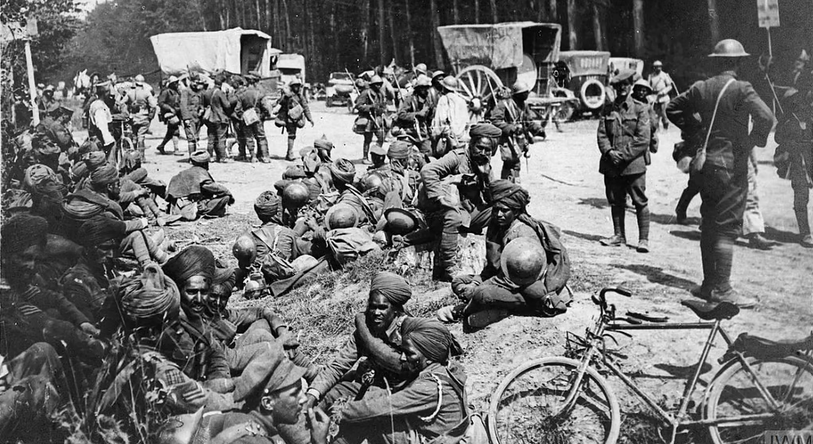
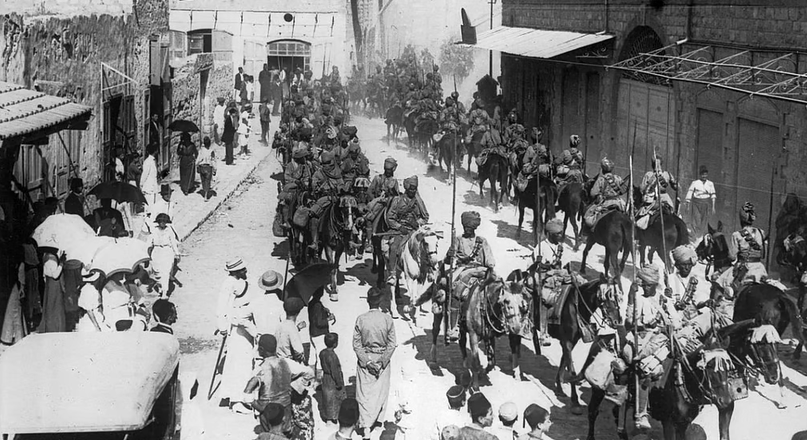
For more than a century, nearly ten thousand Indian soldiers belonged to that forgotten fraternity — men who had marched across continents in the First World War, fought under alien skies, bled in distant trenches, and died thousands of miles away from the villages they once called home. They did not return to their mothers, wives or children. Worse still, many never even returned to history.
Until now.
In what is perhaps one of the most poignant acts of historical correction in recent decades, the Commonwealth War Graves Commission has officially recognised 9,909 Indian soldiers who lost their lives while serving in the British Indian Army during the First World War. More than a hundred years after the guns fell silent, names that had vanished into dusty military ledgers have finally found a place in the official roll of honour.
For generations, these men had existed only in silence.
No memorial bore their names. No official register acknowledged their sacrifice. No government record confirmed that they had died in service.
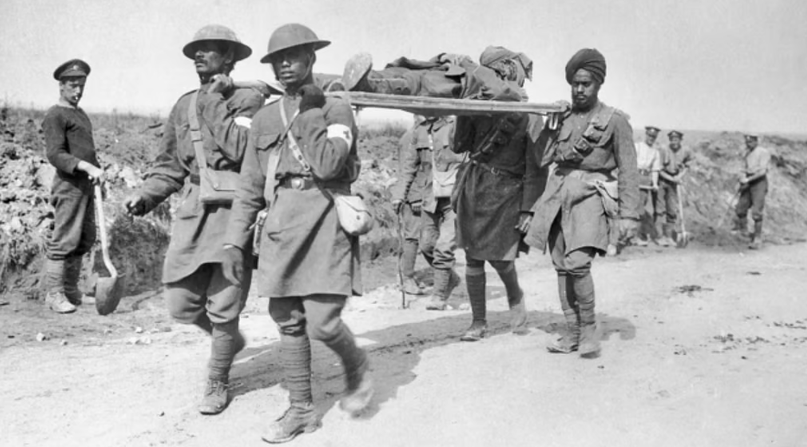
Some had survived the battlefield only to succumb later to wounds, disease or starvation. Under the policies of the colonial British administration, many of these deaths were never classified as war casualties. Bureaucracy accomplished what bullets could not — it erased them from remembrance.
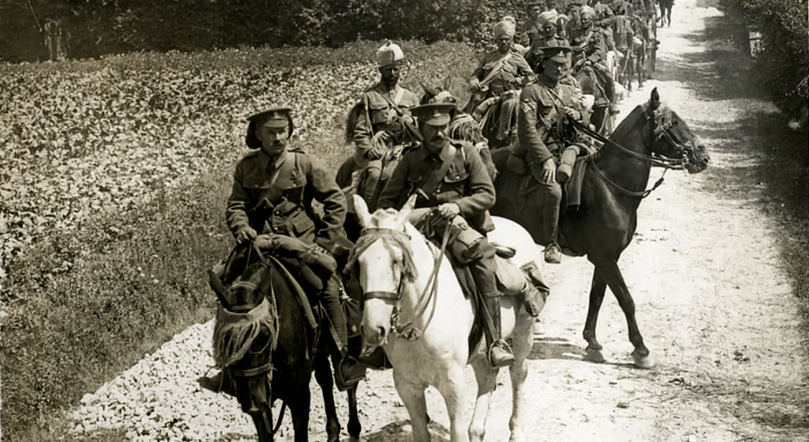
History, too, looked away. Yet their families never stopped waiting.
Across the villages of undivided Punjab, doors remained half-open for sons who never returned. Mothers lived with unanswered questions. Wives grew old without closure. Children inherited stories instead of certainty.
The war had ended.
The waiting never did.
Then came an extraordinary journey through forgotten archives.
Researchers and volunteers associated with the Punjab Heritage Association painstakingly digitised century-old handwritten military registers preserved inside the Lahore Museum. Page after fading page, they reconstructed identities that official history had abandoned.
The exercise became far more than an archival project. It became an act of resurrection.
Among those poring over the fragile documents was University of Greenwich researcher Jasmine Basra. Somewhere between faded ink and brittle paper, she encountered something no historian expects to find — the names of her own great-grandfather and his brother.
The search for anonymous soldiers had suddenly become deeply personal.
For Basra, history was no longer confined to libraries. It had entered her own family.
Thousands of miles away in Leicester, another family experienced a similar moment. Sunny Palahe discovered that his great-grandfather, Kesar Singh, was finally among those officially recognised. More than a century late, the acknowledgement brought tears rather than triumph. Recognition could not return a life. But it could return dignity.
Perhaps that is what remembrance truly means.
The newly recognised soldiers also tell another story — one that resonates even more powerfully in today's fractured world.
Nearly a quarter were Sikhs. Another quarter were Hindus. Around forty per cent were Muslims. They did not fight as communities competing with one another. They fought, suffered and died together, sharing the same mud-filled trenches, the same hunger, the same shells and, ultimately, the same anonymous fate.
Death recognised no religion.
History eventually shouldn't either.
The First World War consumed millions of lives across Europe, Africa and the Middle East. More than a million Indians served in the conflict, often in battles whose names were unknown back home. They fought in freezing European winters, inhospitable deserts and disease-ridden theatres far removed from their own land.
Many never understood the politics behind the war.
They only understood duty.
And when they died, many were denied even the smallest reward history can offer — a name carved into memory.
That omission has finally been corrected.
The Commonwealth War Graves Commission describes the inclusion of these 9,909 soldiers as the largest revision to its records in more than eighty years. Administratively, it is an update.
Morally, it is an apology.
Their recognition also reminds us that history is never truly complete. It continues to evolve as forgotten files surface, neglected archives reopen and long-buried truths emerge from fading paper.
Sometimes, history is rewritten not by discovering new heroes, but by remembering the old ones.
For the descendants of these soldiers, this is not merely about official documentation.
It is the end of a century-long silence.
Some families will finally know where an ancestor fell. Others may never find a grave. But they now possess something equally precious — proof that the man who vanished into war did exist, did serve and did sacrifice.
Perhaps that is all these forgotten soldiers ever asked for.
Not medals.
Not monuments.
Just a place in history beside the countless comrades with whom they had shared the battlefield.
More than one hundred years after they left home, they have, at last, found their way back.
About the Author
Prasanta Paul served Deccan Herald as the Chief of Bureau, Calcutta for nearly two decades before switching to work with various TV channels such as Al-Jazeera, CNN, German TV and CBS. He also headed the Eastern Bureau of Parliamentarian magazine. Mr. Paul who accompanied former Prime Minister Atal Behari Vajpayee on his overseas tour of Singapore and other Asian countries, travelled extensively to Bhutan, Sikkim and Darjeeling besides other Northeastern states. He briefly headed the Mizoram Bureau of the United News of India (UNI).
Discussion
Reader Comments
No comments yet. Be the first to share your perspective.