BreakingNational
The ‘Lie’ That Sent India’s Sukhoi-30 MKIs Roaring Towards Bholari in Pakistan
When Air Marshal Kapoor misled Air Chief A P Singh!
21 Aug 2026, 11:34 am IST·4 min read
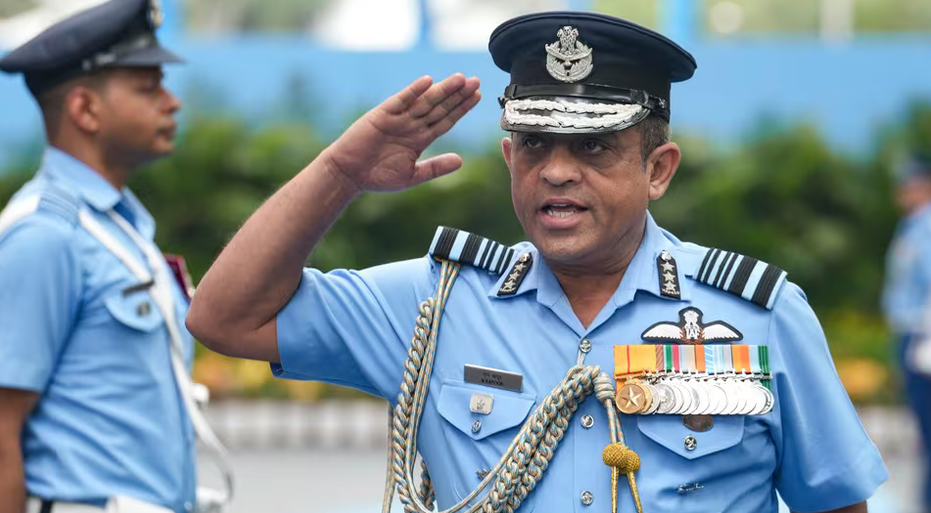
May 10, 2025. As the Indian Air Force pounded targets deep inside Pakistan under Operation Sindoor, a moment of extraordinary tension was unfolding inside the operations room of India’s South Western Air Command (SWAC).
A crucial strike mission was readying for take-off. Its target lay some 520 km north of SWAC headquarters in Gandhinagar: Pakistan’s Bholari airbase, where Indian intelligence had identified a specially segregated hangar believed to house one of the Pakistan Air Force’s most valuable airborne assets—a Swedish-made Saab Erieye airborne early warning and control system (AEWCS)
Then came a telephone call.
On the other end was Air Chief Marshal A.P. Singh.
For Air Marshal Nagesh Kapoor, then heading SWAC, it presented a moment of decision. Would the mission proceed as planned? Or would the fighters, their crews already strapped into cockpits and waiting for the final order, be held back?
Kapoor chose to let them fly—even if, as he later recalled, it meant not telling his chief the whole truth.
Pakistan has reportedly found itself under fresh pressure after a documentary on Operation Sindoor aired by the Discovery Channel. Titled Declassified: Operation Sindoor, the documentary reconstructs what transpired during India’s military operation last year, including its account of how Islamabad desperately sought a ceasefire as the conflict escalated.
Pakistan Army spokesperson Lieutenant General Ahmed Sharif took to social media, dismissing the documentary as a “tragedy and comedy” in a sharply worded jibe.
Kapoor’s Disclosure at NDTV Podcast
In a recent episode of NDTV's #CtrlAltDefence podcast, Kapoor described the breathtaking episode with remarkable candour.
“At that critical moment, I had to tell my chief a lie to complete the mission,” he said, before qualifying his words. “I would not say I directly lied. But I did not tell him the complete truth—and I did that deliberately.”
The Air Chief and Kapoor, he explained, were watching virtually the same operational picture from their respective command centres. When the Chief asked about the position of the fighters, Kapoor replied: “Sir, they are taking off now.”
But he knew they could not actually get airborne for another 15 minutes.
“I had to mislead him on the timing,” Kapoor admitted.
The precise base from which the strike package took off has not been disclosed for operational reasons. SWAC commands some of the IAF's most important frontline bases, including Bhuj, Jaisalmer, Phalodi, Naliya, Jamnagar, Jodhpur, Uttarlai and Pune.
Inside the cockpits, however, the pilots needed no explanation of the stakes.
Their Sukhoi-30 MKIs were fully armed and fuelled. Checklists had been run and rerun. Years of punishing training and countless hours of preparation had led to this moment. One small error could mean far more than a failed mission; it could mean another name being etched onto the wall of a war memorial.
The atmosphere on the tarmac was electric but outwardly calm. Pilots and weapon systems operators exchanged short, clipped and professional messages. Beneath that composure, however, hearts were racing.
The canopies were down. Every system was alive.
And hanging beneath the wings of the Su-30 MKIs was one of the IAF's most formidable weapons—the BrahMos air-to-ground missile, capable of travelling at around three times the speed of sound and carrying a devastating warhead.
The Air Chief called again.
“Where are they now?”
Kapoor replied: “Sir, they are 30 minutes away from missile launch.”
Again, he knew the aircraft had not yet reached the required distance.
But, as Kapoor later put it, he had to let them go.
The pilots had been sitting for a long time with weapons loaded under their wings, waiting only for the command. “Not allowing them to go at that moment would have been almost like committing a crime,” he said.
Then came the green signal.
The Sukhois thundered down the runway and climbed into the sky, racing towards their designated launch zone. Inside the cockpits, weapons were calibrated while radars scanned for possible Pakistani aircraft. Radar-warning systems stood ready to alert the crews to any hostile tracking.
Finally, the missiles were fired.
“Sir, all missiles have been launched. The aircraft are returning,” Kapoor informed the Chief.
The response was brief: “Inform me when they land.”
The mission was a success.
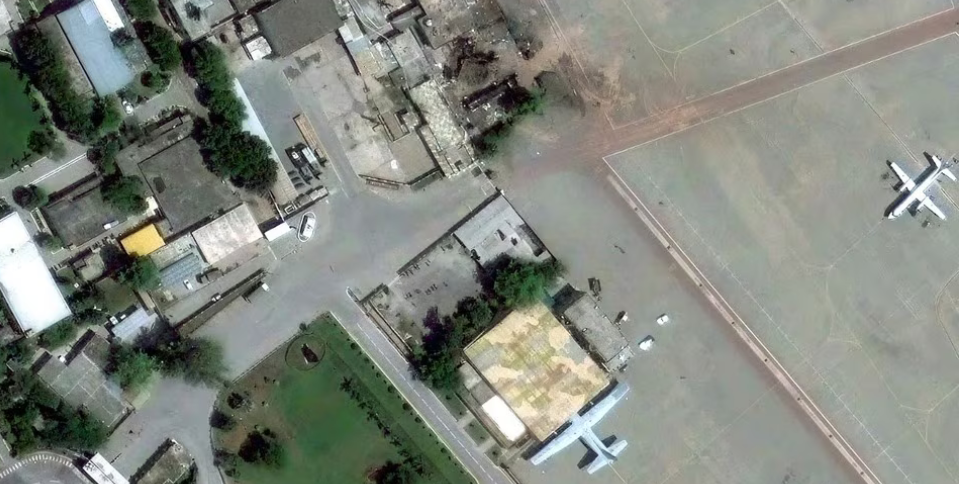
Satellite imagery first broadcast by NDTV later showed the scale and precision of the strike at Bholari. A massive hole had been ripped into the roof of the targeted hangar. Structures inside had collapsed, while debris from the powerful blast was scattered across the apron between the hangar and the runway. Yet the strike appeared remarkably precise, with no visible collateral damage around the designated target.
The extraordinary chapter had an equally dramatic epilogue.
Much later, when Defence Minister Rajnath Singh visited the base and sat down for lunch with the officers, Air Marshal Kapoor found himself sharing the table with the Air Chief.
Kapoor finally confessed.
“Sir, that day I lied to you.”
Air Chief Marshal A.P. Singh looked at him, smiled broadly and replied in Hindi:
“Mujhe pata hai.”
I know.
About the Author

Prasanta Paul served Deccan Herald as the Chief of Bureau, Calcutta for nearly two decades before switching to work with various TV channels such as Al-Jazeera, CNN, German TV and CBS. He also headed the Eastern Bureau of Parliamentarian magazine. Mr. Paul who accompanied former Prime Minister Atal Behari Vajpayee on his overseas tour of Singapore and other Asian countries, travelled extensively to Bhutan, Sikkim and Darjeeling besides other Northeastern states. He briefly headed the Mizoram Bureau of the United News of India (UNI).
Discussion
Reader Comments
No comments yet. Be the first to share your perspective.