BreakingInternational
When AI Knocks on the Door of Hindu Philosophy…....
The Vedanta–AI connection enthralls Anthropic
05 Oct 2026, 09:27 am IST·4 min read
Can artificial intelligence, created by humans, ever learn to distinguish between good and evil?
If we are teaching machines to think, who will teach them what is right?
Or will morality, for machines, ultimately remain no more than a set of rules and instructions written by their human creators?
As AI grows increasingly powerful and autonomous, a profound question is beginning to stare back at humanity: can a technology of our own making one day understand what morality actually means?
Will “ethics” remain merely another set of instructions written into its code?
As the world grapples with these questions, a highly confidential meeting between a leading Silicon Valley AI giant and an Indian Hindu monk has added an entirely intriguing new dimension to the debate.
For as AI pushes ever deeper beyond the boundaries of technology, the world of technology itself is now being forced to knock on the door of Vedanta and Hindu philosophy.
The Encounter
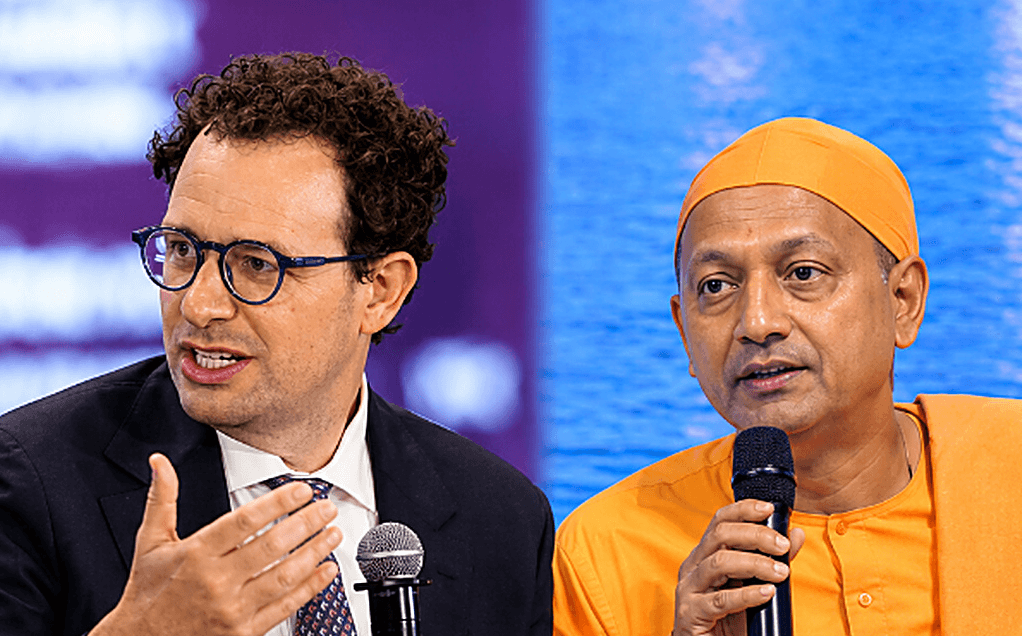
Swami Sarvapriyananda, head of the Vedanta Society of New York and a monk of the Ramakrishna Mission, was invited to the San Francisco headquarters of Anthropic, the American AI giant behind Claude.
According to the Swami, Anthropic initially contacted him for an online interview before inviting him to its office, where discussions continued for several hours.
The meeting brought together religious thinkers, mental-health experts and specialists from other fields. The central concerns were AI ethics and values, and how Anthropic is training Claude to operate safely and responsibly.
The discussions were held under strict confidentiality. Participants were required to sign non-disclosure agreements (NDA), meaning Swami Sarvapriyananda could not reveal precisely what questions were asked or what conclusions were reached.
He did indicate, however, that different ethical and philosophical perspectives were examined in relation to Claude’s training. One of Anthropic’s co-founders, he said, remained present throughout the meeting.
The Significance of the Encounter
The significance of the encounter lies far beyond the symbolism of a technology company consulting a Hindu monk. It points to a profound problem at the heart of frontier AI: how do you teach a non-human intelligence not merely what to do, but why it should do it?
Rules can tell an AI what is permitted and what is forbidden. But real-world decisions frequently involve ambiguity, competing values and moral uncertainty.
Should honesty always take precedence over compassion? When do individual freedom and collective safety conflict? What constitutes harm? Can an apparently beneficial decision produce an unacceptable consequence?
These are not questions invented by Silicon Valley. They have occupied philosophers and religious traditions for centuries.
That is where Vedanta and thinkers such as Swami Sarvapriyananda acquire particular relevance. Technology specialists can build increasingly sophisticated systems around data, computation and safety mechanisms.
But questions concerning consciousness, identity, morality, human nature and the meaning of a good life belong to a much older intellectual tradition.
Anthropic appears to be exploring precisely this intersection.
The company is understood to have engaged thinkers from several religious traditions, including Catholic, Jewish, Sikh and Evangelical Christian backgrounds. The underlying concern is increasingly clear: as AI systems become capable of reasoning and acting across complex domains, their behaviour cannot safely be governed only by a mechanical catalogue of rules.
Anthropic & Moral Status of AI
The issue becomes even more striking when viewed against Anthropic’s own evolving philosophy of Claude.
In January 2026, the company published Claude’s Constitution, a detailed document intended to describe and shape the model’s values and behaviour. Its primary author is Anthropic’s Amanda Askell.
The constitution seeks to make Claude broadly safe, ethical, honest and helpful, while giving it principles for navigating difficult situations rather than relying solely on rigid instructions.
Anthropic explicitly acknowledges uncertainty over the nature, identity and even possible consciousness or moral status of advanced AI.
That is a remarkable conceptual shift. The ambition is no longer simply to build an intelligent machine that obeys commands. It is to cultivate a system capable of exercising judgment.
And judgment is precisely where philosophy enters the AI laboratory.
The deeper question may be more civilisational; it therefore, is not whether Claude will become “human”. It is whether increasingly autonomous artificial systems will require concepts traditionally reserved for human beings—character, wisdom, values, responsibility and perhaps even a sense of self—to function safely in a human world.
Anthropic seeks to enter the domain of far harder a race which may be to decide what kind of intelligence we want AI to possess—and what kind of values should guide it.
About the Author
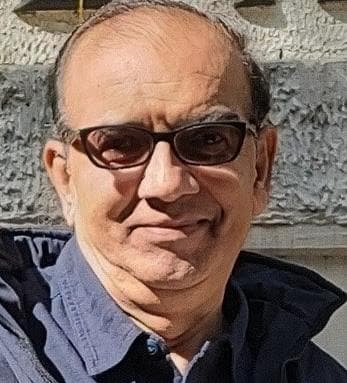
Prasanta Paul served Deccan Herald as the Chief of Bureau, Calcutta for nearly two decades before switching to work with various TV channels such as Al-Jazeera, CNN, German TV and CBS. He also headed the Eastern Bureau of Parliamentarian magazine. Mr. Paul who accompanied former Prime Minister Atal Behari Vajpayee on his overseas tour of Singapore and other Asian countries, travelled extensively to Bhutan, Sikkim and Darjeeling besides other Northeastern states. He briefly headed the Mizoram Bureau of the United News of India (UNI).
Discussion
Reader Comments
No comments yet. Be the first to share your perspective.