BreakingMiscellaneous
Opinion: Bengal’s Dropout Paradox: NEP Policy Hints Solution
Incentives can't hide the failure of community-relevant education
26 Sep 2026, 08:50 am IST·5 min read
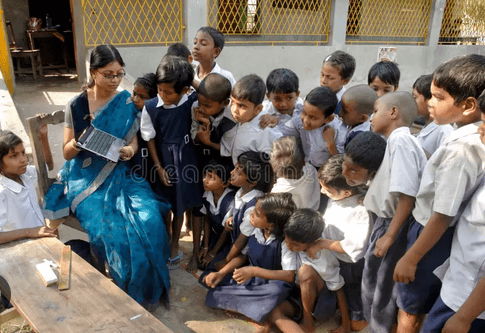
The West Bengal Government, by recently tabling the Comptroller and Auditor General's (CAG) report on Education in the state assembly, has kicked off a process of rethinking on what has been ailing our school education.
The report, based on the CAG audit of 2026 pointed to reasons behind an abysmal rate of dropout. On the other hand, Unified District Information System for Education (UDISE) and all-India report of the Ministry of Education (MoE) in 2024-2025 and 2025-2026 portray a jump from almost hell to heaven within one year on the issue of dropout.
Within a year, the question shifted from why 20% of the students in West Bengal, after reaching class nine, develop a strong penchant to drop out to how Bengal has succeeded in bringing down that rate to 1.5% barely within a year?
The state, as per the UDISE 2024-25, had earlier recorded the highest secondary-level dropout in the country. In sharp contrast this year, Bengal has clocked the lowest dropout state rank as per the new UDISE report!
This happened despite the near absence of any announcement of new government schemes to lure the students back to the classroom at the Ninth grade. UDISE reported this dramatic change after collating data from the West Bengal Government portal- Banglar Shikkha.
This is in sharp contrast to the prevailing norm under which UDISE used to collect data directly for other states. With political change we must go back to the UDISE practice which is normal for all states.
Samagra Siksha Report
The CAG Performance Audit Report on Implementation of Samagra Siksha in West Bengal between 2019-20 and 2023-24 shows that 70% of dropouts occur due to economic compulsion. The question arises why young adults lack confidence in pursuing a career for another couple of years when this could open avenues for a decent earning?
Quite a few long, unsettled questions arise from the clarion call under the National Education Policy (NEP) 2020. The NEP 2020 demonstrated a path to ensure Samagra Siksha (holistic education) enabling a pass out to earn, gain in relevant knowledge, and hone skills while developing the intent and intelligence to take up enterprises. A matriculate can really be educated in general education and skills to earn without leaving his/her focussed area.
Is our school system failing to equip students with the practical skills they need to achieve for financial independence and support their families in adulthood?
Those who needed the competence most to come out of the cycle of poverty are leaving the system regularly for subsistence. Are they inclined to think that the school is something far away for them, where spending two more years of their youth is a luxury, they cannot afford?
Do they or their parents feel so because the content, educational communication and minimal technical skills by trained teachers hardly match the reality where they have to work and earn? Answer is yes; statistics endorses reality.
Another Question
Logically comes the next question: If the government ensures through monetary schemes or any other way that students won’t need to leave the 9th and 10th standard of schooling, then will the relevance of school education to serve the socio-economic parameters be guaranteed?
The CAG audit finds out 53% of dropout occurs due to poverty, while 13% of the boys leave with a motto to start earning early and 4% tend to join the child labour force.
Hence, 70% of the total dropouts leave school during their early adolescence under economic pressure either due to real poverty or specific ambition or to work as cheap labour for the unorganized sector.
A 2017-18 Visva-Bharati-GRTF report found out that students in several villages in Malda, Birbhum and Hooghly dropped out to join the workforce so that they could buy a smartphone or a motorbike or build a pucca room. These clearly establish that for sundry jobs, a couple of years more in the school has little or no relevance for them.
The audit spotted a huge 28 to 42% transition loss between upper primary and higher secondary levels during educational progression through years. Auditors surveyed 581 out-of-school children in 21 high schools across six districts of West Bengal and interviewed the parents and relatives of children who have stopped going to school for more than six months or dropped out between 2022 and 2024.
Besides economic struggle, 14% cited unwillingness to study, while 12% gave marriage as a reason to leave school. Two per cent attributed difficulty to reaching school as the reason to discontinue.
This happens despite the state running all segment-based schemes up to the high school level to ensure students don’t leave school during this period.
State-Sponsored Incentive Schemes
For instance, Kanyashree introduced in 2013 still continues as a conditional cash-transfer scheme where a girl receives Rs 1000 per year upon entry at the eighth grade and a one-time grant of Rs 25,000 after clearing the higher secondary, if she remains unmarried.
The grant continues for unmarried girls up to doctoral level. However, despite this, the ratio of female dropout has been increasing since 2022 reaching the highest at 16.7% in the 2024-25 cycle.
Shikshashree, Aikyashree, and the post-matric scholarships provide financial assistance for SC, ST, and minority students. As per the December 2025 Rajya Sabha reply from the Ministry of Education, West Bengal holds 28.4% and 22.4% of Scheduled Tribe and Scheduled Caste dropout rates respectively at the secondary level.
Why did these scholarships fail to reduce the dropout rates of SC, ST, or minority students? Even a scheme to provide students with cycles - Sabuj Sathi – failed to turn them school-going.
Potential Signal
The state must take this as a signal that economic schemes can't hide the failure of community-relevant education. Transforming the course structure into a curriculum that would make real sense to general students rather than just being bookish, is the real issue.
Nobody is arguing to withdraw algebra or the periodic table from the syllabus or to teach history and geography any less rigorously. The argument is to form a curriculum that touches the terrain of the students and relates everything to their real lives in the neighbourhood and occupational ecosystem.
The case is more specific; the vocational exposure policy of the NEP 2020 starting from Class VI, is designed to be locally mapped in terms of skills rather than having a central fixity. It is high time to take cue from there to tackle dropout rates and make school education relevant to those who matter most – the students.
About the Author

Prof (Dr.) Biplab Loho Choudhury (Born in 1964 in Calcutta), former Head of the Dept of Center for Journalism & Mass Communication, Visva Bharati University, Santiniketan, has been a very senior professor. He is the first Chairperson of Indian Communication Congress. His book- Indian Paradigms of Development Man Standard and Communication offers a fresh perspective. Ms. Mohana Mukherjee is a Research Scholar, Center for Journalism and Mass Communication. She is currently working in the community participatory communication-Indian Knowledge System- School Education interface.
Discussion
Reader Comments
No comments yet. Be the first to share your perspective.