BreakingCreative Corner
Chandrakona: Bengal's forgotten epic, carved in terracotta and memory
A mofussil town in West Midnapore district hides within its ruins a story of Ramayana lineage
21 May 2026, 09:17 pm IST·7 min read
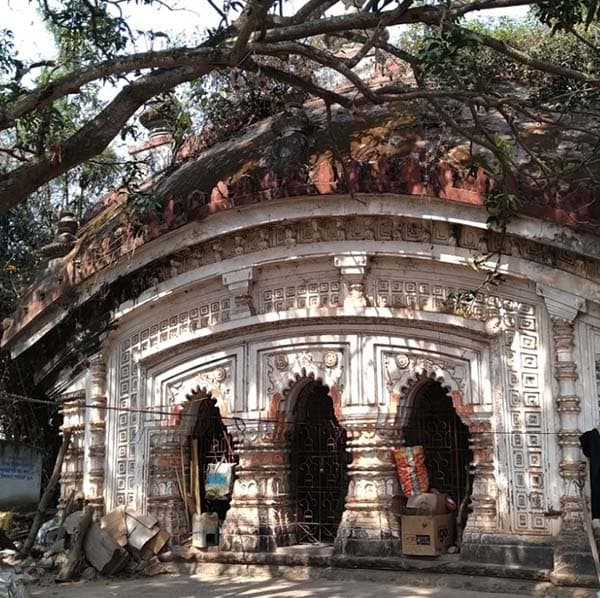
A mofussil town in West Midnapore district hides within its ruins a story of Ramayana lineage, dynastic wars, divine dreams, and a Bengal that once mirrored Ayodhya itself.
How many of you are aware that there exists, in the West Midnapore district of West Bengal, a village named Ayodhya — sitting beside a river that locals call the Sarayu?
These are not coincidences of geography. They are monuments built not in stone but in the naming of land and water, by a king who once dreamed of a god who refused to leave.
Hidden within the heart of Bengal lies a town named Chandrakona, layered with legends, forgotten kingdoms, ruined forts, and divine stories that stretch back to the age of the Ramayana itself.
Today it wears the quiet face of a mofussil town — dusty roads, sleepy afternoons, broken temple walls — but beneath that surface lies one of the most remarkable and under-celebrated heritage landscapes in all of eastern India.
Origins — a town born in the days of the Ramayana
Once upon a time, Chandrakona was not a quiet backwater but a flourishing royal centre, a seat of power ruled across the centuries by the Malla, Ketu, and Bhan dynasties. Its origins, according to local legend and oral tradition, reach all the way back to the aftermath of the Ramayana.
Folklore says that before ascending to Vaikuntha, Lord Rama instructed his younger brother Bharata to establish different princes across kingdoms, spreading righteous rule throughout the subcontinent.
Chandraketu, the son of Lakshmana and Urmila, is believed to have been one such prince. He is said to have founded a city called Chandrakanta Nagar — the city that would, through the long erosions of time, become today's Chandrakona.
The name itself, meaning "the radiant corner," hints at the luminous past this town once possessed. Ancient texts and regional chronicles place Chandraketu's kingdom in this part of Bengal, and local traditions have kept this memory alive through generations of storytelling, temple worship, and seasonal festival.
"Before leaving for Vaikuntha, Lord Rama instructed Bharata to establish princes across kingdoms — and Chandraketu, son of Lakshmana, came to Bengal."
The age of Forts — Ramgarh and Lalgarh
As centuries passed, Chandrakona grew into a centre of both military and spiritual power. Two great forts rose from its landscape: Ramgarh and Lalgarh. These were not merely defensive structures but the nuclei of entire cultural worlds — surrounded by grand temples, thriving markets, royal courts, and a deeply rooted Vaishnava tradition that shaped the spiritual life of the region for hundreds of years.
Within Ramgarh resided Raghunath Jiu, worshipped by devotees as Lord Rama himself. In Lalgarh, the deity Laljiu held court. The temples that housed these deities were built with remarkable craftsmanship — terracotta panels depicting scenes from the epics, intricately carved pillars, and sacred precincts that once echoed with the sounds of festivals, kirtan, classical music, and the rituals of royal patronage.
The Vaishnava influence that pervaded Chandrakona during this era connected it to the broader Bengal renaissance of Bhakti devotion that swept through the region following Sri Chaitanya Mahaprabhu's movement in the 15th–16th centuries.
Archaeological traces of this period — terracotta brickwork, carved lintels, the outlines of temple foundations — still survive, though they are increasingly endangered by neglect, vegetation, and the slow violence of indifference.
The War — and the Dream that saved a Deity
Then came war.
The conflict with Kirttichand, the powerful king of Bardhaman, brought catastrophe to Chandrakona. Both Ramgarh and Lalgarh fell. The forts were destroyed; the temples were shattered. And the victorious king, following the custom of conquering rulers, decided to carry the presiding deities — Raghunath Jiu and Laljiu — back to his capital at Bardhaman as trophies of conquest.
But the journey was interrupted by the divinity. Legend says that on the road to Bardhaman, Lord Raghunath appeared to King Kirttichand in a dream. The deity spoke clearly and without ambiguity: he wished to remain in Chandrakona. He would not be relocated. His home was here, among the people of this land, beside the river that bore his mother-city's name.
The king — moved, perhaps also frightened — obeyed without question.
The very next morning, Kirttichand ordered the construction of a new temple for Raghunath Jiu at Chandrakona. From that time onward, in an extraordinary gesture of devotional contrition, the entire expense of the deity's annual worship and all associated festivals was borne by the Bardhaman royal family — the very dynasty that had destroyed the original temple. The conqueror became the patron; the destroyer became the protector.
A New Ayodhya on the Sarayu
King Kirttichand's acts of reparation did not end at temple construction. In an extraordinary act of sacred geography, he established a village beside the temple site and named it Ayodhya. The small river flowing nearby was renamed Sarayu, after the sacred river of Rama's own city in Uttar Pradesh.
In doing so, Kirttichand was not merely building a village — he was recreating a cosmology, transplanting the spiritual essence of Ayodhya itself into the soil of West Midnapore.
Three temples were built on the banks of this newly named Sarayu, positioned between the ruins of Ramgarh and Lalgarh. Two were dedicated to Raghunath Jiu — the Deul (the main sanctum tower) and the Jagamohan (the assembly hall or antechamber). A third temple, built beside them, was dedicated to Laljiu. Together, the three temples formed a sacred complex that drew pilgrims from across the region and kept alive the memory of Chandrakona's ancient Ramayana connection.
The Bardhaman royal family continued its patronage of these temples for generations, funding not just worship but also the elaborate festivals — Rathyatra, Doljatra, Annakuta — that marked the devotional calendar and brought the community together across caste and season.
Ruins now waiting to be Read
Today, what survives of this extraordinary heritage is a landscape of magnificent, heartbreaking ruins. The Rasmancha — a multi-arched platform used for displaying deities during the Ras festival — stands broken but still imposing. The Natmandir, the hall of performance where devotional music and dance once entertained gods and kings, is crumbling.
The guest houses that sheltered pilgrims have largely collapsed. Ancient temple walls, carved with scenes from the epics, lean into the vegetation that slowly claims them.
The terracotta artisanship visible in these surviving fragments belongs to the finest tradition of Bengal's temple-building era — a tradition that flourished between the 17th and 19th centuries, producing masterpieces at Bishnupur, Kalna, and Ambika Kalna.
Chandrakona belongs to that same conversation. Its panels, where they survive, show the same skill, the same narrative ambition, the same devotional intensity. They were made by hands that understood that a temple wall is also a sacred text.
And yet Chandrakona is barely known outside its district. It receives no heritage tourism promotion, no Archaeological Survey of India active conservation, no cultural festival that might bring it to national attention. Its ruins are not dramatic enough to become viral, not convenient enough to become a weekend destination. They simply stand and slowly return to earth.
"Chandrakona is not just a town. It is a forgotten epic — carved in terracotta, preserved in dream, and kept alive by devotion alone."
A Plea — and a Hope
The decline of Chandrakona's heritage is, in large part, the result of decades of governmental neglect. The structures cry out for emergency conservation — not reconstruction that erases authenticity, but careful, scholarly restoration that preserves what remains and documents what has been lost. Local historians and heritage enthusiasts have long raised their voices. So far, those voices have not been loud enough to move the machinery of the state.
It is hoped that the new government of West Bengal will turn its attention to places like Chandrakona — not as charity to a forgotten town, but as an act of cultural duty toward one of Bengal's most remarkable and layered histories.
The Ramayana gave Bengal the story; the Bhan and Ketu dynasties built the temples. The Bardhaman king preserved the deity through a dream. Now it falls on us — governments, travellers, heritage bodies, and on every Bengali who takes pride in the culture of this land — to preserve what remains before it is gone entirely.
Chandrakona is not just a mofussil town in West Medinipur. It is a living argument that Bengal's sacred geography extends far beyond Nabadwip and Puri, that the Ramayana did not only happen in Ayodhya, and that gods — even in dreams — choose where they wish to remain.
Key Words: Archaeological Survey of India - Annakuta -Chandrakona – Doljatra- , Kirttichand - Laljiu -Natmandir - Rasmancha – Rathjatra- Raghunath Jiu - the Bhan and Ketu- Terracotta artisanship - Ramayana- Vaikuntha -West Bengal- West Midnapore.
About the Author
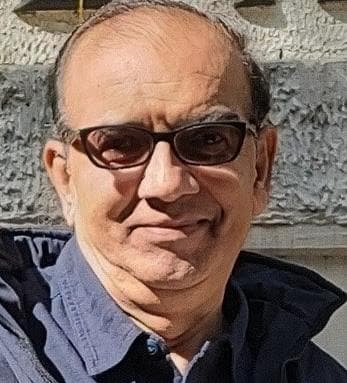
Prasanta Paul served Deccan Herald as the Chief of Bureau, Calcutta for nearly two decades before switching to work with various TV channels such as Al-Jazeera, CNN, German TV and CBS. He also headed the Eastern Bureau of Parliamentarian magazine. Mr. Paul who accompanied former Prime Minister Atal Behari Vajpayee on his overseas tour of Singapore and other Asian countries, travelled extensively to Bhutan, Sikkim and Darjeeling besides other Northeastern states. He briefly headed the Mizoram Bureau of the United News of India (UNI). To his credit goes a deep-rooted empathy for social issues and marginalized people. His extensive coverage on the Tsunami, the Super Cyclone in Odisha and the 2020 Amphan cyclone besides the Gaisal Train mishap in eastern India has easily been the best around the world.
Discussion
Reader Comments
No comments yet. Be the first to share your perspective.