Spinning a fortune to save a tradition
03 May 2026, 08:14 pm IST·3 min read
Every misty morning, some obscure villages of Bolpur in Birbhum district slowly wake up to the chirping of birds. They always come up with new tunes to communicate among themselves.
Batches of ‘obscure’ women, in an identical fashion, engage themselves daily in designing new handmade items to woo visitors-turned-customers to Tagore’s Santiniketan.
As they weave or blend or dye or design new patterns, they consciously or unconsciously build new bridges to become self-reliant, bit by bit, with their hand-powered enterprise.
These women are faceless ordinary villagers who have been increasingly replacing their male counterparts in giving an extraordinary push to the varied forms of cottage industry in the neighbourhood of Bolpur.
The entire landscape has slowly been undergoing a definitive change; these women, having replaced male dominance, have been innovating a vortex of intricate designs for home decoration.
Powered by a rising demand that is pushing a rapid flow of sale, the households of these women have become financially independent and economically self-reliant, giving the rural cottage industry segment a much-needed boost.
Among the umpteen varieties of thriving cottage industrial units in and around Santiniketan, handmade jewelry is one. And the ‘tale and gossip’ of this segment is quite funny, but equally interesting.
The women engaged in this trade aren't shunning their household chores; instead, they complete them and then dedicate themselves to this craft. And the biggest opportunity for the display of their products is the Sonajhuri Haat, 5 kms from the hustle and bustle of Santiniketan.
Meet Shonaka Beshra, the 37-year-old housewife of Goalpara who can be seen passionately weaving patterns of jewelry spreading her wire at the Haat. “ I make earrings, necklaces and bangles using thread, beads and fruit seeds and sell them here,” says Beshra with a sort of emotive confidence. She has two other fellow sellers from the village close by.
Beshra makes it a point to reach the Haat every Saturday and Sunday when the famous fair routinely opens each weekend, drawing a huge crowd of tourists, mostly young ladies and women from far-flung places.
Beshra is one among many such rural artisans who have become self-reliant by selling their hand-made products. How has it ushered in a change in their lives?
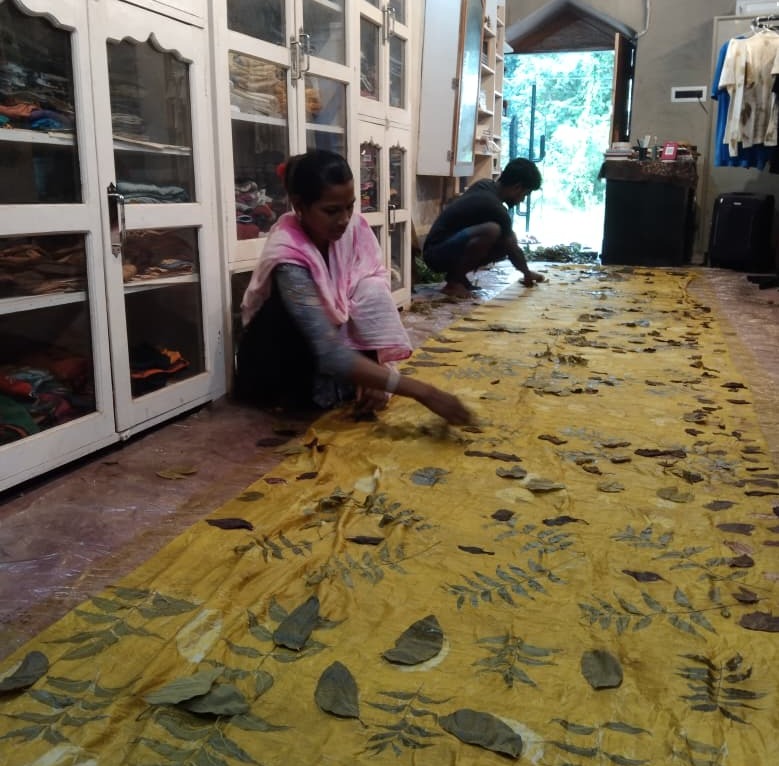
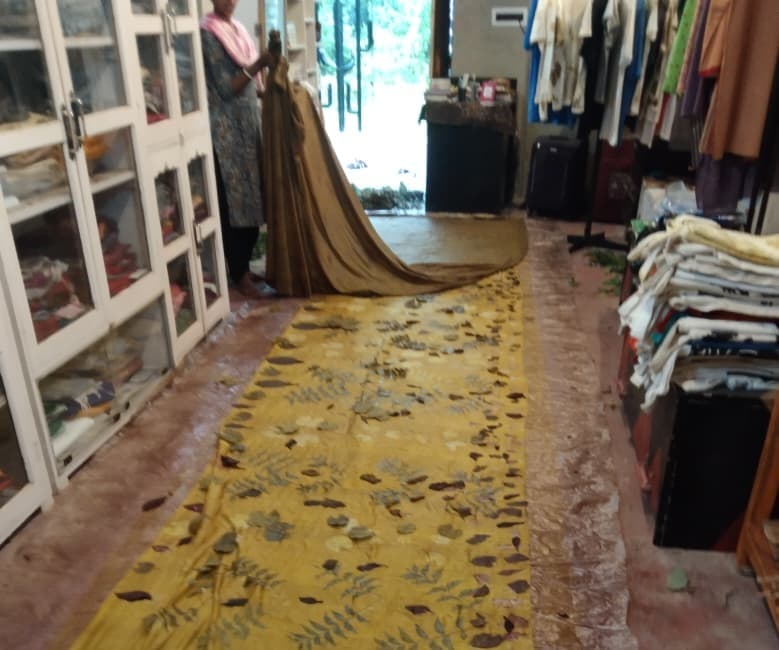
Woman working on handmade saree
“Intially, some ten years ago, I had financial problems in sending my daughter to school; when I started coming to the Haat, tourists began liking my products. As the order volume and subsequent sales have slowly grown, I now find it quite comfortable to handle my finances,” explains Shonaka. Her hands don’t take any break though from weaving the beads while speaking.
“Sometimes, ladies from cities and towns enquire if I can make one for them right in front; I readily agree and the result is I procure additional orders from her companions,” she sounds quite cheerful.
To a question on where she has learnt this art, her prompt reply is “Palli Shiksha Bhavan of Visva Bharati has provided us adequate training; many of us have developed our skillset there, enabling us to make our both ends meet.”
Tagore’s dream of women empowerment is truly getting translated through Palli Shiksha Bhavan; in fact, it’s not just handicraft, it is a symbol of rural India’s rebirth.
Cottage industry has become an important chapter in rural development; its revival is not only economic but a social revolution. In fact, there are countless rural men and women who have become self-reliant today, thanks to its sweeping development and worldwide recognition.
Currently, the social outreach of these products has steadily been increasing thanks to their promotion through videos, photos and films which are teeming with their presence in such various social platforms as Facebook, X (Formerly Twitter), Telegram and Messenger. As a result, product demand has been spiraling which is truly a positive aspect.
With the range of such rural handicraft spreading far and wide, especially abroad, an increasing number of village women have been embracing this profession to preserve the craft. Sonaka is not far from truth when she claims “We are not just working to earn; we are saving an important tradition”.
About the Author
U
Ukti Chowdhury, a final year student of Centre for Journalism and Mass Communication Visva-Bharati, Santiniketan, has been enrolled for a month’s internship with Eastern News Network (ENN). As an aspiring journalist, she is keen to leverage her skill to bring out the truth hidden in various layers of the society. She is ready to travel to the last mile to realise her goal through impactful journalism.
Discussion
Reader Comments
No comments yet. Be the first to share your perspective.