BreakingNational
Dr Shyama Prasad Mukherjee: Little-known Facts Veiled So Far
A proper and impartial dig at history will reveal the hidden truth
06 Jul 2026, 12:16 pm IST·4 min read
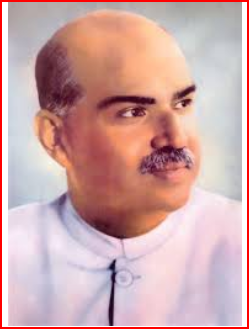
The learned custodians of our academia and media are quick to sort every person and every party into one of two neat camps — Left and Right.
And by that count, Dr Shyma Prasad Mukherjee whose 125th birth anniversary is being celebrated today across India, has already been tagged Right by the Left.
A proper and impartial dig at the history which we hardly do, would reveal a different story altogether. Just two among the umpteen references to Dr Mukherjee will shed a light where a veil of darkness has deliberately been kept looming.
Chittaranjan Locomotive Works
Have we ever been properly told how Chittaranjan Locomotive Works began, and who its principal architect was? Who was the person that petitioned the then Bihar government for land in West Bengal, so that a steam-locomotive plant could be established in the name of Deshbandhu Chittaranjan Das?
Who laid the foundation stone of that steam locomotive factory in January 1948, inviting Deshbandhu's widow, Basanti Devi, to perform the inaugural ceremony?
CLW, we simply know, builds electric locomotives for the Indian Railways.
Tragedy is history, suppressed and forgotten, will reveal that the name of that gentleman is Dr Shyama Prasad Mukherjee.
India won independence in 1947. But the Constitution was yet to be written. An interim national government was formed and Dr Shyama Prasad Mukherjee was invited to join.
Dr Mukherjee’s preference was the education portfolio, but that chair had already been reserved for someone "educated in a particular manner."
What fell to Shyama Prasad instead was the Ministry of Industry and Supply. Assuming charge, he discovered to his dismay that the greater part of the country's railway network ran on steam engines; and the same engines had to be imported from abroad and India had to rely on foreign firms even for their upkeep and total maintenance.
To break free of this dependence, he resolved to build India's own locomotives — and so began Chittaranjan Locomotive Works. It is worth noting, in particular, that CLW rolled out its very first locomotive on 26th January 1950 — the same day India presented to the world her own Constitution.
A step toward self-reliance in agriculture: the Sindhri Fertilizers Corporation.
We often grow accustomed to seeing a person through one fixed lens and a person can become a prisoner of his own image reflected in that lens. Only history — a hard, dispassionate walk through history — can break that sordid chain.
We have grown used to assessing Dr Mukherjee purely as a professional educationist or a political leader. How deeply he thought about the direction of the Indian economy, what he envisioned for the nation's self-reliance — of this, we know precious little.
The Sindhri Fertilizers Corporation too is unmistakably the doing of Dr Mukherjee. The aim was to lessen the burden of fertiliser import of the Indian. Thus, he conceived of — and brought into being — this fertiliser plant.
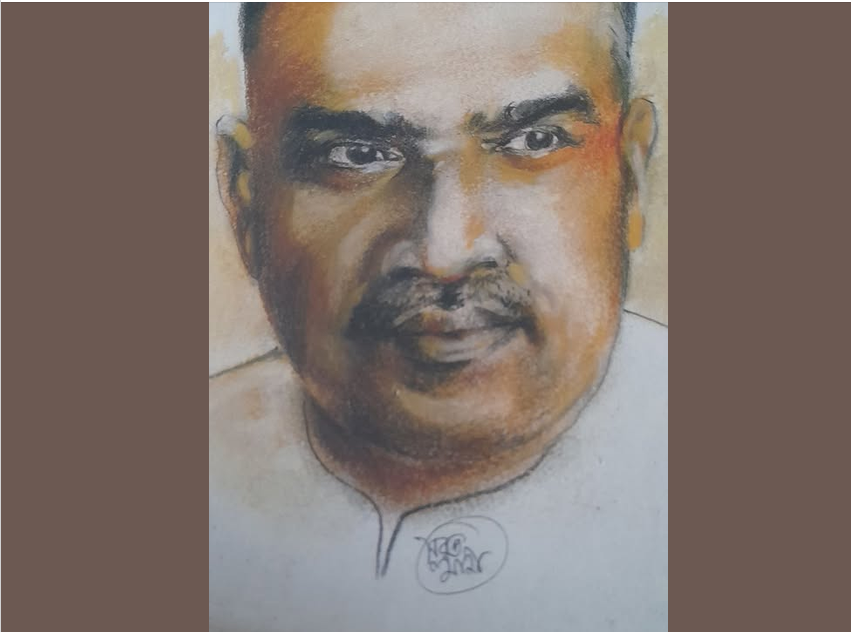
Debate: Right or Left
We can't even quite decide whether the actual, lived world of economics and politics can honestly be divided in a manner of the Right or Left. Because the moment one asks the question, one risks being called a fool — and who wants to be branded a fool?
By the judgment of the "enlightened," Shyama Prasad Mukherjee is a man of the Right. However, let's see, just once, what he himself said during an official address:
…Wealth that serves no purpose for the common people — India has no need of such wealth any longer. Government, industrialist, and worker alike must today devote themselves to the welfare of the ordinary man.
…In a land where, amid so-called prosperity, misery and poverty have grown starkly visible — if no definite remedy is undertaken at once, matters will turn so grave that the propertied classes will be swept away, and along with them, those presently entrusted with the governance of the nation.
Is there anything of the "Right" in words like these? If some especially "enlightened" soul can explain it, gracious gratitude will surely greet him or her.
Private Enterprise & Private Capital
Dr Mukherjee did believe in private enterprise and private capital; but in the same breath, he spoke for the workers too. He held that no nation could achieve gainful progress without a spirit of cooperation between workers and management.
He spoke of profit-sharing for labour — because he believed that only then would a worker truly come to think of the enterprise as his own.
What is true, though, is that he placed no faith in two hugely popular doctrines of his time — class struggle and wholesale nationalisation.
After more than a century, can we honestly label his thinking as completely irrelevant? Is there any committed Leftist today who still insists, unreservedly, on class struggle? If anything, they are the ones now demanding more dialogue with management.
Nor does anyone speak of nationalising industries anymore — what one hears instead is the hope that already-nationalised enterprises should not collapse; that with everyone's cooperation they should be made to survive and compete; that modern technology be applied wherever needed.
That balance — openness without dependence — is precisely what today's talk of a Viksit Bharat gestures toward.
About the Author
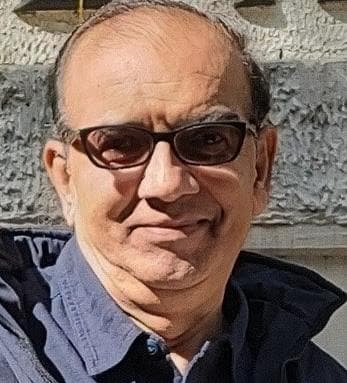
Prasanta Paul served Deccan Herald as the Chief of Bureau, Calcutta for nearly two decades before switching to work with various TV channels such as Al-Jazeera, CNN, German TV and CBS. He also headed the Eastern Bureau of Parliamentarian magazine. Mr. Paul who accompanied former Prime Minister Atal Behari Vajpayee on his overseas tour of Singapore and other Asian countries, travelled extensively to Bhutan, Sikkim and Darjeeling besides other Northeastern states. He briefly headed the Mizoram Bureau of the United News of India (UNI).
Discussion
Reader Comments
No comments yet. Be the first to share your perspective.