BreakingNational
India Rapidly Strides in Rare Earth Elements Exploration
‘Anushandhan Research’ to shortly leapfrog India’s position
03 Sep 2026, 11:04 am IST·4 min read
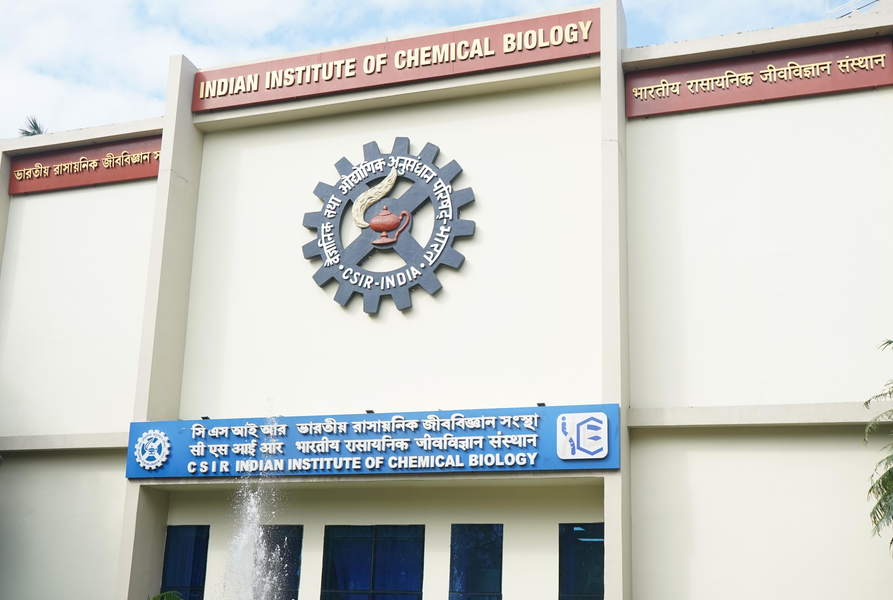
India has quietly been building its indigenous resources to strengthen the space and defence sectors besides automotive segment where shortage of rare earth elements (REEs) had once threatened to disrupt production and crucial research and development activities.
The Dragon land, New Delhi's close neighbour in Asia, imposed tough controls on export of REE to India early last year, triggering supply constraints for EV manufacturers.
However, under Anushandhan National Research Foundation (ANRF) and Critical National Mineral Mission (CNMM), efforts have been critically mounted to extract as much rare earth ingredients as possible and turn the same into profitable use through dedicated research and processing in the laboratories of Council of Scientific & Industrial Research (CSIR), India Rare Earths Ltd (IREL), IITs and Diagnostic Nasal Endoscopy (DNE), Dr. Ramanuj Narayan, director, CSIR – Institute of Minerals & Materials Technology (IMMT) disclosed here on Wednesday.
Speaking to Eastern News Network (ENN) on the sidelines of an interaction to mark the RISE Conclave 2026, Dr. Narayan said India currently ranks 3rd in the list of countries in the world having primary REE resources.
“India has been making rapid strides in the REE segment under the ANRF programme which is the latest initiative of the Narendra Modi government to carry out research with dedicated involvement of scientists while National Research Foundation (NRF) has also been working with the Ministry of Mines, Government of India, to fund research and development of pilot plants” Dr Narayan said.
Interestingly, India offers a big opportunity to produce rare earth minerals from both the primary and secondary resources.
As per the latest Geological Survey of India (GSI) report, five of the North-Eastern states — Assam, Arunachal Pradesh, Meghalaya, Manipur and Nagaland — are rich in REE and mineral reserves, including of graphite, vanadium, lithium and cobalt, which are crucial for the manufacture of batteries, semiconductors and advanced alloys besides key mobile components.
India used to source 85 per cent of its REE requirement from China; but the picture has undergone a sea change under the ‘Vikshit Bharat’ initiative in the wake of China imposing a blanket ban on REE exports.
That India has remained undeterred by the Chinese move, can be gauged by the fact that the country’s broader auto growth has helped it become the world’s third-largest automotive market at the moment.
Rare Earth Components
According to Dr. Narayana, rare earth itself constitutes 15 elements besides two other components, totaling 17, the combination of which finally gives its present term – rare earth elements.
These all are identified as critical for the complete value chain of energy, automotive and defence sectors. The most important is permanent magnets which are required for windmills, automobiles and other high-performance devices which is technically termed as NdfeB.
Mobile phone itself uses more than 56 elements for display and other components.
The Ministry of Mines (MoM) has launched the Critical National Mineral Mission (CNMM) to build self-reliance in 24 elements which include this rare earth group of elements.
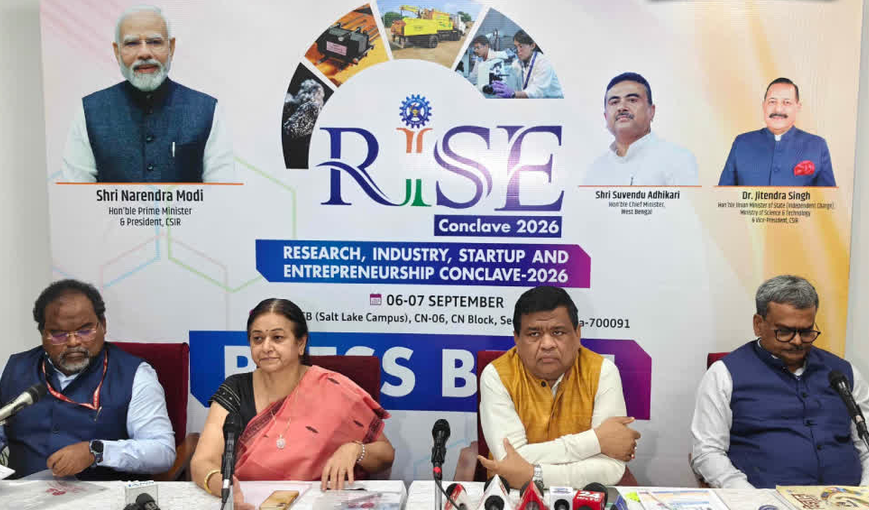
Under CNMM, India has identified 9 Centres of Excellence (CoE) to meet this strategic objective.
Two of the CSIR labs – CSIR IIMT Bhubaneswar and CSIR NML Jamshedpur – in the eastern region have been declared CoE under this programme.
The primary economic resources for rare earth elements are the minerals bastnäsite, monazite, and loparite, along with lateritic ion-adsorption clays.
And one of the biggest factors behind secondary resources include electronic gadgets and printed circuit boards among others.
“Although we have developed the capacity to recycle and exploit them, several new companies and start-ups have stepped up efforts to produce them in an integrated fashion” he stated.
“India, at the moment, ought to focus on recycling the first followed by extractions from the primary parts. This strategy, if properly implemented, will lead India to its goal of ‘Vikshit Bharat’, Dr Narayan averred.
Tapping the Potential in Northeast
Hence, if the Northeast emerges as a mineral and REE hotspot, India would be positioned as a strategic counterweight, with supply chains diversified and domestic resilience bolstered amid shifting global dynamics.
Additionally, what gains tremendous importance is the GSI report that has flagged what could become India’s first lithium brine prospect in Arunachal Pradesh, right at China’s doorsteps, along with Nagaland and Assam.
The lithium brine discovery may not immediately shake global markets, but it signals a strategic shift with long-term implications for supply chains, pricing dynamics, and geopolitical leverage, having the potential to challenge the dominance of the “Lithium Triangle” (Chile, Argentina, Bolivia) and Australia’s hard rock mines.
About the Author
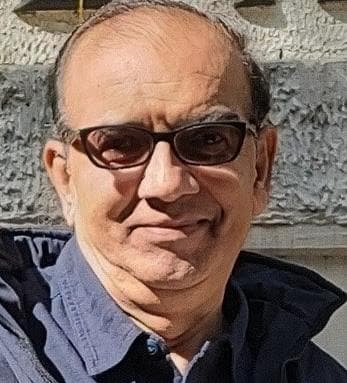
Prasanta Paul served Deccan Herald as the Chief of Bureau, Calcutta for nearly two decades before switching to work with various TV channels such as Al-Jazeera, CNN, German TV and CBS. He also headed the Eastern Bureau of Parliamentarian magazine. Mr. Paul who accompanied former Prime Minister Atal Behari Vajpayee on his overseas tour of Singapore and other Asian countries, travelled extensively to Bhutan, Sikkim and Darjeeling besides other Northeastern states. He briefly headed the Mizoram Bureau of the United News of India (UNI).
Discussion
Reader Comments
No comments yet. Be the first to share your perspective.
Similar Stories
National
Could the Bay of Bengal Hold a New Oil Bonanza for Bengal?
Future oil discoveries in the Bay of Bengal could be substantially larger than those currently being produced at Ashoknagar, Samik Bhattacharya.
Prasanta Paul·21 Sep 2026
National
Diamond May Soon Start Shining in Bengal, Samik Bhattacharya
“We’ve to reverse-engineer the earlier flight of capital from Bengal,” said Samik Bhattacharya “from diamonds to chips, capital has to return”.
Prasanta Paul·19 Sep 2026
National
Fair Is Foul, Foul Is Fair
Central Drugs Control issues a public-health alert against two unauthorised Pakistan-made cosmetic products—Goree Beauty & Chandni Whitening Cream.
Prasanta Paul·17 Sep 2026
