BreakingEnvironment
Methuselah: World’s Living Tree Watching history for nearly five Millennia
Older than the Pyramids: it’s a living monument to resilience
13 Jul 2026, 12:30 pm IST·3 min read
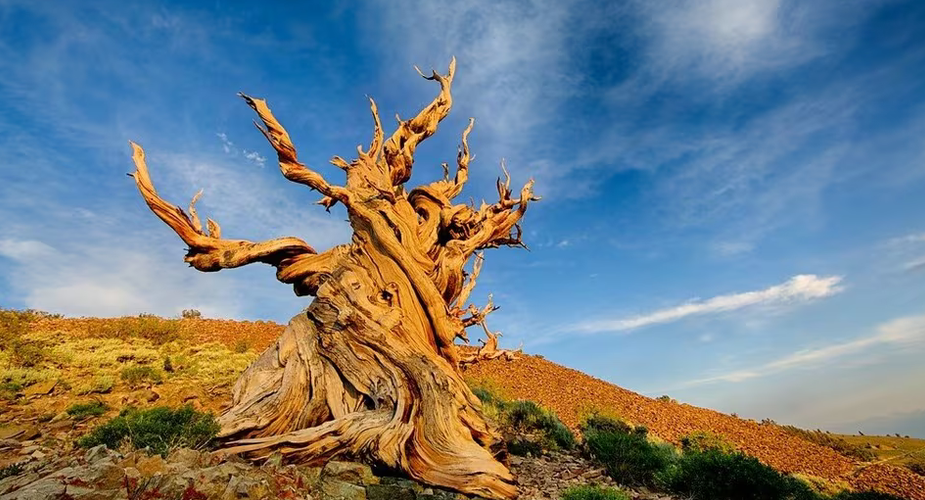
Our planet is home to a handful of living wonders that predate even humanity's greatest architectural achievements.
Long before civilizations began carving their stories into stone, one silent survivor had already taken root on Earth.
The oldest known living tree on the planet has endured for more than 4,850 years—making it older than Egypt's iconic pyramids.
It has silently witnessed the rise and fall of kingdoms, the birth and collapse of empires, and the relentless march of human civilization. This extraordinary botanical relic is not merely a tree; it is a living chronicle of Earth's past.
Today, in an age obsessed with skyscrapers, artificial intelligence and engineering marvels, a remote mountain range in California reminds us that nature still holds the ultimate record for endurance.
Hidden high in the White Mountains stands the world's oldest known living tree, surviving in near anonymity.
Methuselah: A Living Epic of Time
Scientists have named this remarkable tree Methuselah. It belongs to the Great Basin Bristlecone Pine, a species renowned for its astonishing longevity.
Using precise tree-ring analysis and radiocarbon dating, botanists estimate Methuselah's age to be well over 4,850 years.
By the time Egypt's oldest pyramid—the Step Pyramid of Pharaoh Djoser—was constructed, Methuselah had already been rooted in the earth for centuries.
The rise of the Roman Empire, the birth of Jesus Christ, the decline of the Indus Valley Civilization, and countless chapters of human history have unfolded within the lifetime of this single tree.
Few living organisms on Earth can claim to have witnessed so much history.
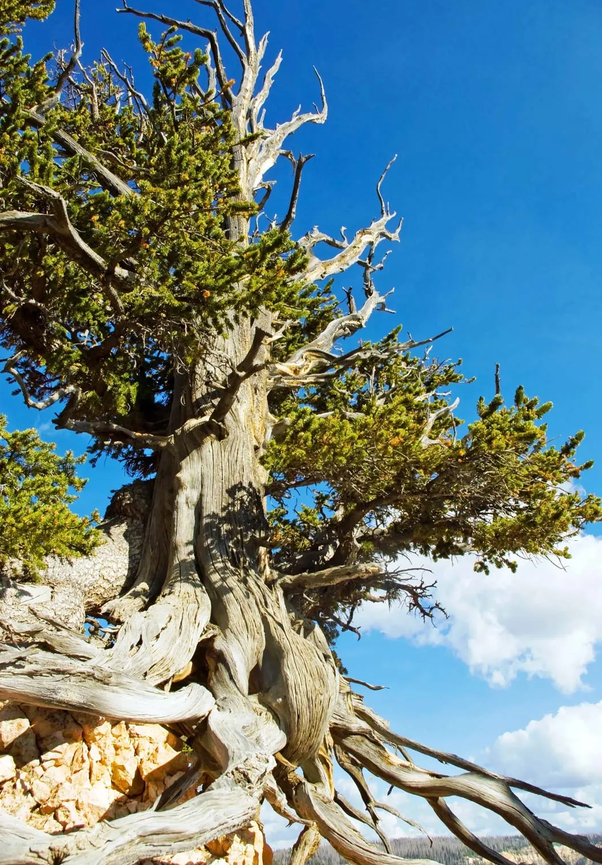
Credit: Britanica
How Has It Survived for So Long?
For scientists, Methuselah represents one of nature's greatest biological mysteries. Its extraordinary lifespan is the result of several remarkable adaptations.
Exceptionally slow growth: The tree grows at an incredibly slow pace, producing wood that is unusually dense, resin-rich and remarkably resistant to insects, fungi and decay. What appears to be slow progress has become the secret of its survival.
Thriving in harsh conditions: The White Mountains offer an environment that most plants would find hostile—freezing winters, fierce winds, dry air and nutrient-poor soil. Ironically, these unforgiving conditions protect Methuselah by preventing larger trees and invasive vegetation from competing for water and nutrients.
Built for longevity: The tree's needle-like leaves remain functional for nearly 30 to 40 years, reducing the energy required to replace foliage. Even if much of the tree dies, a small section of living tissue can keep it alive for centuries, allowing it to regenerate slowly over time.
A Closely Guarded Secret
Despite its global fame, Methuselah's exact location remains one of the best-kept secrets in the United States.
The U.S. Forest Service deliberately withholds its precise location to shield the ancient tree from vandalism and excessive tourism.
The decision stems from a painful lesson: another legendary bristlecone pine, known as Prometheus, was cut down decades ago during scientific research, destroying one of the oldest trees ever recorded.
Determined not to repeat that mistake, authorities have chosen secrecy as Methuselah's greatest protection.
Nature's Greatest Lesson
Methuselah is far more than an ancient pine. It is a living monument to resilience.
Human civilizations have built magnificent cities, towering monuments and colossal pyramids—many of which now stand weathered by time. Yet this solitary tree, clinging to a windswept mountainside, continues to send out fresh green needles year after year.
Its silent existence reminds us that while humanity measures history in dynasties and empires, nature measures it in millennia.
Long before the first pyramid rose above the Egyptian desert, Methuselah was already alive. And if protected, this timeless guardian may continue watching history unfold long after today's civilizations have become tomorrow's archaeology.
About the Author

Prasanta Paul served Deccan Herald as the Chief of Bureau, Calcutta for nearly two decades before switching to work with various TV channels such as Al-Jazeera, CNN, German TV and CBS. He also headed the Eastern Bureau of Parliamentarian magazine. Mr. Paul who accompanied former Prime Minister Atal Behari Vajpayee on his overseas tour of Singapore and other Asian countries, travelled extensively to Bhutan, Sikkim and Darjeeling besides other Northeastern states. He briefly headed the Mizoram Bureau of the United News of India (UNI).
Discussion
Reader Comments
No comments yet. Be the first to share your perspective.