BreakingInternational
Islamabad Rachets Up Rhetoric as Indus Waters Treaty Standoff Deepens
New Delhi holds firm: No revival until cross-border terrorism ends.
01 Jul 2026, 04:33 pm IST·3 min read
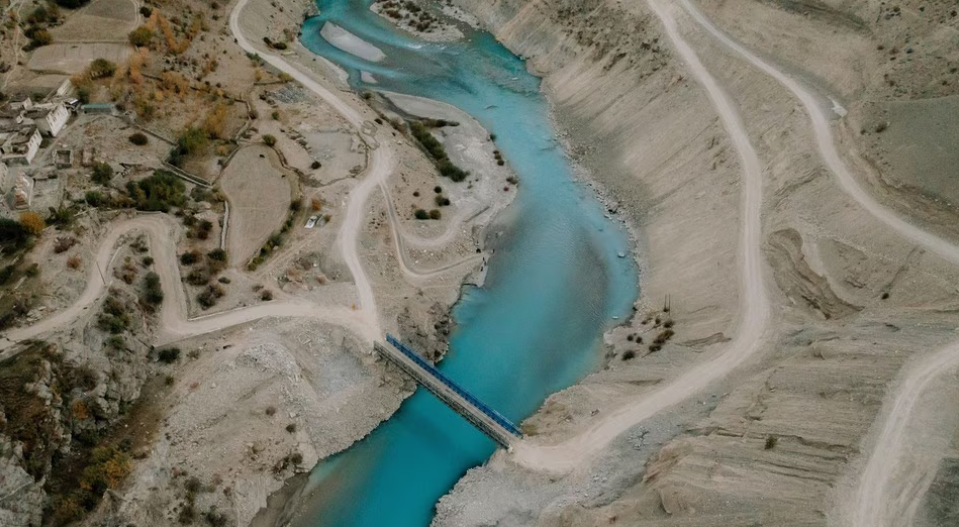
Pakistan is once again sounding the alarm over India's suspension of the Indus Waters Treaty — and this time, the language coming out of Islamabad has turned sharply combative.
With apprehension mounting over water shortages following an intensifying heatwave, Pakistan convened an international conference in Islamabad urging India to reinstate the six-decade-old treaty.
Its top leadership went further, warning that the treaty's collapse could undermine the credibility of the entire post-World War II system of international agreements.
India's response has not wavered: the treaty stays suspended until Pakistan credibly and permanently ends its support for cross-border terrorism.
Islamabad's Pushback: "Water Should Never Be a Weapon"
At a conference titled "The Indus Waters Treaty: A Key Instrument for Peace and Regional Stability," Pakistan's Deputy Prime Minister and Foreign Minister, Ishaq Dar, branded India's suspension a violation of international law, arguing no country can unilaterally suspend a treaty that contains no exit clause.
Water, he said, should never be turned into a political weapon — cross-border rivers ought to symbolize cooperation, not conflict.
Pakistan Peoples Party (PPP) chairman Bilawal Bhutto Zardari struck an even harder note, calling the Indus River Pakistan's "lifeline" and warning that any interference with its flow "will not be tolerated." He also floated a new global convention aimed at preventing the weaponization of water resources internationally.
Pakistan's Minister for Water Resources, Musadik Malik, framed the stakes in sweeping terms — arguing the treaty's fate could become a global benchmark for the credibility of international agreements, and that its failure would shake the foundations of the post-war international order.
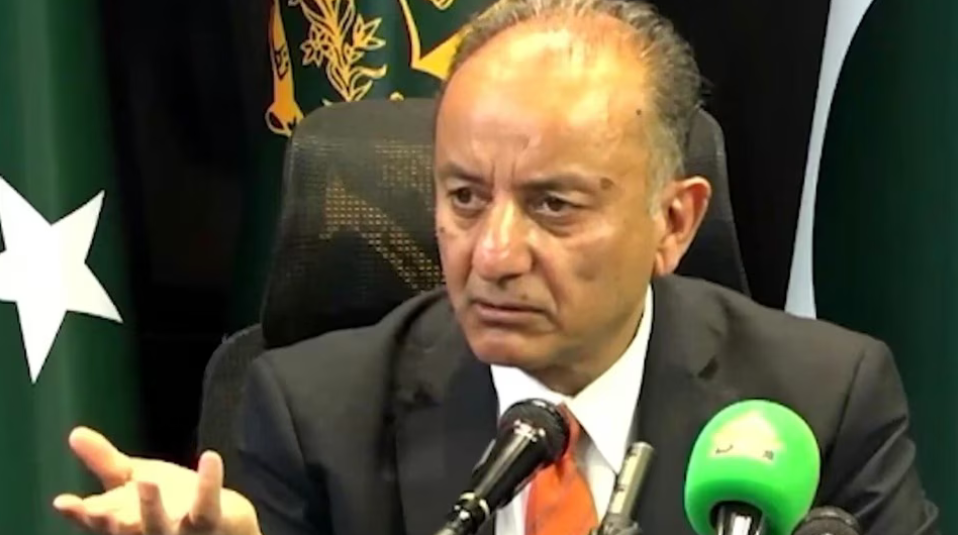
Pakistan's Minister for Water Resources Musadik Malik
"We Will Cut Off That Hand": Malik's Warning to India
In a separate and more inflammatory statement, Malik — Pakistan's Minister for Climate Change — warned that anyone who reaches for Pakistan's share of water would have "that hand cut off."
"We will defend ourselves. If anyone reaches for our share of water, that hand will be cut off."
Malik argued that at least 40 to 50% of Pakistan's population depends on agriculture, and that disrupting the water flow would deal a severe blow to food security, employment, and the broader economy.
India Holds the Line
New Delhi's position remains unchanged. Speaking at a UN event marking World Water Day, India's Permanent Representative, Harish Parvathaneni, said it was sustained cross-border terrorism — and the failure of bilateral dialogue — that forced India's hand in suspending the treaty. He reiterated that it will not be revived until Pakistan credibly and irreversibly halts its support for terrorism.
Adding to Pakistan's woes, Union Minister for Water Resources C.R. Patil recently said India intends to fully utilize its rightful share of Indus basin waters within the next 18 to 24 months, stating plainly that "not a single drop" of India's share would be allowed to flow into Pakistan going forward.
Background: A Treaty Frozen After Pahalgam
The current standoff traces back to April 2025, when a vicious terrorist attack in Pahalgam, Jammu and Kashmir, killed 26 tourists. In its aftermath, India launched ‘Operation Sindoor’, attacking selected terror hideouts in Pakistan and a devastating and precision strike using Brahmos missile at Nur Khan airbase at Rawalpindi, crippling air traffic operations there.
Besides, India simultaneously rolled out a series of diplomatic and administrative measures against Pakistan — chief among them being the suspension of the 1960 Indus Waters Treaty.
Brokered by the World Bank, the treaty had governed the sharing of the Indus River and its tributaries between the two countries for 65 years, surviving multiple wars and long stretches of diplomatic hostility.
Signed in 1960 under World Bank mediation, the Indus Waters Treaty has long been considered one of the more durable frameworks of India-Pakistan cooperation, having withstood decades of war and diplomatic breakdowns.
But escalating security tensions and unresolved terrorism concerns have now placed it under its greatest strain in generations.
Observers say Pakistan's latest rhetoric is likely to deepen an already tense standoff. India, as of this writing, has issued no official response to Malik's warning.
About the Author

Prasanta Paul served Deccan Herald as the Chief of Bureau, Calcutta for nearly two decades before switching to work with various TV channels such as Al-Jazeera, CNN, German TV and CBS. He also headed the Eastern Bureau of Parliamentarian magazine. Mr. Paul who accompanied former Prime Minister Atal Behari Vajpayee on his overseas tour of Singapore and other Asian countries, travelled extensively to Bhutan, Sikkim and Darjeeling besides other Northeastern states. He briefly headed the Mizoram Bureau of the United News of India (UNI).
Discussion
Reader Comments
No comments yet. Be the first to share your perspective.