BreakingCreative Corner
‘Star Wars’ in Remote Indian Village Drawing Star Gazers
Udhmale’s greatest asset is its pitch darkness
22 Aug 2026, 01:26 pm IST·4 min read
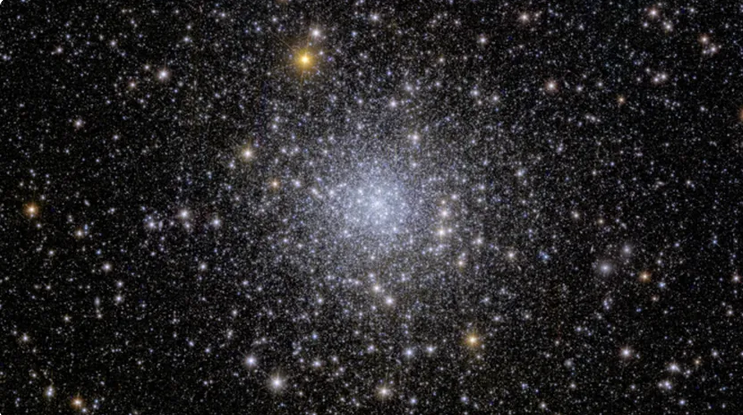
Twinkle, twinkle, little star,
How I wonder what you are......
When did you last gaze at a night sky studded with millions of milky-white, twinkling stars?
Long after the nursery rhyme faded from memory, perhaps you cast a casual glance skywards during a sudden power outage—only to find darkness above, but precious few stars.
In the modern city, the stars have not disappeared. We have simply lost the ability to see them.
Artificial light has thrown up an invisible curtain between human eyes and the universe. Street lamps, halogens, neon signs, illuminated billboards, shopping malls and glowing apartment blocks have steadily conquered the night.
Even on a moonless night, when a handful of stars manage to pierce the urban glare, they often vanish behind clouds stained by smoke and pollution.
Now, however, a remote tribal village in Maharastra’s Nasik district has suddenly catapulted itself onto the itinerary of astro-tourists and star-gazers from India and abroad.
Welcome to Udhmale, where the night itself has laid its beauty bare.
Tucked away amid the hills of Surgana taluka in Nashik district, the tiny village has no grand historical monument, no luxury resort and no glittering entertainment complex.
Until recently, few outside the region had even heard its name. But today, Udhmale is emerging as one of India's most fascinating astro-tourism destinations.
Its greatest asset is pitch darkness.
And a what darkness it is!
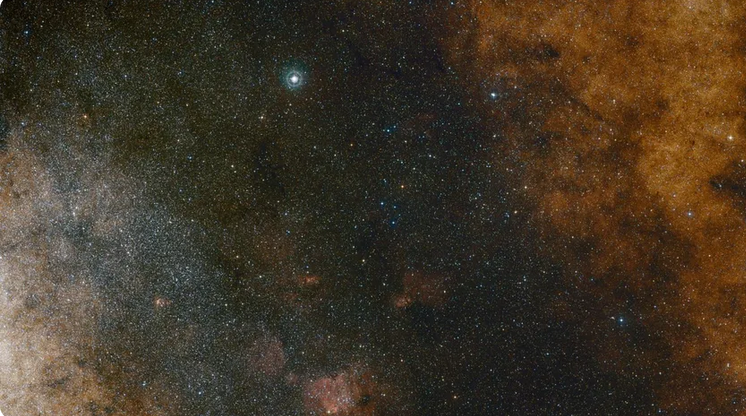
As night descends, the village appears to surrender itself to the heavens. There is no artificial glare to compete with the stars. Look in virtually any direction and the sky opens up like a vast cosmic theatre, shimmering with countless points of light.
Star clusters become visible to the naked eye, while the Milky Way appears to snake across the darkness in a breathtaking celestial sweep.
Hours can pass simply looking up.
For city dwellers, such a sky has become an almost forgotten luxury. The problem is not that the stars have gone away; light pollution has pushed them beyond our vision.
The World Atlas of Artificial Sky Brightness has warned of the enormous reach of artificial skyglow, with a large majority of the world's population living under light-polluted skies.
That is why destinations with genuinely dark skies are becoming increasingly precious.
Maharashtra has identified several locations for the promotion of astro-tourism, and Udhmale figures prominently among them.
The village, inhabited largely by members of the Kokna tribal community, has a population of barely 500 to 600 people. Yet this little settlement has begun dreaming big—by preserving something the world's great cities have almost casually destroyed: the natural darkness of night.
Dark Sky Community
The villagers themselves have played a crucial role in seeking recognition for their star-filled skies. Efforts were initiated to bring the village within the framework of a Dark Sky Community, including initiatives linked to local self-governance under the PESA Act. The broader objective has been to preserve the night environment and develop the area as a centre for responsible astro-tourism.
Here, darkness is not treated as an inconvenience to be eliminated. It is carefully protected as a natural resource.
The village has largely escaped the common forms of light pollution—light trespass, over-illumination and light clutter. Light trespass occurs when unwanted illumination spills into places where it is neither needed nor wanted—for instance, when a powerful streetlight shines through somebody's bedroom window.
Light clutter, meanwhile, is created by a confusing profusion of bright and often multi-coloured lights that distract, disorient and overwhelm the natural visual environment.
In Udhmale, such intrusions are conspicuously absent.
There are no blazing neon signs tearing holes through the darkness. No giant floodlights washing out the heavens. No excessive illumination competing with the moon and stars.
Nature provides the light.
And that has become the village's greatest tourism magnet.
Pollution-Free Sky
At a time when urban life has made a clear horizon and a pollution-free sky increasingly rare, people are travelling to selected pockets of the country simply to rediscover the universe overhead.
Astro-tourism is turning the night sky into a destination in itself—where travellers come not for malls, monuments or manicured nightlife, but for silence, darkness and a chance to see what civilisation has hidden from itself.
Udhmale offers precisely that.
There, you may not need a telescope to begin your journey through the cosmos. Just lift your eyes.
And perhaps, after years of looking at illuminated screens, you may finally rediscover the oldest spectacle known to humankind—a sky blazing with stars.
For, in this obscure village in the hills of Nashik, the greatest show begins when all the lights go out.
About the Author

Prasanta Paul served Deccan Herald as the Chief of Bureau, Calcutta for nearly two decades before switching to work with various TV channels such as Al-Jazeera, CNN, German TV and CBS. He also headed the Eastern Bureau of Parliamentarian magazine. Mr. Paul who accompanied former Prime Minister Atal Behari Vajpayee on his overseas tour of Singapore and other Asian countries, travelled extensively to Bhutan, Sikkim and Darjeeling besides other Northeastern states. He briefly headed the Mizoram Bureau of the United News of India (UNI).
Discussion
Reader Comments
No comments yet. Be the first to share your perspective.