BreakingNational
Supreme Court Judgement Deals a Blow to Opposition Bloc
“You cannot occupy a protest site for all time to come”- SC
04 Nov 2026, 11:36 am IST·4 min read
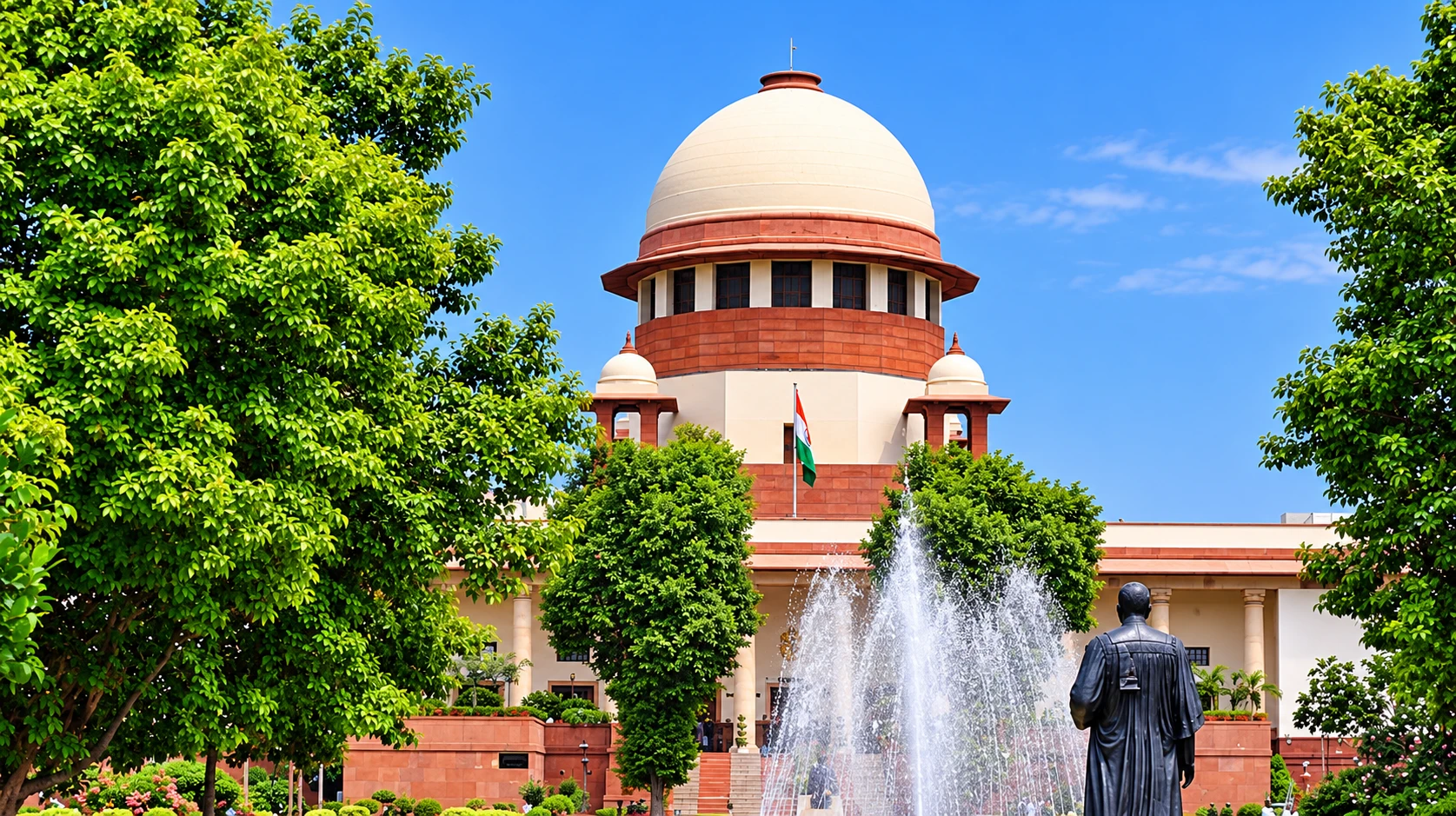
The historic judgement of the division bench of the Supreme Court on Tuesday not only gave a big blow to the opposition Congress-led INDIA alliance, but also served as an eye opener to all the political parties of the country.
That a prime location in the heart of the capital cannot be held at ransom for an indefinite period by any entity of the country, has been abundantly made clear by a three-judge bench of the Supreme Court.
The prolonged seize coupled with intermittent demonstrations in New Delhi, especially at Jantar Mantar by the Cockroach Janata Party (CJP) and joined later by the Congress-led alliance had severely disrupted business transactions and affected the livelihood of innumerable traders.
“Even the right to protest at a designated site has to be for a certain period. You cannot occupy a protest site for all time to come…where will farmers, traders, journalists go? Everyone has a right to protest. Designated sites must be given for a designated period,” the bench led by honourable Chief Justice Surya Kant stated without mincing words.
The real blow was delivered when the judgement categorically pointed out that no individual, group or organisation could claim an indefinite right to occupy a designated protest site.
The bench comprising CJI Surya Kant and justices Joymalya Bagchi and V Mohana stressed that other organisations or entities too have an equal constitutional right to use the same public space to raise their grievances.
“You cannot occupy a protest site indefinitely. You cannot prevent other people from protesting, saying ‘I can protest and you cannot’,” said the court, adding that the order granting permission must spell out the reasons for allowing or refusing a protest and, if allowed, the duration for which the site could be used.
The top court made these observations while hearing a clutch of petitions arising from the police action during the July protests led CJP, including allegations of mass detentions, police excesses, internet restrictions and the closure of metro stations.
The latest stricture from the SC followed a petition filed by the Kirana Committee Delhi and other traders’ bodies, represented by senior advocate Mukul Rohatgi.
Traders Seek a Ban on Protests
The Chamber of Trade and Industry (CTI) has estimated that Delhi suffered business losses worth nearly ₹11,000 crore following the massive INDIA bloc rally at Ramlila Maidan on November 1.
The CTI claims that the disruption severely affected retail and wholesale markets, transportation, hotels and restaurants, as well as the tourism sector. Nearly 2.5 lakh shops were reportedly forced to remain closed that day.
Alarmed by the mounting economic losses, CTI on Tuesday wrote to the Delhi Police Commissioner, seeking a ban on all processions, political rallies and sit-in demonstrations in the national capital until November 11.
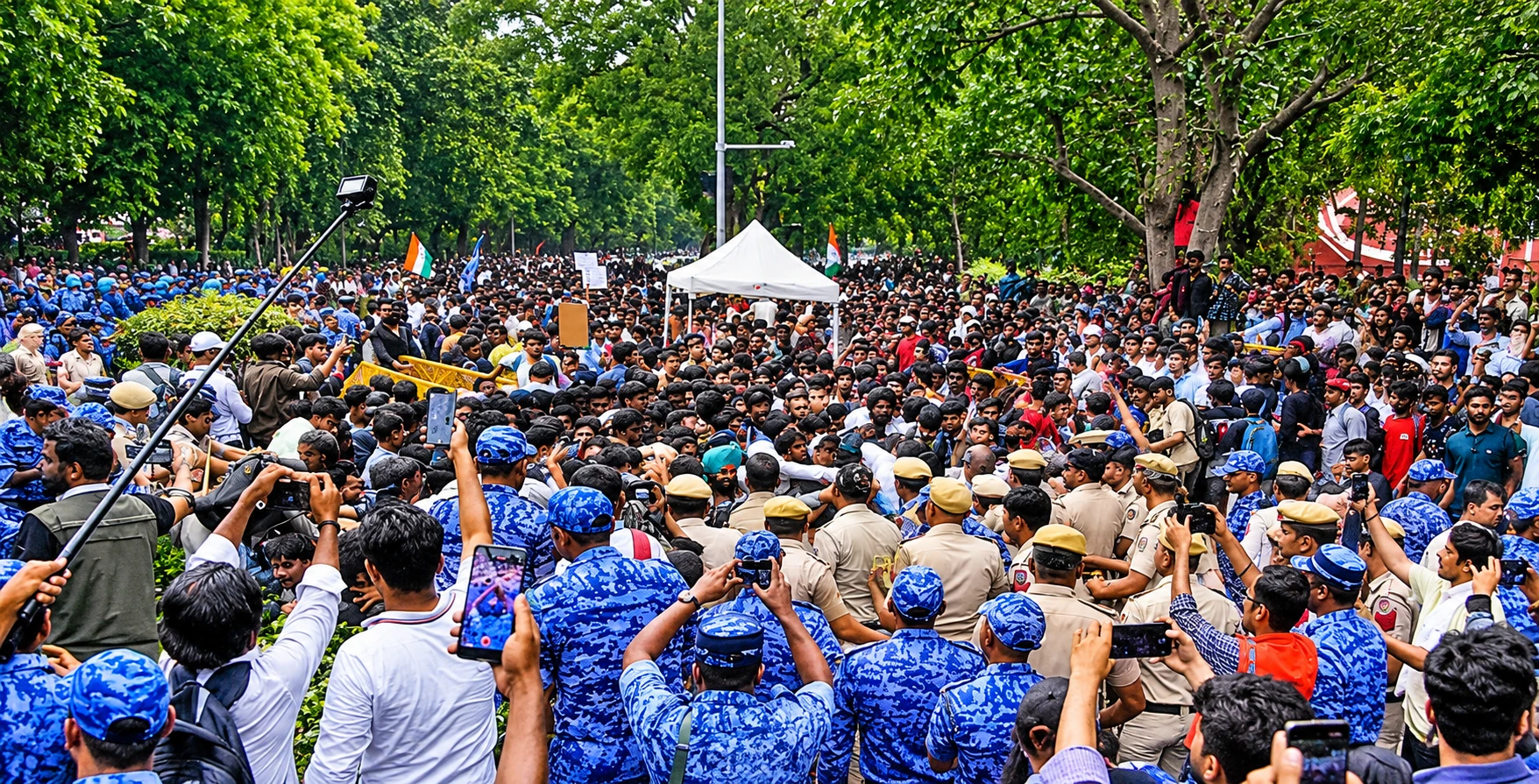
The organisation further claimed that repeated political rallies and protest programmes over the past couple of months had inflicted severe cumulative business losses of approximately ₹14,000 crore on Delhi’s trading community.
The resulting interruptions in the movement of people and goods have taken a heavy toll on routine business activities.
The traders argue that while political demonstrations are a part of democratic expression, their recurring disruption of commercial life is imposing an increasingly unsustainable economic burden on the capital’s business community.
The Point of Duration
The CTI has welcomed the observation of the division bench which categorically directed the police to make it clear to an organisation or political party the duration for which the site could be used, if permission is granted to hold a protest.
However, the bench made it clear that permission to hold a protest at an identified site could not translate into an open-ended licence to occupy it.
The bench, has, at the same time, warned against treating the dispute as one in which either side must surrender its rights.
“It is a competing right -- your right to trade, business and earn livelihood and someone’s right to protest peacefully,” it said. The right to livelihood, it added, was not confined to business profits but extended to daily wagers and small traders.
“These are two competing claims -- right to protest is recognised by the Constitution and right to trade and earn livelihood,” said the bench.
The judges also made it specifically clear that the way forward was to identify public spaces for demonstrations without hampering the ability of others to earn their livelihood.
The opposition Left parties including CPI(M) in West Bengal must take a cue out of the Supreme Court judgement.