BreakingSeven Sisters
Unprecedented Flood Fury Ravages Assam, Arunachal
Twin northeastern states battle deadly monsoon deluge
31 Jul 2026, 09:57 am IST·4 min read
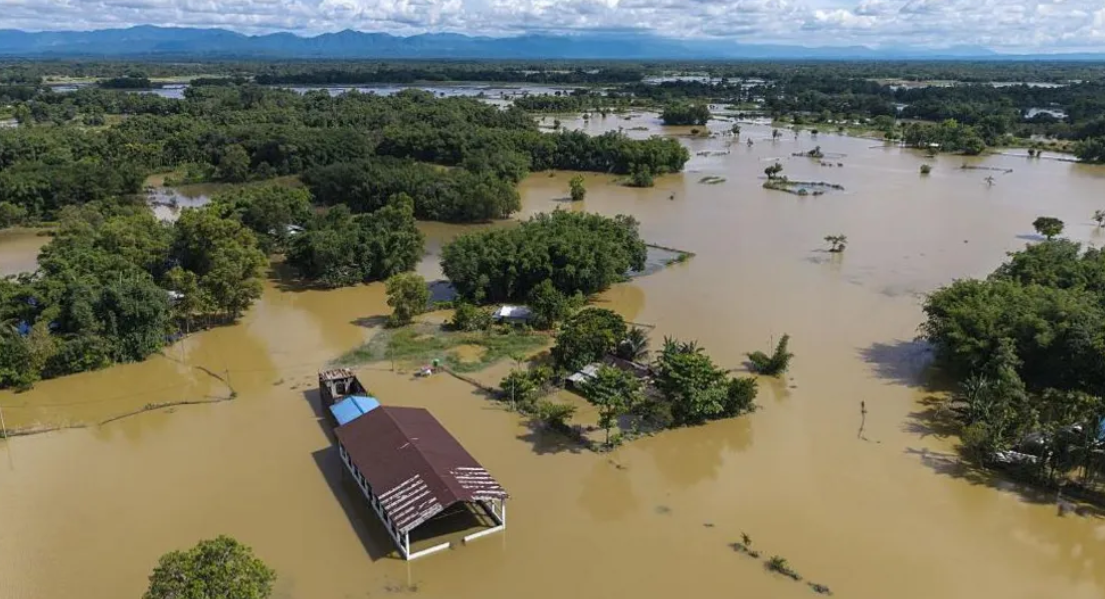
Northeast India is in the grip of one of its most punishing monsoon seasons in years, with Assam and Arunachal Pradesh bearing the brunt of floods and landslides that have left scores dead, displaced hundreds of thousands, and unleashed a trail of devastation across roads, bridges, farmland and homes.
Assam: Death Toll Climbs Past 78
In Assam, officials confirmed on Thursday that the flood death toll for this year's monsoon season has risen to 78 and the toll has been going up every day. Though the floodwaters have begun receding in some districts, latest weather predictions have threatened more rains in upper catchment areas.
According to the Assam State Disaster Management Authority (ASDMA), more than three lakh people remain affected, with Charaideo district the worst hit, followed by Sivasagar and Jorhat.
Seven districts — Golaghat, Jorhat, Nagaon, Sivasagar, Charaideo, Biswanath and Kamrup (Metropolitan) — have witnessed unprecedented destruction this season.
The scale of agricultural loss has been severe, with over 21,500 hectares of cropland damaged and more than 11,000 livestock swept away in the deluge. Urban Guwahati has not been spared either, with low-lying neighbourhoods including Rukminigaon, Anil Nagar, Hatigaon, Zoo Road and Nabin Nagar left waterlogged for days.
Even as waters have started to withdraw in many places, thousands of residents are unable to return home because their houses remain filled with mud and silt, or have been damaged beyond immediate use.
Unlike previous years, when the mighty Brahmaputra itself has been the chief culprit, this year's disaster followed a different pattern. Meteorologists and disaster officials say the 2026 floods were driven largely by intense upstream rainfall over Nagaland and Arunachal Pradesh, which sent the Brahmaputra's south-bank tributaries — the Dikhow, Disang, Janji and Dhansiri rivers — surging past danger levels well before the Brahmaputra itself reached peak discharge.
Water overtopped embankments in several stretches, flooding areas in Upper Assam that do not typically see catastrophic flooding, underscoring how closely the flood risk in the Assam plains is tied to rainfall patterns in neighbouring hill states.
Union Home Minister Amit Shah spoke with Assam Chief Minister Himanta Biswa Sharma to review the situation and assured the state of full central assistance for relief and restoration work. Sharma, in turn, has pledged that no affected family will be left without support as relief and rehabilitation efforts continue.
The reprieve may be short-lived. The India Meteorological Department (IMD) has forecast heavy to very heavy rainfall accompanied by thunderstorms between July 31 and August 1 in isolated pockets across Assam and adjoining parts of Arunachal Pradesh and Nagaland.
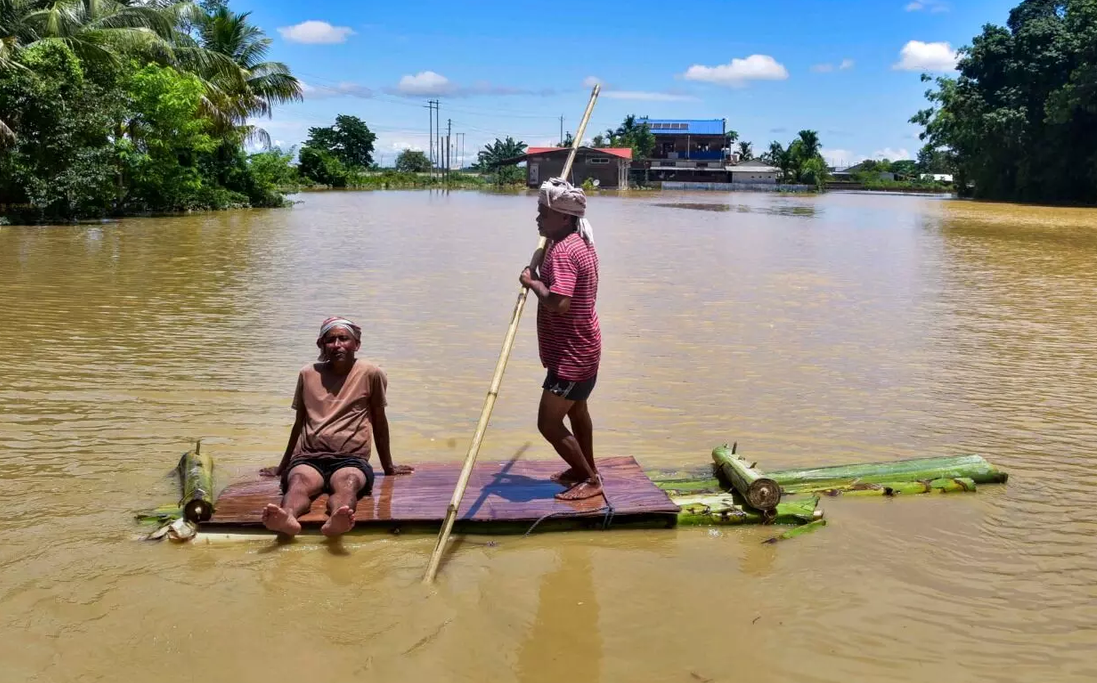
The districts of Tinsukia, Dhemaji and Lakhimpur — which border Arunachal Pradesh — are considered particularly vulnerable to a fresh spike in water levels. The ASDMA has urged residents in these districts to stay alert and monitor official updates.
Arunachal Pradesh: Hills Battered by Repeated Flash Floods and Landslides
Arunachal Pradesh, which forms much of the upper catchment for Assam's tributary rivers, has itself endured wave after wave of flash floods and landslides through July. Earlier in the month, the State Emergency Operation Centre (SEOC) reported that more than 97,000 people across 425 villages in all 26 districts of the state had been affected by the ongoing monsoon calamity, with the season's death toll standing at seven and 29 people injured.
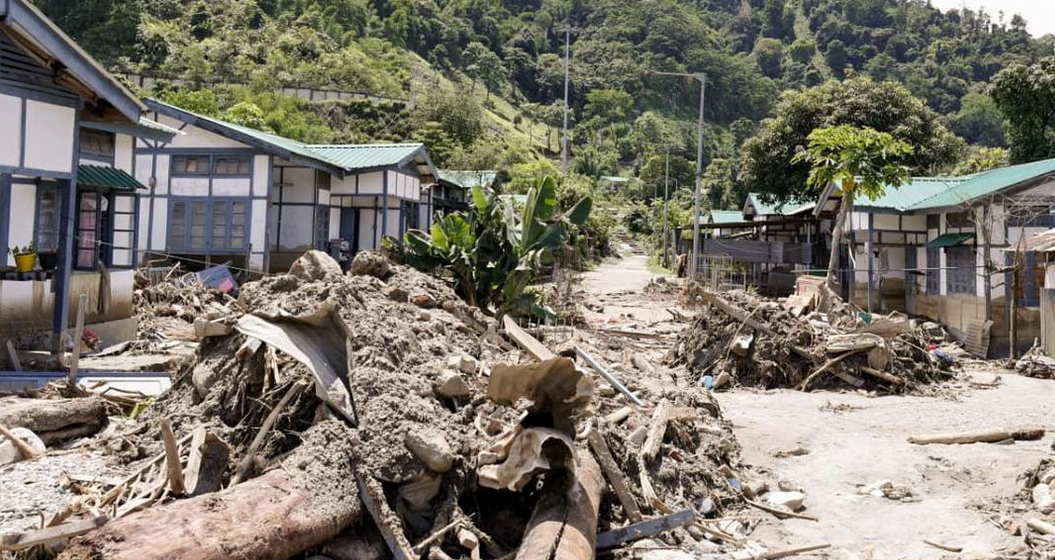
Kurung Kumey district emerged as one of the worst-hit areas, after a sharp rise in the Kumey River triggered flash flooding in the Parsi-Parlo circle and Damin subdivision. Other districts including Upper Siang, Tirap, Changlang, Papum Pare, Upper Subansiri, East Kameng, Kamle and Kra Daadi have all reported fresh flood or landslide damage at various points this month, with roads, bridges, irrigation channels, water supply systems and power infrastructure repeatedly cut off and later restored, only to be hit again by subsequent spells of heavy rain.
Infrastructure Loss
Officials have recorded extensive infrastructure losses across the state, including damage to over 130 roads and around 19 bridges, alongside nearly 200 water supply schemes, according to earlier assessments in July.
More than 800 houses — a mix of kutcha and pucca structures — have been damaged, and cumulative agricultural and horticultural losses have crossed 600 hectares. Two migrant labourers were killed in a landslide at a construction site in Lohit district, while two women swept away by flash floods in Keyi Panyor in late June remain missing.
The SEOC has said rescue, relief and restoration operations are continuing in the affected areas, even as fresh rainfall keeps adding to the toll.
A Recurring Pattern, A Warming Concern
Assam's vulnerability to flooding is not new — the state has grappled with the Brahmaputra and its more than 50 tributaries for decades, despite thousands of kilometres of embankments built under India's flood-control policy dating back to 1954.
But this year's disaster has renewed scrutiny of a shifting risk pattern: as rainfall becomes more intense and erratic in the hills of Arunachal Pradesh and Nagaland, the resulting flash floods in south-bank tributaries are emerging as a threat just as serious as the Brahmaputra itself, exposing gaps in a flood-management approach built primarily around the main river.
With the IMD warning of more heavy rain in the coming days, disaster management authorities in both states remain on high alert, even as communities in the worst-hit districts begin the slow process of rebuilding homes, roads and livelihoods buried under mud, debris and floodwater.
About the Author

Prasanta Paul served Deccan Herald as the Chief of Bureau, Calcutta for nearly two decades before switching to work with various TV channels such as Al-Jazeera, CNN, German TV and CBS. He also headed the Eastern Bureau of Parliamentarian magazine. Mr. Paul who accompanied former Prime Minister Atal Behari Vajpayee on his overseas tour of Singapore and other Asian countries, travelled extensively to Bhutan, Sikkim and Darjeeling besides other Northeastern states. He briefly headed the Mizoram Bureau of the United News of India (UNI).
Discussion
Reader Comments
No comments yet. Be the first to share your perspective.