BreakingInternational
Chinese Relief Receives ‘Solidarity’ Medal from CPI(M); India Scores a Blank
Marxists’ ideological retina swivels towards Beijing
07 Sep 2026, 10:49 am IST·3 min read
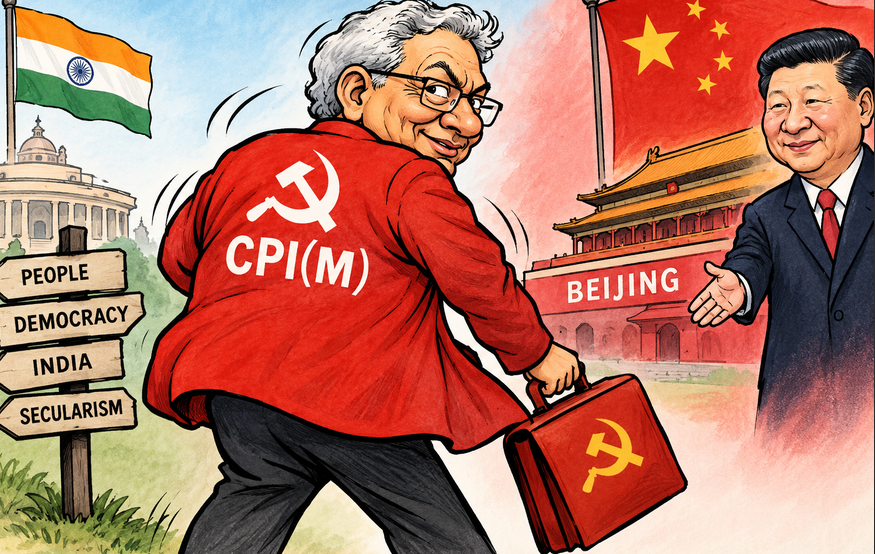
If the CPI(M) ever opens a department for Advanced Studies in Selective Vision, former West Bengal minister Suryakanta Mishra may qualify for an honorary chair.
The speciality of this peculiar branch of eyesight is simple: when China does something, however distant the geographical location, the ideological retina springs into action with the efficiency of a newly serviced telescope.
But when India happens to be doing something remarkably similar—sometimes even on a considerably larger scale—the same instrument develops what doctors might delicately describe as -- focus has become a bit hit-or-miss.
It is, of course, an old occupational hazard of a section of the Indian Left, especially the CPIM.
For decades, the Marxists have displayed a political compass of rare engineering. Unlike ordinary compasses, which stubbornly point north, this one has occasionally shown an irresistible tendency to swivel towards Beijing—particularly when there is praise to be distributed.
And so comes the latest little episode in this long-running ideological comedy.
Nepal is battling a devastating humanitarian disaster. India has been continuously rushing relief materials, medicines, disaster-response personnel and other assistance to its Himalayan neighbour.
But apparently, relief operations too can suffer from a visibility problem!
For Comrade Mishra, the ideological binoculars appeared to have settled firmly on China.
When Beijing announced that it had dispatched emergency assistance to Nepal, including tunnel-rescue specialists and DNA identification experts, the CPI(M) Politburo member promptly discovered the perfect expression.
“This is what we understand & call solidarity.”
And there it was—the certificate framed, signed and handed over.
Fair enough. Nothing wrong, of course, in appreciating Chinese humanitarian assistance. Relief is relief, and human suffering does not carry a nationality certificate.
Which is where precisely the political comedy begins.
Because while China’s contribution apparently qualified for a public certificate of “solidarity”, India’s extensive and continuing humanitarian assistance to Nepal somehow failed to secure even a passing mention in this particular festival of solidarity.
And this despite Nepal itself having levelled serious allegations against China over the failure to provide timely warnings and adequate information concerning glaciers, water levels and the unfolding disaster in Tibet—territory controlled by Beijing.
In other words, China may have been accused of failing to ring the alarm bell in time. But once it arrived with assistance, the CPI(M) leader was ready with the applause.
India, meanwhile, was busy doing the unglamorous work—sending relief, medical supplies and disaster-response teams.
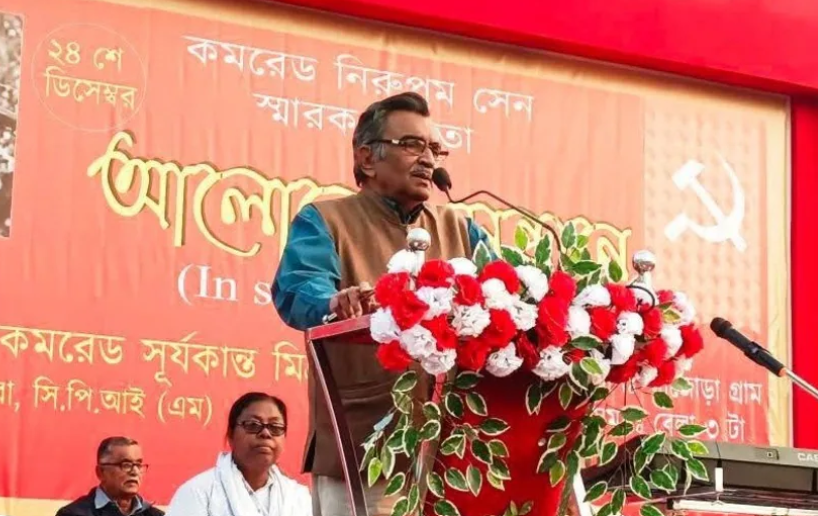
File Picture of Comrade Suryakanta Mishra
Social Media Jibes
The omission did not go unnoticed.
Social media users quickly descended on Mishra’s post, asking why his timeline carried praise for Chinese assistance but appeared to have no corresponding acknowledgement of India’s contribution.
“Why, Comrade?” asked one user in essence.
Another pointed out that India had sent substantial assistance and rescue teams, wondering whether the Marxist leader intentionally omitted India’s unstinted cooperation.
The sharper criticism was even more politically uncomfortable: that the CPI(M)’s instinctive admiration for China had once again overridden its ability to acknowledge its own country’s humanitarian role.
That, perhaps, is the real problem confronting the Indian Left today.
The CPI(M), once a formidable political force that ruled West Bengal for 34 uninterrupted years, has been reduced to a shadow of its former self.
Yet, even after such a spectacular electoral collapse, sections of its leadership appear unwilling to examine whether ideological reflexes that may have sounded fashionable in party seminars still resonate with ordinary Indians.
Humanitarianism does not come with a Chinese label or an Indian label. Relief deserves appreciation irrespective of where it comes from.
But when a political leader finds the time to celebrate Beijing’s solidarity while overlooking New Delhi’s massive contribution to the same tragedy, the inevitable question arises:
Is it ideology?
Or is it political blindness?
Or is it simply the CPI(M)’s old practice of clinging to ‘Double Standard’ when confronted with the question of patriotism? No patriotic Indian has forgotten the role CPIM had played during the ‘Operation Sindoor.’
About the Author
Prasanta Paul served Deccan Herald as the Chief of Bureau, Calcutta for nearly two decades before switching to work with various TV channels such as Al-Jazeera, CNN, German TV and CBS. He also headed the Eastern Bureau of Parliamentarian magazine. Mr. Paul who accompanied former Prime Minister Atal Behari Vajpayee on his overseas tour of Singapore and other Asian countries, travelled extensively to Bhutan, Sikkim and Darjeeling besides other Northeastern states. He briefly headed the Mizoram Bureau of the United News of India (UNI).
Discussion
Reader Comments
No comments yet. Be the first to share your perspective.
Similar Stories
International
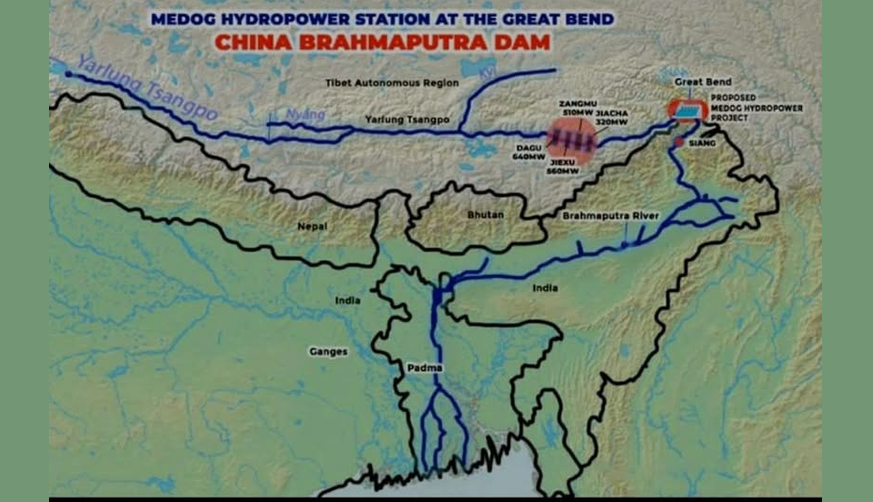
India’s ‘Hydraulic Shield’ in Arunachal Pradesh VS China’s Himalayan Gamble
Just dozens of kms from Indian frontier, Beijing is developing the world’s largest hydropower project on the Yarlung Tsangpo river that turns Siang in Arunachal
Prasanta Paul·09 Sep 2026
International
When the Mountains Fell: A Foreman’s Nine-Day Tryst with Death
Tale of the extraordinary choice of one foreman facing death under a collapsing mountain: rare combination of courage, camaraderie, faith, tragedy and miracle.
Prasanta Paul·05 Sep 2026
International
EDITORIAL: Himalayas on the Edge: Catastrophe Rekindles Alarm Over Fragile Mountain Ecology
The tragedy is a warning from the Himalayas where melting glaciers,unstable mountains & intense developmental work converge in the planet's most fragile regions
Prasanta Paul·28 Aug 2026
