BreakingInternational
India’s ‘Hydraulic Shield’ in Arunachal Pradesh VS China’s Himalayan Gamble
More profound danger may lie beneath the river itself
09 Sep 2026, 12:14 pm IST·4 min read
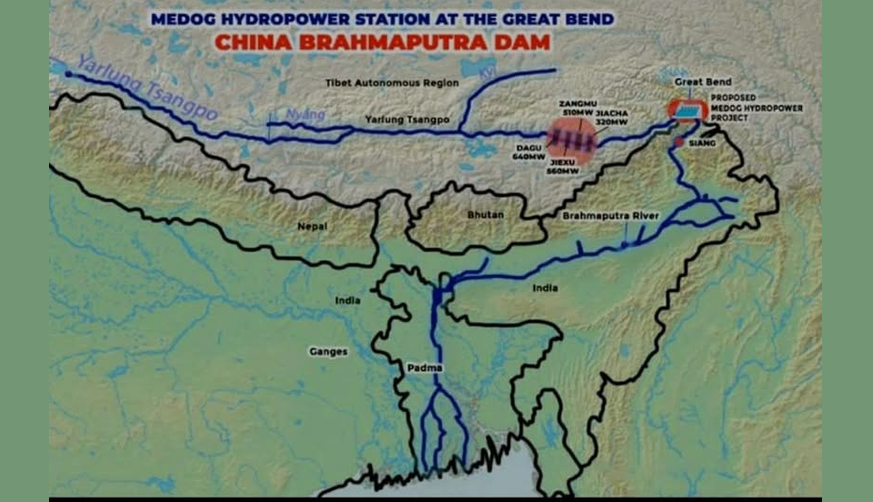
China is now engaged in a perilous gamble with the geology of the Himalayas.
While Beijing appears determined to overturn nature’s own rules in pursuit of a gigantic hydropower project, India is quietly preparing a strategic countermeasure to protect millions of people living along the Brahmaputra basin.
New Delhi has embarked on an ambitious counter-offensive in Arunachal Pradesh, close to the Chinese border.
At the precise point where the Yarlung Tsangpo enters India and assumes the name Siang, India plans to build the Upper Siang Multipurpose Project, an estimated $13-billion masterplan of immense strategic significance.
With a proposed capacity of around 11,000 MW, the project would become one of the largest hydroelectric installations in the Indian subcontinent. But power generation is not necessarily its most important strategic dividend. Its deeper purpose lies in creating a formidable hydraulic buffer for the millions of people downstream in Assam and Bangladesh.
The key to this strategy is the project’s proposed reservoir, with a storage capacity of roughly nine billion cubic metres. In a worst-case scenario—whether an upstream accident, an extreme flood or an abrupt release of water from China—the reservoir could provide an important flood-moderation buffer before the surge reaches the densely populated plains downstream.
Conversely, during lean-flow periods, India’s stored water could provide greater flexibility in maintaining downstream river flows.
The project would therefore give India additional leverage in managing the Brahmaputra’s water regime, even though its precise effectiveness would depend on the final design and operational parameters.
What is India’s Concern?
The urgency stems from what China is building upstream.
In Tibet, barely dozens of kilometres from the Indian frontier, Beijing is developing what is being described as the world’s largest hydropower project on the Yarlung Tsangpo. The proposed installation is expected to have a staggering capacity of about 60,000 MW—roughly three times that of China’s Three Gorges Dam—with an estimated investment of around $167 billion.
The implications extend far beyond electricity. Because of a number of reasons. And true to its style, Dragon has maintained considerable secrecy surrounding the project.
The Yarlung Tsangpo is the same river that enters India as the Siang and eventually becomes the Brahmaputra, the lifeline of northeastern India and Bangladesh. Its waters sustain agriculture, livelihoods, ecosystems and the region’s entire hydrological balance.
The immediate strategic concern is obvious. China could potentially regulate downstream flows, retain water during critical periods or alter the timing and volume of releases.
Such possibilities raise concerns over artificial water scarcity, disruption of sediment flows vital to the Brahmaputra delta and, under extreme circumstances, sudden downstream flooding.
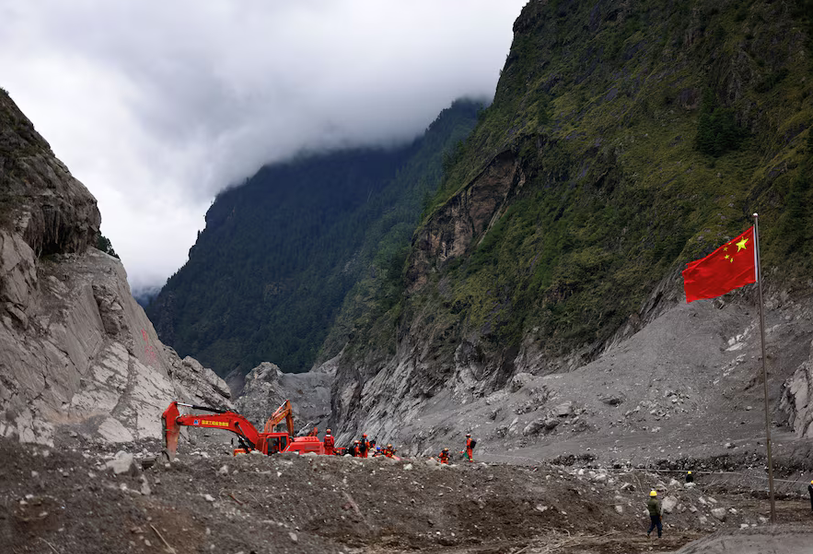
No trace of the 5-storey Chinese Customs Building at Gyirong, at Chinese-occupied Tibet
The Himalayan Danger Beneath
But the more profound danger may lie beneath the river itself.
The eastern Himalayas are among the most tectonically active regions on Earth, where the Indian and Eurasian plates continue to collide. Geological studies have highlighted the presence of active faults and the highly fractured nature of the region’s underlying rock formations.
The construction of enormous tunnels through such terrain adds another layer of concern. The sheer scale of excavation, blasting and water diversion raises legitimate questions about the cumulative geological consequences.
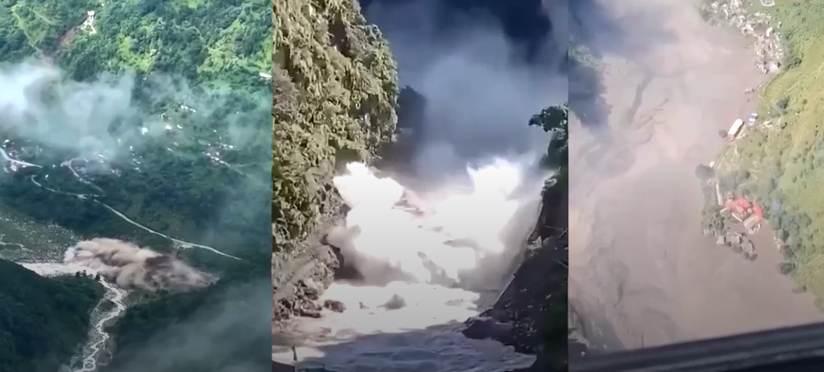
The August 26 calamity at Gyirong, the land port at the Chinese occupied Tibet, demonstrated the scale of devastation. There was no trace of the five-storey Chinese customs building that had stood at the border before the disaster. The only structure still visible was part of a nearby water tower installation in a barren grey-black mud field.
Hence, one particular phenomenon demands attention: Reservoir-Induced Seismicity, whereby the enormous weight and pressure of stored water can interact with pre-existing geological faults and potentially influence seismic activity.
China’s own experience has demonstrated that large reservoirs can become part of complex seismic systems, although establishing direct causation in individual earthquakes remains scientifically difficult.
The consequences of a major earthquake, structural failure or extreme flooding in such a gigantic project would be difficult even to contemplate.
A sudden release of a vast volume of water could race downstream through Arunachal Pradesh and Assam, (the way it impacted Nepal recently) threatening settlements, infrastructure, agriculture and millions of lives.
This is why the Yarlung Tsangpo project should not be viewed merely as an energy venture.
It represents a new dimension of Himalayan geopolitics—where water, tectonic vulnerability and national security converge.
And that is precisely why India’s Upper Siang project assumes significance far beyond the electricity it may generate. It is, in essence, an attempt to ensure that the future of the Brahmaputra—and the lives dependent upon it—is not left entirely at the mercy of decisions taken upstream in Beijing.
The Himalayan water game has therefore ceased to be merely about power generation. It is increasingly about who controls the river, who bears the geological risk—and who is prepared for the consequences.
About the Author

Prasanta Paul served Deccan Herald as the Chief of Bureau, Calcutta for nearly two decades before switching to work with various TV channels such as Al-Jazeera, CNN, German TV and CBS. He also headed the Eastern Bureau of Parliamentarian magazine. Mr. Paul who accompanied former Prime Minister Atal Behari Vajpayee on his overseas tour of Singapore and other Asian countries, travelled extensively to Bhutan, Sikkim and Darjeeling besides other Northeastern states. He briefly headed the Mizoram Bureau of the United News of India (UNI).
Discussion
Reader Comments
No comments yet. Be the first to share your perspective.
Similar Stories
International
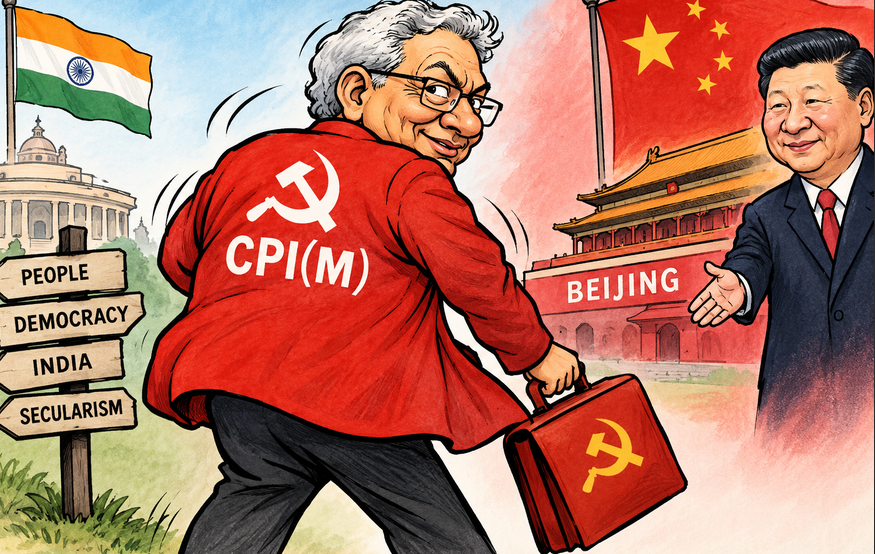
Chinese Relief Receives ‘Solidarity’ Medal from CPI(M); India Scores a Blank
CPM’s political compass permanently displays irresistible tendency to swivel towards Beijing & the ideological retina springs into action if China sneezes even.
Prasanta Paul·07 Sep 2026
International
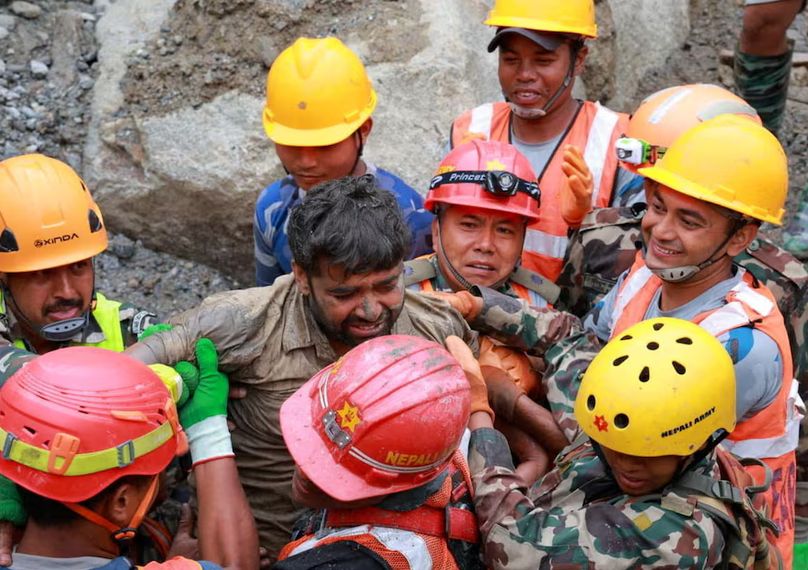
When the Mountains Fell: A Foreman’s Nine-Day Tryst with Death
Tale of the extraordinary choice of one foreman facing death under a collapsing mountain: rare combination of courage, camaraderie, faith, tragedy and miracle.
Prasanta Paul·05 Sep 2026
International
EDITORIAL: Himalayas on the Edge: Catastrophe Rekindles Alarm Over Fragile Mountain Ecology
The tragedy is a warning from the Himalayas where melting glaciers,unstable mountains & intense developmental work converge in the planet's most fragile regions
Prasanta Paul·28 Aug 2026
