BreakingInternational
Sino-Bangladesh partnership over Teesta a warning bell for India
The thaw is far more than a water-management initiative.
02 Jul 2026, 03:44 pm IST·3 min read
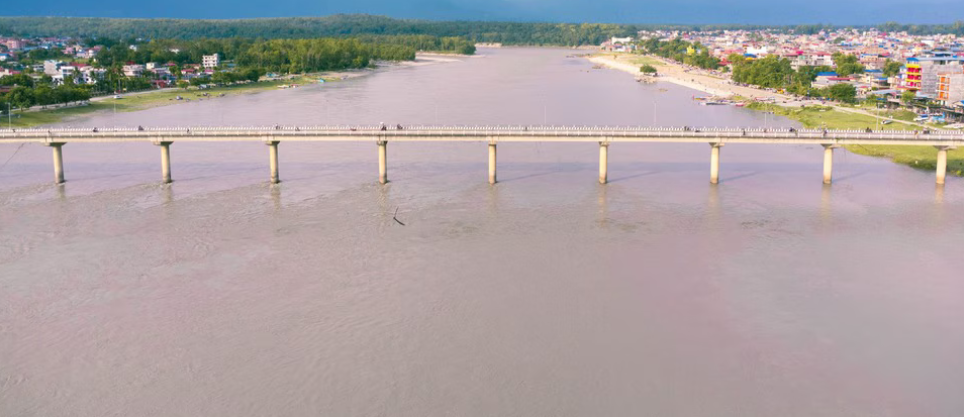
The Teesta Barrage Master Plan, one of Bangladesh's most ambitious river management projects, is rapidly evolving into a geopolitical signal with deep diplomatic, strategic and security implications for India.
For Bangladesh, Chinese involvement offers leverage, infrastructure financing and diplomatic alternatives. For China, it expands influence into a geopolitically sensitive theatre close to India’s vulnerable eastern corridor.
At the centre of the controversy lies the Teesta River Comprehensive Management and Restoration Project (TRCMRP), which Bangladesh has increasingly sought to implement with Chinese financial and technical support. During Bangladeshi Prime Minister Tarique Rahman’s recent Beijing visit, both countries agreed to deepen cooperation on Teesta river management, flood control and ecological restoration.
Why the Teesta Issue Matters
The Teesta is not merely a river dispute. It is one of the most emotionally and politically sensitive bilateral issues between India and Bangladesh. The river originates in Sikkim, in the eastern corner of the Himalayan region and flows through West Bengal before entering Bangladesh.
A long-pending Teesta water-sharing agreement between India and Bangladesh has remained stalled since 2011, largely because of opposition from the previous Mamata Banerjee-led Trinamool Congress government. (The latest change of the government in West Bengal could certainly benefit New Delhi in this regard.)
Bangladesh increasingly views the deadlock as a symbol of India’s inability—or unwillingness—to accommodate Dhaka’s core interests. This diplomatic frustration has opened strategic space for China.
Diplomatic Significance of the Sino-Bangladesh Partnership
For decades, Bangladesh was considered part of India’s immediate strategic neighbourhood where New Delhi retained decisive influence. Chinese entry in the Teesta project signals a gradual erosion of that dominance.
Beijing is no longer restricting itself to ports, roads or industrial zones. It is now entering river management and water infrastructure—an area historically tied to sovereignty and national security.

The Teesta River
This particular shift is diplomatically significant because transboundary rivers are politically sensitive assets in South Asia. China’s engagement gives Bangladesh an alternative strategic partner against Indian delays.
This is not necessarily an anti-India move outright. China itself publicly stated that its cooperation “does not target any third country.”
But for Dhaka, it provides an opportunity to pursue a “multi-vector diplomacy” strategy—maintaining ties with India while simultaneously leveraging China for bargaining power.
Bangladesh understands that India needs regional stability, connectivity to the Northeast, and cooperation on border security. By drawing China into the Teesta question, Dhaka intends to gain diplomatic leverage over New Delhi.
For Beijing, the Teesta initiative fits neatly into its broader regional strategy under the Belt and Road Initiative.
After ports, power plants, bridges and economic corridors, the Teesta project potentially extends China’s footprint deeper into environmentally and strategically critical zones near India’s eastern frontier.
Impact on India
India’s greatest concern is geographical – the Chicken’s Neck is barely 34 km away.
The Teesta basin lies close to the narrow Siliguri Corridor—often called the “Chicken’s Neck”—which connects mainland India with its northeastern states. Any major Chinese infrastructure presence near this zone naturally raises Indian security concerns.
Even if the project is civilian in nature, India worries about:
long-term Chinese strategic access,
dual-use infrastructure,
surveillance possibilities,
and deep Chinese penetration into a militarily sensitive region.
From New Delhi’s perspective, the issue is therefore not simply about water engineering but about strategic encirclement.
Because, the Sino-Bangladesh partnership gives China a) Myanmar connectivity, b) Bay of Bengal access, and c) regional economic corridors. The two countries are already discussing a Bangladesh-Myanmar-China Economic Corridor.
For India, this could gradually reduce its strategic exclusivity in eastern South Asia and complicate security calculations in the Northeast.
About the Author

Prasanta Paul served Deccan Herald as the Chief of Bureau, Calcutta for nearly two decades before switching to work with various TV channels such as Al-Jazeera, CNN, German TV and CBS. He also headed the Eastern Bureau of Parliamentarian magazine. Mr. Paul who accompanied former Prime Minister Atal Behari Vajpayee on his overseas tour of Singapore and other Asian countries, travelled extensively to Bhutan, Sikkim and Darjeeling besides other Northeastern states. He briefly headed the Mizoram Bureau of the United News of India (UNI).
Discussion
Reader Comments
No comments yet. Be the first to share your perspective.