BreakingInternational
Self-Immolation by Activist in US Reignites Tibetan Independence Movement
The World Remains Unashamed of Its Silence on Chinese Repression
05 Jul 2026, 12:01 pm IST·4 min read
Behind the glossy language of "development," "stability," and "national unity," a darker reality continues to unfold across Tibet under Chinese rule — a reality marked by cultural suppression, political intimidation, religious control, mass surveillance, and the systematic erosion of Tibetan identity.
But beneath this carefully constructed narrative lies an uncomfortable truth: no amount of economic investment can erase a people's demand for dignity, identity, and freedom.
The tragedy of Tibetan self-immolations stands as one of the starkest indictments of this repression.
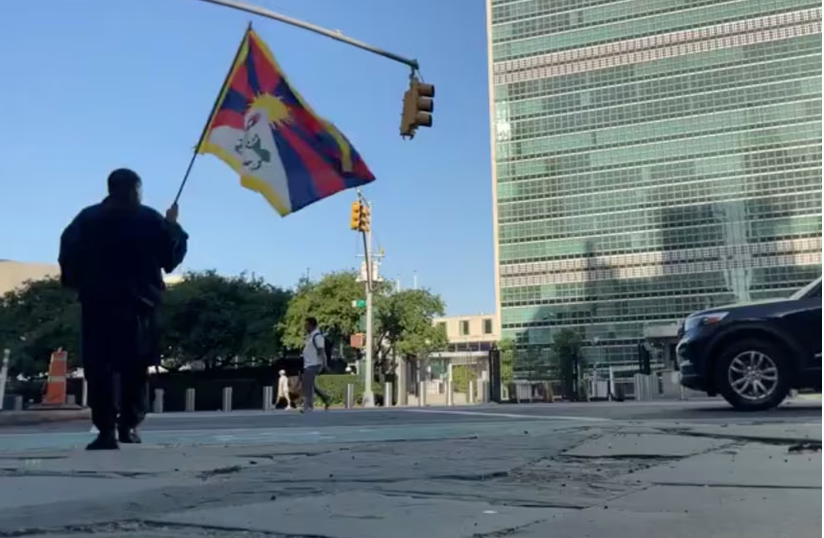
On Thursday evening (July 2), at New York's First Avenue opposite the UN headquarters, a video livestreamed from a Facebook account under the name Lobga Rangzen (also known as Lobsang Palden) showed a man holding a Tibetan flag collapsing on the road after being engulfed in flames.
CNN (Cable News Network) quoted a New York City Police Department spokesperson as saying that the 52-year-old man was taken to hospital, where he was later pronounced dead. His death was confirmed and widely reported the following day, Friday, July 3.
In a separate video posted around the same time, the man himself called on Tibetans to work together for "the independence of Tibet" and to "never forget" their heritage and identity, accusing the Chinese government of policies "aimed at destroying the Tibetan identity, culture and language."
Penpa Tsering, head of the Tibetan government-in-exile, released a statement saying he was "deeply saddened" by the self-immolation. While honouring the man's devotion to the cause, Tsering urged Tibetans to "cherish" their lives, stressing that human life is precious and must be preserved to serve the long-term struggle for Tibet — a plea against further such acts, not an endorsement of them.
The rare incident comes just days after China enacted an ethnic unity law that expands mandates over the use of Chinese language in schools and governments in ethnic minority regions and calls for the further "Sinicization" of religion.
Tibetan and human rights activists have voiced alarm over the sweeping new law, which they fear will further erode the cultural fabric of ethnic minorities across China.
Beijing says the law protects the rights of "all ethnic groups," CNN has stated in its news report.
Chinese Aggression on Tibet
China's ruling Communist Party has governed Tibet since 1951, with Beijing insisting Tibet has been part of Chinese territory for centuries. Beijing has framed Tibet largely as a success story of modernization and economic integration — glittering highways, rail networks, urban expansion, and state-led infrastructure projects all projected as evidence of progress.
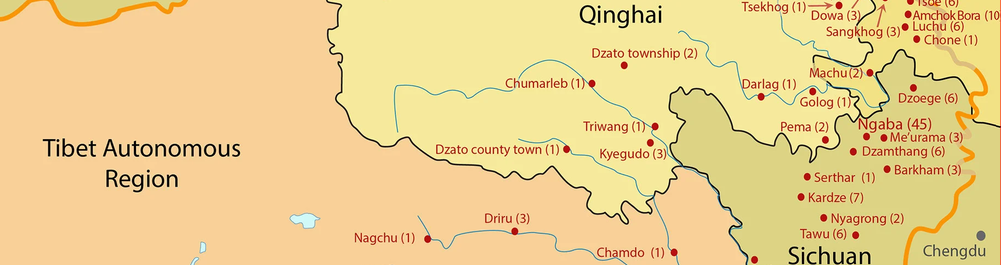
Yet the embers that kindle dreams of independence have simmered among hundreds of Tibetans who, since 2009, have resorted to a stark and tragic method of protest: self-immolation.
Scores of monks, nuns, teachers, students, nomads, artists, and ordinary civilians have set themselves afire in acts of political protest against Chinese state policies. After the incident in New York, the toll now stands at more than 150 (unofficially 170) since 2009 — though it is highly unusual for a Tibetan activist to self-immolate outside Tibet, let alone in the US.
These were not isolated incidents of despair detached from politics. They were deliberate, public, and deeply symbolic acts aimed at drawing the world's attention toward what many Tibetans describe as suffocating political and cultural domination.
Their demands have been strikingly consistent: religious freedom, preservation of Tibetan language and culture, freedom from political persecution, and the right to live without fear inside their own homeland.
The Chinese state has responded not with introspection, but with intensified crackdowns.
Hence, it is hardly surprising that Tibet continues to resonate globally, despite Beijing's enormous diplomatic and economic influence.
A Larger Global Struggle
The issue is no longer simply territorial or geopolitical. It has become emblematic of a larger global struggle between centralized authoritarian power and the survival of vulnerable cultural identities under state pressure.
Entire Tibetan regions have been placed under sweeping surveillance. Monasteries — once the spiritual and intellectual backbone of Tibetan civilization — have faced heavy state intrusion, and religious institutions have been subjected to political "re-education" campaigns.
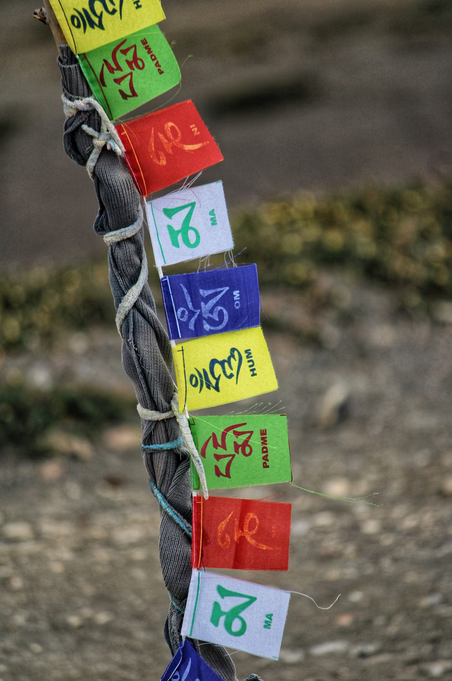
Tibetan monks and nuns have been forced to publicly denounce the Dalai Lama, a figure still revered by millions of Tibetans as both spiritual guide and cultural symbol, while the Tibetan flag remains banned in China as a symbol of independence.
Possession of the Dalai Lama's photograph has reportedly led to arrests in some regions.
The repression has not stopped at religion; the avowed aim of the Chinese Communist Party has been to reduce Tibetan identity to little more than state-managed folklore — culturally visible, yet politically powerless.
Across Tibetan areas, local linguistic traditions have been replaced with Mandarin-centered state curricula. The pattern reflects a broader authoritarian strategy: preserve the appearance of diversity while dismantling the foundations of independent identity.
The Tibetan issue ultimately forces the world to confront an enduring principle: development without freedom cannot fully silence a people's historical identity. Surveillance cannot erase memory. Political intimidation cannot permanently extinguish spiritual and cultural consciousness.
The flames of Tibetan protest — literal and symbolic — continue to remind the world that beneath the language of stability lies a struggle over identity, freedom, and the right of an ancient ethnic community to exist without fear of cultural extinction.
About the Author
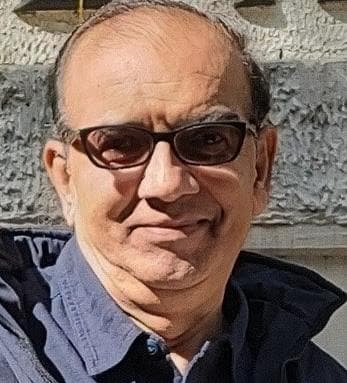
Prasanta Paul served Deccan Herald as the Chief of Bureau, Calcutta for nearly two decades before switching to work with various TV channels such as Al-Jazeera, CNN, German TV and CBS. He also headed the Eastern Bureau of Parliamentarian magazine. Mr. Paul who accompanied former Prime Minister Atal Behari Vajpayee on his overseas tour of Singapore and other Asian countries, travelled extensively to Bhutan, Sikkim and Darjeeling besides other Northeastern states. He briefly headed the Mizoram Bureau of the United News of India (UNI).
Discussion
Reader Comments
No comments yet. Be the first to share your perspective.