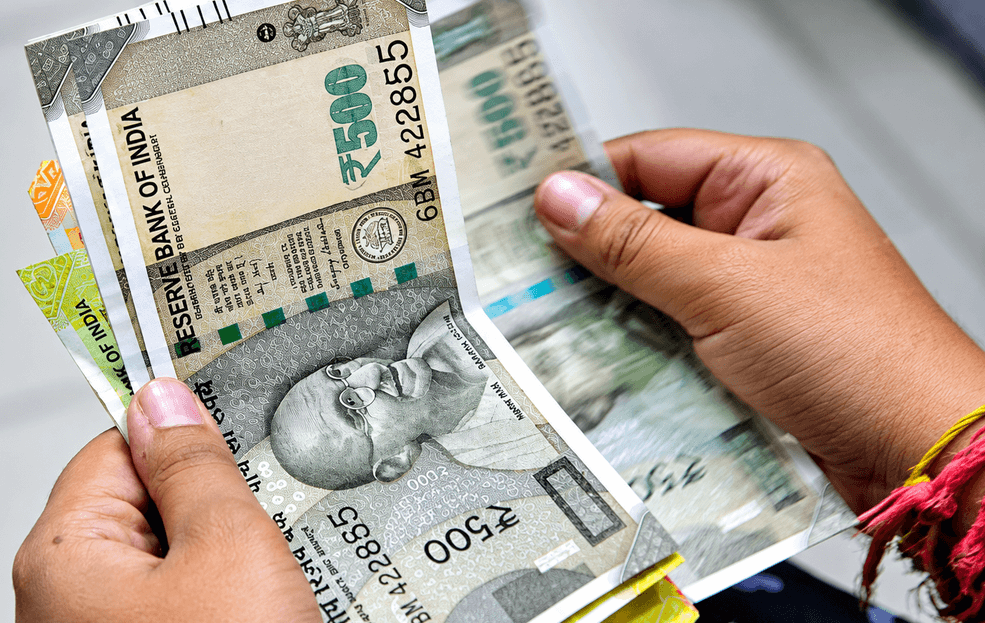
'Operation Wings of Dawn' – Indian Jews' Trek to Israel
Lost tribes of Israel reaches Tel Aviv from Mizoram, India
18 May 2026, 12:41 pm IST·5 min read

Close to 250 members of the B'nei Menashe community — a Jewish group from Manipur and Mizoram who trace their ancestry to one of the biblical "Ten Lost Tribes of Israel" — touched down in Tel Aviv on the night of Thursday, April 24, 2026.
This marked a watershed moment: the first relocation carried out under an official Israeli government programme. More arrivals are expected to follow in the coming months.
This is also the first batch of Indians from the twin northeastern states to fly to Israel following a landmark Israeli government commitment to fund the relocation and resettlement of nearly 5,000 B'nei Menashe members. That decision was formally taken in November 2025, preceded by extensive research processes and DNA sample testing.
The Lost Tribes — A Brief History
Who exactly are the B'nei Menashe, and how did communities in Northeast India come to claim descent from an ancient Israelite tribe?
Around 722 BCE, the Assyrian empire swept through northern Israel, displacing much of its population. Jewish tradition holds that those exiled people belonged to ten distinct tribes: Reuben, Simeon, Dan, Naphtali, Gad, Asher, Issachar, Zebulun, Ephraim, and Manasseh. Over the centuries, Jewish communities across the world have searched for their descendants — including in the Indian subcontinent.
The B'nei Menashe — literally "sons of Manasseh" — believe they descend from the largest of these ten tribes. Their tradition holds that after their exile, their ancestors travelled eastward over centuries, passing through Persia and Afghanistan before finally settling in what is now Northeast India. Today, the community numbers around 7,000 people, drawn from the Mizo and Kuki tribal groups across both states. Thousands have already emigrated to Israel since the 1990s.
An Unlikely Path: From Christianity to Judaism
Curiously, the road to Jewish identity for these communities first ran through Christianity. Academic Gideon Elazar, writing in Jewish Communities in Modern Asia (2023), notes that the identification of upland Southeast Asian groups as remnants of the lost tribes was largely set in motion by the success of Protestant missionaries in the mid-nineteenth century. Baptist missionaries introduced the Bible to communities that already held strong messianic beliefs — a cultural fit that helped Christianity take root rapidly, with the missionaries themselves coming to be seen as restorers of ancient tradition.
In the case of the B'nei Menashe, a comparable dynamic took shape during the turbulent resistance to Indian governance in the region during the 1960s, against a backdrop of Christian revivalist movements that had been spreading across Mizoram since the 1930s.
The pivot toward Judaism, however, began with a vision. In 1951, a Mizo mystic named Challianthanga — also known as Mela Chala — reportedly dreamt that the Mizo, Kuki, and Chin people were in fact descendants of ancient Israelite tribes. Sayan Lodh, a PhD researcher at Presidency University whose work focuses on Judaising movements in India, suggests there may be a deeper dissatisfaction with the form of Christianity being practised in the region that helped fuel this shift.
The active Judaising movement among these communities developed from the late 1970s onward, driven significantly by an Israeli organisation called Amishav, led by Rabbi Eliyahu Avichail. The organisation's mission was to gather scattered tribes back to Israel in fulfilment of what it saw as the preconditions for the coming of the Messiah.
The communities had already shown interest in forging ties with Jews and the Israeli state as early as the 1950s, and in 1974, the Mizo Israel Zionist Organization was formally established. The majority of people in Mizoram and Manipur, however, continue to practise Christianity to this day.
Forging Formal Ties
Direct contact with Rabbi Avichail was established in 1979. He drew a connection between the biblical figure of Manasseh and ancestral figures invoked in local tradition — Manmasi among the Kukis and Manasia among the Mizos. Avichail and others also worked to demonstrate that the B'nei Menashe had preserved oral traditions linked to the land of Israel, along with certain Jewish practices.
From the late 1980s, Amishav began bringing small groups of B'nei Menashe to Israel on tourist visas. At the time, Israel had not yet recognised them as "Lost Jews," and full diplomatic ties between India and Israel were only established in 1992. Once in Israel, these individuals studied Orthodox Judaism — Reform and Conservative movements hold limited sway in the country — and underwent formal conversion.
A landmark moment came in 2005, when the Chief Rabbinate of Israel — the country's highest religious authority — officially declared the B'nei Menashe the "Lost Seed of Israel," recognising them as a lost tribe. The ruling drew on DNA evidence produced by scientists in Kolkata, though the findings were inconclusive.
Scientists at the Technion-Israel Institute of Technology in Haifa subsequently conducted their own tests, which yielded similarly inconclusive results. Both studies, however, detected traces of the Cohen modal haplotype — a genetic marker found among people identifying as Cohanim — in a small number of samples.
These results, combined with the Rabbinate's ruling, led Israel to permit B'nei Menashe migration, though in limited numbers and with periodic interruptions. Lodh's research also found that community members face racial discrimination in Israel on account of their physical appearance — a challenge that adds another layer of complexity to their integration.
Following Amishav, another organisation — Shavei Israel — assumed responsibility for supporting the community's migration and integration between the 2000s and 2020. Since 2020, a newer body called Degel Menashe has stepped in, notably led by B'nei Menashe members themselves rather than outside actors — a sign of the community's growing agency in shaping its own future.
Other Claimants to the Lost Tribes
The B'nei Menashe are not the only Indian community to claim Israelite ancestry. The Telugu-speaking B'nei Ephraim of Andhra Pradesh trace their lineage to the tribe of Ephraim, believed to have arrived in India via Central Asia roughly a thousand years ago. Their leader, Shmuel Ya'acobi, made a journey to Jerusalem in the 1980s that marked the beginning of the group's formal identification with Judaism. Elazar notes that the group belongs to the Dalit community and that the claim to Jewish heritage is often interpreted as a strategy to escape the caste discrimination prevalent in that state.
About the Author
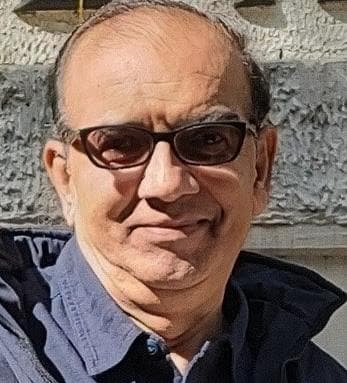
Prasanta Paul served Deccan Herald as the Chief of Bureau, Calcutta for nearly two decades before switching to work with various TV channels such as Al-Jazeera, CNN, German TV and CBS. He also headed the Eastern Bureau of Parliamentarian magazine. Mr. Paul who accompanied former Prime Minister Atal Behari Vajpayee on his overseas tour of Singapore and other Asian countries, travelled extensively to Bhutan, Sikkim and Darjeeling besides other Northeastern states. He briefly headed the Mizoram Bureau of the United News of India (UNI). To his credit goes a deep-rooted empathy for social issues and marginalized people. His extensive coverage on the Tsunami, the Super Cyclone in Odisha and the 2020 Amphan cyclone besides the Gaisal Train mishap in eastern India has easily been the best around the world.
Discussion
Reader Comments
No comments yet. Be the first to share your perspective.