BreakingInternational
Pakistan's Naval Ambition Reaches the Bay of Bengal
Thaw between Dhaka and Islamabad introduces complex variables for India
19 Jun 2026, 03:05 pm IST·5 min read
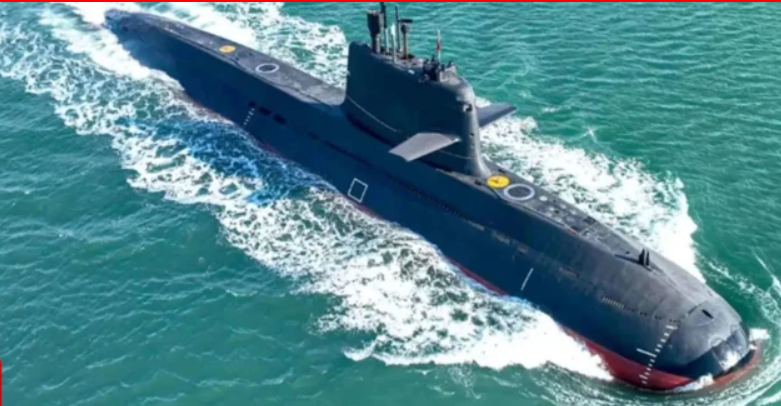
Pakistan's deployment of its new Chinese-built Hangor-class submarine in the Bay of Bengal posits a broader maritime strategic challenge within the India-China-Pakistan triangular dynamics.
The arrival of PNS Hangor in Karachi has stirred memories of the 1971 war, when its predecessor sank India's INS Khukri — though Pakistan ultimately suffered a decisive defeat, losing its eastern wing and giving rise to the independent nation of Bangladesh.
The Pak ambition carries considerable strategic weight and marks a significant shift in South Asian naval dynamics. Because for more than five decades, Pakistan's naval presence was largely confined to the Arabian Sea.
Senior naval officers in the Indian navy are understood to be discussing the new projection of power into the Bay of Bengal, a theatre where India has long held dominance.
Hangor & The Bay of Bengal
Commissioned in China in April and escorted home via Sri Lanka, the Hangor-class sub is the first of eight submarines planned for induction into the Pakistan Navy. Commodore Omer Farooq has claimed it to be a "game changer", for it could enable a sustained Pakistani presence in the Bay of Bengal.
The Bay of Bengal region is home to India's Eastern Naval Command at Visakhapatnam which lies adjacent to the Andaman and Nicobar Islands, and serves as a critical corridor for trade and energy between India and Bangladesh. The region has also emerged as a focal point of broader Indo-Pacific competition, with its littoral states — Myanmar, Thailand, Malaysia, Indonesia, and Sri Lanka — adding to its geopolitical significance.
At the heart of Pakistan's naval modernisation are these Hangor-class submarines. The greatest strength of these submarines lies in their Air-Independent Propulsion (AIP) technology. Conventional diesel-electric submarines (which India possesses) must periodically surface or use a snorkel to recharge their batteries. AIP technology, however, allows the Hangor to remain submerged continuously for several weeks, making it possible to conduct operations over long distances while evading enemy radar and surveillance.
The Hangor class, some analysts believe, could eventually serve as a platform for Pakistan's sea-based nuclear deterrent, though Islamabad has not confirmed this. The revival of the Hangor name carries clear symbolic intent, even as today's strategic environment differs vastly from 1971 — India now operates nuclear-powered submarines, aircraft carriers, and sophisticated long-range surveillance assets.
India's eastern coastline, key naval bases, the Andaman and Nicobar Islands, and vital commercial sea lanes are all closely tied to this region. If Pakistan were to deploy submarines here on a regular basis, the Indian navy would be compelled to significantly enhance its surveillance and defensive capabilities. Even a small number of modern, stealthy submarines can pose a serious headache for an adversary.
Why is Bangladesh's Role a Subject of Speculation?
Pakistan's growing naval ambitions coincide with a notable warming of its relations with Bangladesh. Following the removal of Sheikh Hasina's government in 2024, Islamabad has made significant diplomatic inroads in Dhaka. Military cooperation has progressed, with Bangladesh expressing interest in acquiring JF-17 fighter jets and participating in joint maritime exercises.
In November 2025, the Pakistan Navy frigate PNS Saif docked at the Chittagong port — the first visit by a Pakistani warship to Bangladesh since 1971. Reports indicate that the two countries are in discussions over a mutual defence agreement, though no formal arrangement for hosting Pakistani naval assets has been announced.
These developments raise the prospect of Pakistani naval vessels operating with greater frequency in the eastern Indian Ocean. While Bangladesh under Tarique Rahman has continued to maintain strong ties with India, the latest thaw between Dhaka and Islamabad introduces new and complex variables into the regional equation.

What Is the Real Challenge for India?
Even a limited Pakistani presence in the Bay of Bengal is likely to be viewed with concern by India, which regards the region as its strategic front yard. India's own expanding capabilities around the Andaman and Nicobar Islands reflect the increasingly competitive nature of this maritime environment.
Pakistan's naval expansion signals a clear ambition to move beyond coastal defence and establish a broader operational footprint across the Indian Ocean. The planned induction of eight Hangor-class submarines from China represents the country's most significant naval modernisation programme in decades.
While Pakistan is unlikely to alter the fundamental balance of power in the Bay of Bengal, its aspirations signal a meaningful shift in regional dynamics — one with implications for India, Bangladesh, and the wider Indo-Pacific order.
Indian Naval Strength
India currently possesses approximately 16 conventional submarines, in addition to nuclear-powered ones. In numerical terms, India still holds a clear advantage. There is, however, one concern — most of India's conventional submarines have yet to be equipped with AIP technology. Work is underway to integrate indigenously developed AIP systems into India's Kalvari-class submarines, with the first upgraded vessel expected to be ready by late 2026.
To meet Pakistan's growing capabilities, India has already been strengthening several areas:
# Deployment of long-range maritime patrol aircraft, the P-8I
# Development of an advanced sonar network for submarine detection
# Anti-Submarine Warfare (ASW) helicopters and warships
# Construction of six modern submarines under Project 75(I), at an estimated cost of approximately ₹70,000 crore
All said and done, the balance of power is not changing overnight. The Indian Navy remains considerably larger, stronger, and more technologically advanced. Nevertheless, Pakistan's move serves as a warning signal for India — the days ahead may bring increasingly intense maritime competition in the Bay of Bengal as well.
About the Author

Prasanta Paul served Deccan Herald as the Chief of Bureau, Calcutta for nearly two decades before switching to work with various TV channels such as Al-Jazeera, CNN, German TV and CBS. He also headed the Eastern Bureau of Parliamentarian magazine. Mr. Paul who accompanied former Prime Minister Atal Behari Vajpayee on his overseas tour of Singapore and other Asian countries, travelled extensively to Bhutan, Sikkim and Darjeeling besides other Northeastern states. He briefly headed the Mizoram Bureau of the United News of India (UNI).
Discussion
Reader Comments
No comments yet. Be the first to share your perspective.