BreakingInternational
Political Furore Erupts in Nepal After Balendra’s Admission
Balendra admits of Nepal occypying Indian land
01 Jun 2026, 09:07 pm IST·3 min read
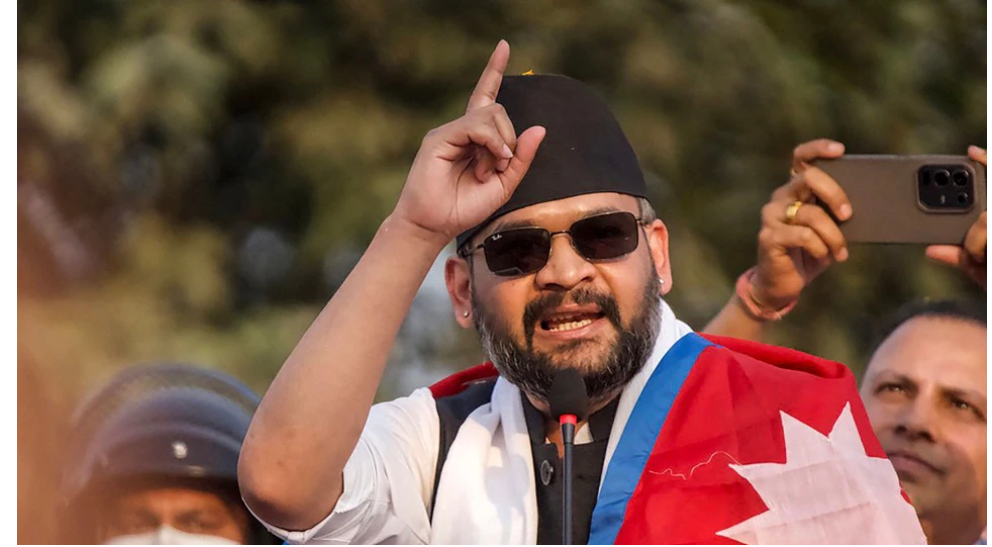
A huge political furore erupted in Nepal’s capital Kathmandu in the wake of Prime Minister Balendra Shah’s stunning confession in Parliament that has indirectly boosted India’s position.
In a recent address to Nepal's Parliament, Prime Minister Balendra Shah made a striking disclosure: "After becoming Prime Minister, I learned something that will surprise you — India has not only occupied Nepali land, but Nepal too has occupied Indian land in several places."
Former Prime Minister KP Sharma Oli lost power in Nepal following a popular uprising, and subsequently, Balendra Shah came to power through electoral support, taking over as Prime Minister.
Since assuming office, several of Shah's decisions have drawn significant public attention. Now, in a candid and notable admission before Nepal's Parliament, he has stated that not only has India been occupying Nepali territory — but Nepal too has been occupying certain areas of Indian territory.
Shah further added that both countries should review the actual ground situation and resolve the issue together as friendly neighbours.
Shah also informed lawmakers that Kathmandu has raised the matter with China and the UK — the UK being contacted specifically because of its colonial-era legacy (British period) in the region.
A Hasty Clarification
However, within a few hours of his address in parliament, Nepal's Foreign Ministry clarified that Shah's remarks about Nepal "encroaching" on Indian territory referred to incidents of crossing into no-man's land and cross-border encroachments — not formal territorial occupation.
The foreign ministry’s clarification stems from the fact that early May last, Nepal lodged a protest with India in the wake of the latter announcing the resumption of the Kailash Manas Sarovar Yatra, a sacred pilgrimage for Hindus, through the Lipulekh Pass.

The Lipulekh Pass, which sits where Nepal meets India and Tibet has been claimed by Nepal based on the 1816 Treaty of Sugauli, which it entered into with India’s British colonial rulers to define its western border.
In its complaint, Kathmandu stressed that the territories of Limpiadhura, Lipulekh and Kalapani are part of Nepal, “a position on which the government remains clear and firm”.
India’s Ministry of External Affairs responded immediately by asserting that Lipulekh has been used by Hindus, Buddhists, Jains and Bon followers for the Kailash Manas Sarovar pilgrimage to Mount Kailash and Lake Manas in Tibet since 1954. The yatra remained suspended since 2020 due to the COVID-19 pandemic.
“This is not a new development,” a spokesman said. “India has consistently maintained that such claims are neither justified nor based on historical facts and evidence. Such unilateral artificial enlargement of territorial claims is untenable.”
Political Fallout in Kathmandu
Shah's remarks triggered immediate political controversy. Opposition MPs including Basana Thapa of the Nepali Congress and Ramesh Malla of the Communist Party of Nepal, opposed Shah’s statement and demanded it be struck off from parliamentary records.
They insisted the Prime Minister must either provide evidence or withdraw the statement entirely. Former Foreign Minister Pradeep Gyawali also demanded an apology from the government.
The Core Territorial Dispute
The India-Nepal border stretches nearly 1,850 km, mostly through populated areas. The central dispute revolves around three Himalayan foothill regions which Nepal has depicted in its new map as an integral part of the Himalayan kingdom.
🔴 Kalapani
🔴 Lipulekh Pass
🔴 Limpiyadhura
These lie in the western section of the border, near India's Uttarakhand state, close to Chinese-controlled Tibet. The region is strategically vital as it sits near the India-China-Nepal tri-junction and contains key trade and pilgrimage routes — including the path used by Indian pilgrims heading to Kailash Manas Sarovar in Tibet.
About the Author
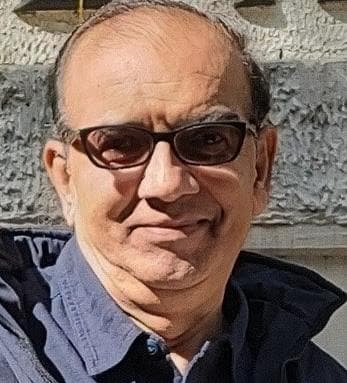
Prasanta Paul served Deccan Herald as the Chief of Bureau, Calcutta for nearly two decades before switching to work with various TV channels such as Al-Jazeera, CNN, German TV and CBS. He also headed the Eastern Bureau of Parliamentarian magazine. Mr. Paul who accompanied former Prime Minister Atal Behari Vajpayee on his overseas tour of Singapore and other Asian countries, travelled extensively to Bhutan, Sikkim and Darjeeling besides other Northeastern states. He briefly headed the Mizoram Bureau of the United News of India (UNI).
Discussion
Reader Comments
No comments yet. Be the first to share your perspective.