BreakingInternational
US Navy to be stationed in the Bay of Bengal?
US Navy’s presence may trigger geopolitical tension in the Bay of Bengal
19 May 2026, 09:35 pm IST·3 min read
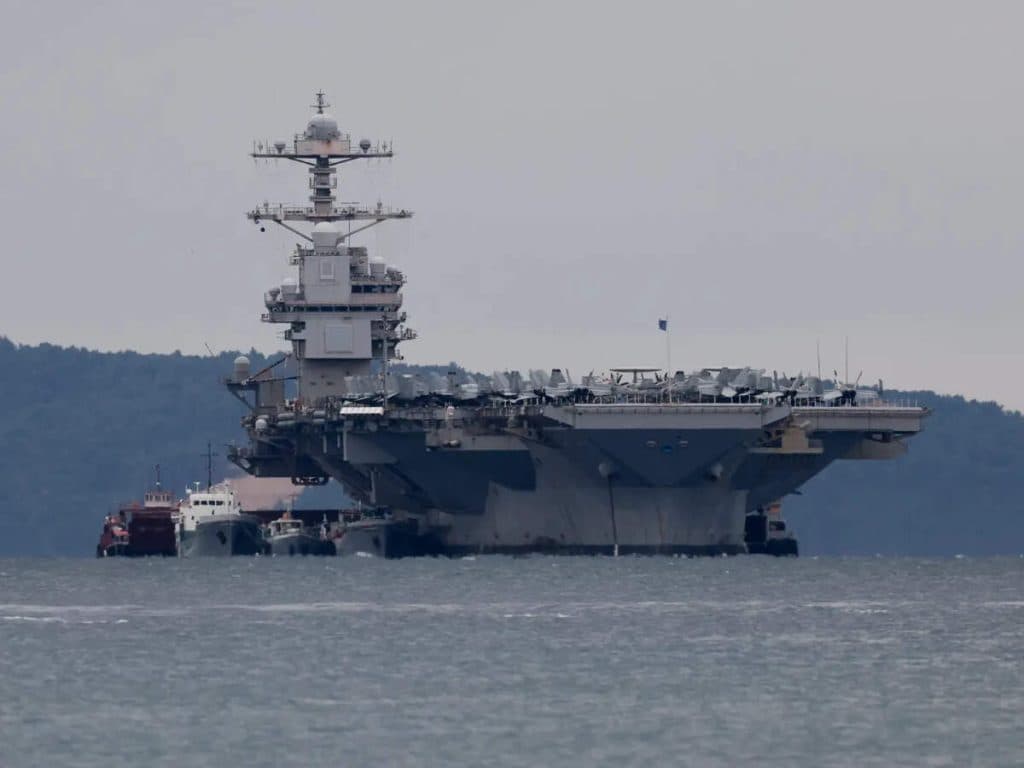
India is smitten with concern after reports have emerged of a possible US naval build-up in the Bay of Bengal following a defence treaty with Bangladesh to ensure the latter’s protection from any enemy attack.
If the latest reports are to be believed, a high-level defence treaty with the US Navy is under active consideration of the Bangladesh National Party (BNP) government to protect its shores from the possible subversive attacks on its maritime assets.
The Acquisition and Cross Servicing Agreement (ACSA) and General Security of Military Information Agreement (GSOMIA) which are currently under an advanced stage of discussion between the Donald Trump and Tarique Rahman administrations, could in all probability see the light of the day very soon, reports have indicated.
The treaty envisages complete and thorough maintenance of the US naval assets including aircraft carriers and the navy fighters, their refuelling facilities and supply of other key defence logistics at such key Bangladesh ports as Chittagong and Matabari overlooking the Bay of Bengal.
And the US, while downplaying the treaty as routine, has sought to project it as part of its measures for strengthening maritime security and dealing with the surrounding subversive elements that pose a real threat to the Bay of Bengal region.
Questions in the Corridors in New Delhi
The crucial questions doing round the corridor in New Delhi are manifold. First, is it part of a calculated US move to counter India’s latest defence agreement with Putin’s Russia that put in place Reciprocal Exchange of Logistics Support (RELOS) pact?
Under the agreement that came into effect from January, 2026, both nations are permitted to simultaneously station up to 3,000 military personnel in each other's territory besides the deployment of up to 5 warships and 10 military aircraft.
The reciprocal access applies to military bases, airfields, and ports. It facilitates logistical support (such as refuelling, repairs, and technical assistance), joint exercises, training, and Humanitarian Assistance and Disaster Relief (HADR) missions.
This agreement marks a significant shift, as it grants Russia access to ports in the Indo-Pacific and grants India access to the Arctic and Far East regions.
Secondly, Bangladesh has so far maintained very strong cordial ties with both China and Pakistan. Hence, there is no question of any territorial aggression from either of them.
So, is it part of a plan to trigger a new tension between India and China or could the latest US move be viewed as an attempt to curtail increasing Chinese influence in the region, especially Bangladesh?
Other Concerns
As for India, this foreign maritime build up hardly augurs well as it is fraught with a sensitivity that is definitely uncalled for at this critical juncture when a temporary `lull in the storm’ (Read the US-Israel-Iran conflict in the Gulf) has immeasurably fractured the global peace.
Presence of a foreign naval entity could seriously jeopardise the fishermen’s livelihood and smooth movement of oceanic trade and business. This could also lead to a disabled diplomatic equilibrium, posing a grave danger to regional balance.
The Bay of Bengal is a crucial waterway linking the larger Indo-Pacific trade. Presence of such nuclear-powered nations as the US could adversely impact the security concerns of the South Asian countries.
Hence, it is expected of the big powers to exercise restraint and reduce any heightened tension through dialogues and peace processes; otherwise, this region might turn into an unwelcome sphere of competition of increased dominance of the superpowers.
Key Words: ACSA -Bay of Bengal- Bangladesh-China-Chittagong-Gulf- GSOMIA- Geopolitical tension- HADR -Indo-Pacific trade – Matabari-RELOS- US-Israel-Iran conflict.
About the Author

Prasanta Paul served Deccan Herald as the Chief of Bureau, Calcutta for nearly two decades before switching to work with various TV channels such as Al-Jazeera, CNN, German TV and CBS. He also headed the Eastern Bureau of Parliamentarian magazine. Mr. Paul who accompanied former Prime Minister Atal Behari Vajpayee on his overseas tour of Singapore and other Asian countries, travelled extensively to Bhutan, Sikkim and Darjeeling besides other Northeastern states. He briefly headed the Mizoram Bureau of the United News of India (UNI). To his credit goes a deep-rooted empathy for social issues and marginalized people. His extensive coverage on the Tsunami, the Super Cyclone in Odisha and the 2020 Amphan cyclone besides the Gaisal Train mishap in eastern India has easily been the best around the world.
Discussion
Reader Comments
No comments yet. Be the first to share your perspective.