BreakingInternational
When the Mountains Fell: A Foreman’s Nine-Day Tryst with Death
Faith & Camaraderie: Extraordinary choice of one facing death
05 Sep 2026, 11:22 am IST·3 min read
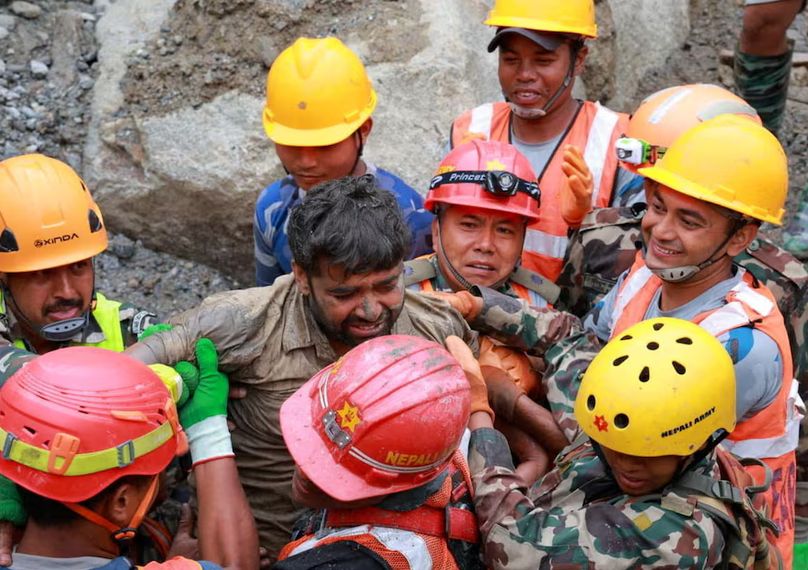
Call it providence. Call it the hand of Lord Krishna.
When mountains of ice, rock and mud came crashing down upon Nepal’s Trishuli valley, 30-year-old foreman Sanjay Shah had a chance to run.
The nearly four-kilometre-long tunnel of a hydropower project offered him an escape route.
But Sanjay Shah chose not to save himself first.
Dozens of his fellow workers were inside the mountain.
And for Shah, the instinct of a foreman proved stronger than the instinct of survival.
“My responsibility was to save everyone’s lives,” he later told rescuers from a stretcher, an oxygen mask strapped to his face. “When there was such a big accident, it was not right for me to run away.”
Nine days later, Shah emerged from the darkness of the mountain—alive.
A Spiritual Dimension
And on the morning of Janmashtami, his astonishing account acquired an almost spiritual dimension.
“I kept chanting the Hare Krishna Mahamantra for the last nine days,” said the rescued worker, who had remained trapped beneath tonnes of earth and rock while the world above desperately searched for survivors.
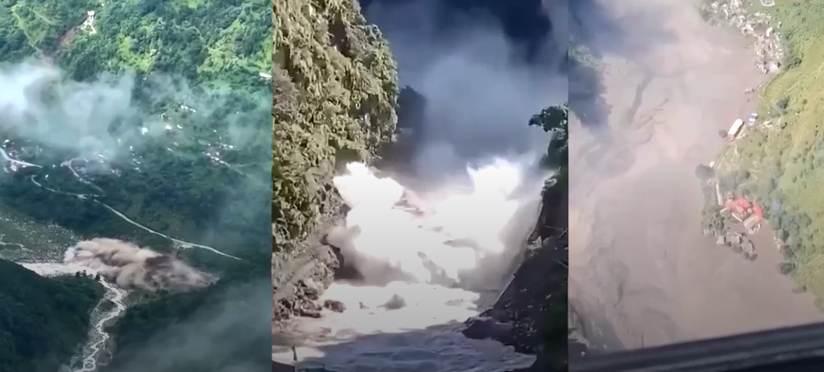
The disaster struck after a devastating wall of ice, mud and rock tore through a vast stretch of the Trishuli valley, Nepal, leaving behind destruction on a scale impossible to comprehend.
Shah was in the control room inside the tunnel when news of the catastrophe upstream reached him.
Normally, only four to six people worked there. But on that day, there could have been as many as 40 or 45.
Shah immediately sounded the warning.
He asked everyone to run.
Workers began fleeing for their lives.
But fate had reserved a cruel irony for the man who had helped others escape.
By the time Shah himself decided to run, there was no time left.
The mountain had closed in.
For nine days, trapped in darkness beneath the Himalayan earth, he survived—clinging to hope, faith and the possibility that somebody would eventually find him.
He managed to remain in contact with three or four other workers somewhere inside the vast tunnel network. But his greatest fear was for those trapped deeper inside the mountain.
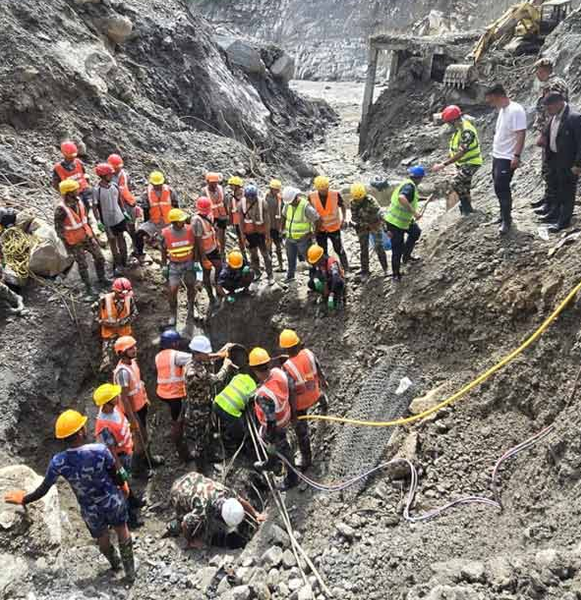
Shah and mechanical supervisor Kabir Maharajan became the first workers to be pulled alive from the hydropower tunnels after the catastrophe. A small group had managed to escape from another tunnel within hours of the disaster.
Worst Nightmares Await
But the nightmare is far from over.
Officials fear that hundreds of workers could still be trapped inside extensive tunnels dug for as many as six hydropower projects along the Trishuli river.
The Trishuli-3 project itself is located around 19 kilometres south of Trishuli town. A huge underground powerhouse had been built beneath the earth, connected through long tunnels. Temporary arrangements for workers, including a kitchen and food stocks, were reportedly available underground.
Whether those facilities have survived—and whether they can sustain those still trapped—remains uncertain.
And yet, amid this overwhelming tragedy, Sanjay Shah’s survival has become a story larger than a disaster.
It is a story about a man who had an opportunity to flee but stayed behind.
A man who placed the lives of his colleagues before his own.
A man who spent nine days inside the belly of a mountain chanting the name of Krishna—and walked out alive on Janmashtami.
In an age increasingly marked by self-preservation, Shah’s extraordinary act offers a simple but powerful reminder:
Sometimes, the greatest courage is not in running away from danger.
It is in staying back when everyone else needs you the most.
About the Author
Prasanta Paul served Deccan Herald as the Chief of Bureau, Calcutta for nearly two decades before switching to work with various TV channels such as Al-Jazeera, CNN, German TV and CBS. He also headed the Eastern Bureau of Parliamentarian magazine. Mr. Paul who accompanied former Prime Minister Atal Behari Vajpayee on his overseas tour of Singapore and other Asian countries, travelled extensively to Bhutan, Sikkim and Darjeeling besides other Northeastern states. He briefly headed the Mizoram Bureau of the United News of India (UNI).
Discussion
Reader Comments
No comments yet. Be the first to share your perspective.
Similar Stories
International
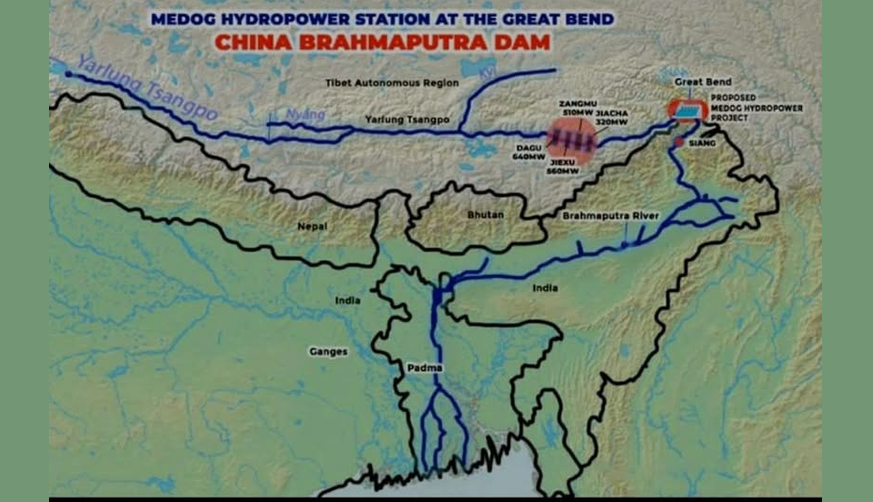
India’s ‘Hydraulic Shield’ in Arunachal Pradesh VS China’s Himalayan Gamble
Just dozens of kms from Indian frontier, Beijing is developing the world’s largest hydropower project on the Yarlung Tsangpo river that turns Siang in Arunachal
Prasanta Paul·09 Sep 2026
International
Chinese Relief Receives ‘Solidarity’ Medal from CPI(M); India Scores a Blank
CPM’s political compass permanently displays irresistible tendency to swivel towards Beijing & the ideological retina springs into action if China sneezes even.
Prasanta Paul·07 Sep 2026
International
EDITORIAL: Himalayas on the Edge: Catastrophe Rekindles Alarm Over Fragile Mountain Ecology
The tragedy is a warning from the Himalayas where melting glaciers,unstable mountains & intense developmental work converge in the planet's most fragile regions
Prasanta Paul·28 Aug 2026
